Il Divo: Sorrentino's Andreotti Grotesque
Toni Servillo builds a seven-times prime minister out of a stoop, a whisper and a pair of ears, and Paolo Sorrentino films him like a horror villain
Contents
Il Divo (2008) opens with a man having needles put into his head. Giulio Andreotti has migraines, and he sits still for the acupuncture the way he sits still for everything, with a patience that has outlasted governments. Then Paolo Sorrentino gives us a montage of dead Italians — a magistrate, a journalist, a banker, a politician — each killing announced with a caption and a flourish, edited to music, staged with the panache of a title sequence for a heist movie. The bodies pile up in about ninety seconds. Then we return to the little man with the needles in his skull, and the film’s proposition is on the table before a scene has properly begun.
Giulio Andreotti was prime minister of Italy seven times. He was at or near the centre of Italian power for the entire post-war era. He was tried for association with the mafia and for ordering a journalist’s murder, and the trials ended without a conviction that stuck, in judgments tangled enough that everyone involved claimed vindication. He was, at the time this film came out, alive, elderly, a senator for life, and reportedly unamused: the word he is said to have used for the picture translates roughly as a caddish trick.
The problem
How do you make a film about a man with no surface? Andreotti’s genius was blankness. He did not shout, did not gesture, did not emote, did not explain. He was pious, ascetic, up at five, at Mass, home early, married to the same woman for decades, famously fond of cats. He produced aphorisms — the best of them, that power wears out those who do not have it, is the closest thing the film has to a mission statement — and otherwise gave the world almost nothing to read.
Sorrentino’s first answer is to let the country describe him instead. Early on the film simply lists the nicknames Italy gave the man over half a century, stacking them on screen one after another — Beelzebub, the Black Pope, the Hunchback, the Fox, the Salamander, Moloch. It is a superb piece of construction, because it hands the characterisation to the public record and to popular dread rather than to the screenwriter. Sorrentino does not have to assert that this man was regarded as demonic. He can show you that a nation reached for the vocabulary of hell and kept reaching for forty years, and let the accumulation make the case.
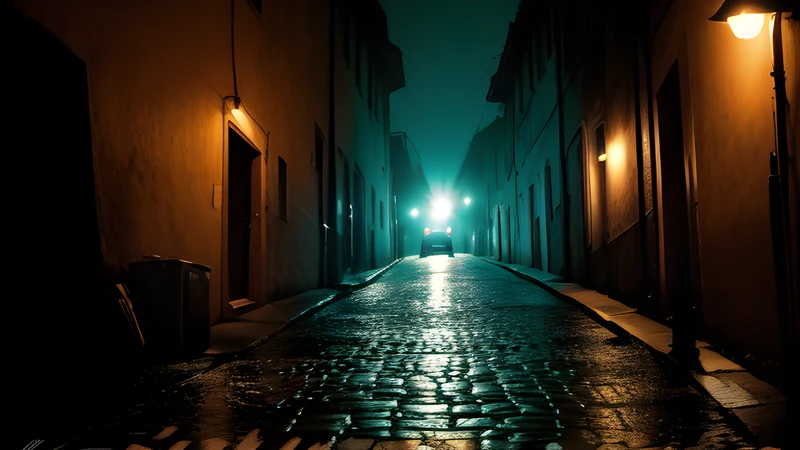
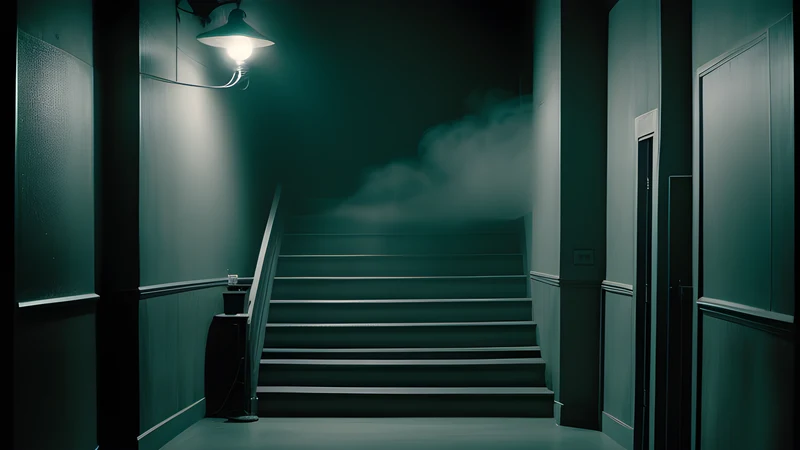
His larger answer is to refuse realism entirely. If the man is opaque, film the opacity as a special effect. Il Divo is shot like a horror picture about a monster who happens to hold cabinet office: whip-pans, crash-zooms, slow-motion entrances, a camera that treats a corridor in a ministry the way John Carpenter treats a hallway in a suburban house. Andreotti is introduced repeatedly with the grammar of a boogeyman. He appears at the end of long tracking shots. He is discovered in the dark, already present, already still.
This is a real critical position rather than mere flash. Sorrentino is arguing that Italy could not see this man because he had made himself unwatchable, and the only honest way to portray him is as a figure of genre — a wraith, a Nosferatu with a red box.
Servillo’s construction
Toni Servillo does something here that almost nobody attempts: he builds a character from the outside in and never once cheats toward interiority. The Andreotti he assembles is a set of physical decisions. The stoop, curling the spine into a question mark. The arms held rigidly at the sides while walking, so that the man moves like a piece of furniture being pushed. The ears, prosthetically enlarged into wings. The head tipped slightly forward as if permanently listening for something behind him. The voice, a flat, dry murmur that never rises and never quite stops.
The astonishing thing is that Servillo declines to explain any of it. There is no scene where the mask drops and the sad boy appears. He plays a man whose inner life is a locked room and refuses to hand the audience a key, which means the performance generates its own dread: we keep leaning in for a tell and there is never one. Servillo and Sorrentino had already done The Consequences of Love together and would later do The Great Beauty, and this is the hinge of the collaboration — the actor who can make stillness feel like a threat.
Bigazzi’s frames and the anachronistic jukebox
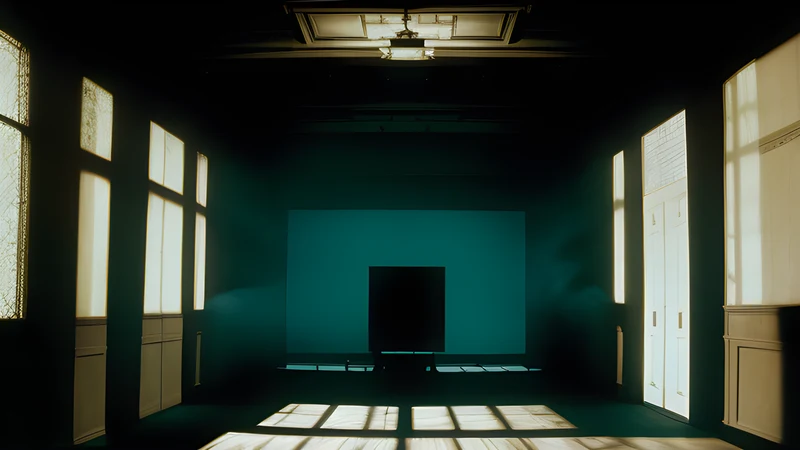
Luca Bigazzi shoots the film in deep, lacquered darkness with hard pools of light, and his real contribution is composition. Andreotti is constantly placed at the exact centre of enormous symmetrical rooms, tiny, dead centre, in frames so formally balanced they feel embalmed. Everyone else is off-axis. The visual logic says the man is the fixed point around which Italian politics happened to be arranged, and it says it without a line of dialogue.
Then there is the music, which is where Sorrentino makes his most divisive choice and his best one. The score is a jukebox of the wrong things: German new wave from the eighties, French house from the noughties, Sibelius, Fauré. A montage of mafia executions plays out to a lolloping pop tune. A political manoeuvre gets club music. The anachronism is deliberate and it functions the way Morricone’s jeering theme functions in Elio Petri’s Investigation of a Citizen Above Suspicion — it denies the powerful man the dignity of his own soundtrack. Andreotti wanted to be a grave historical figure. Sorrentino scores him like a nightclub.
The ethics
This is a film about a living man, alleging things a court declined to affirm, and made as a grotesque. It is worth being honest about the discomfort. Sorrentino gives himself cover with a caption disclaiming strict factual accuracy, and he builds the whole picture on the boundary between the documented and the imagined — the meetings that happened, the motives that cannot be known.
You can defend it, and the defence is that the film never claims to be an investigation. It is a portrait of how a country experienced a man, which is a different and legitimate object. Whether that distinction survives contact with the audience is another question, and it is one worth putting alongside The “Based on a True Crime” Boom and Its Ethics, because Il Divo is doing something the true-crime industry usually does badly and here does with real self-awareness: it foregrounds its own unreliability instead of hiding it under a documentary hush.
The bloodline
The direct ancestor is Petri, and the family resemblance is unmistakable — the formal show-off aggression, the mocking music, the state as horror architecture. Where Petri invented a policeman to make his case, Sorrentino uses a real man, which is braver and dirtier. The other essential companion is Bertolucci’s The Conformist: Marcello Clerici is a man who joins the machine because he wants to be nobody, and Andreotti is what that man looks like at seventy-three, having run the machine for half a century and become nobody so completely that it worked.
For the European crime film as institutional anatomy, Jacques Audiard’s A Prophet makes the third leg of a superb triple bill — power as a curriculum, learned by a man with nothing, in a building he cannot leave. All three films are about the same thing: what an institution does to the person who understands it best.
The case against
Sorrentino’s style has an appetite, and it occasionally eats the film. There are stretches where the camera’s swagger is doing the work that an argument should be doing, and a viewer without a working knowledge of Italian politics from 1969 to 1993 will drown. The picture assumes you know who Salvo Lima was, why 1992 matters, what Mani Pulite did, who died at Capaci. It offers captions and no context, and while that refusal to hold hands is admirable in principle, in practice a great deal of the film’s meaning is simply unavailable to most of its audience.
There is also a coldness that cuts both ways. By declining to psychologise Andreotti, Sorrentino keeps his integrity and forfeits some force. The film cannot land a moral blow on a man it has defined as unhittable, and there are moments when its own thesis has it in a corner.
Where to find it
On disc from the specialist labels and a regular on the arthouse platforms. Read a page about Italy in 1992 first — half an hour of homework triples the film.
Spoilers below
The picture’s great set piece is a monologue, and Sorrentino saves it for the end. Andreotti, alone in his study at night, finally speaks — to his wife, to nobody, to the camera — and delivers a confession that is also a defence and also, unmistakably, a boast. He talks about evil done in the service of good. He talks about the monstrous, necessary arithmetic of governing a country like his. Servillo plays it as a man who has been holding this in for fifty years and who, released, discovers he still cannot raise his voice.
It is the only moment where the mask moves, and Sorrentino has been careful to make it unusable. We do not know whether it is happening. There is no witness. It reads as fantasy — the confession the country wanted and never got, staged by a director who knows he is providing an invention where the record has a hole. That is the film’s most honest gesture and its most dishonest one at the same time, and Sorrentino knows it: he gives you catharsis and simultaneously stamps it as fiction, so you cannot take it away with you.
Then comes the trial, and the anticlimax is the point. Andreotti sits in court, small, still, hands folded, and the proceedings grind through a judgment nobody can summarise cleanly. He does not go to prison. He is made a senator for life. The film ends with the man exactly where he began, unmoved and unmovable, and Sorrentino’s last gesture is to let the tribunal’s language wash over that immobile figure until the words stop meaning anything at all.
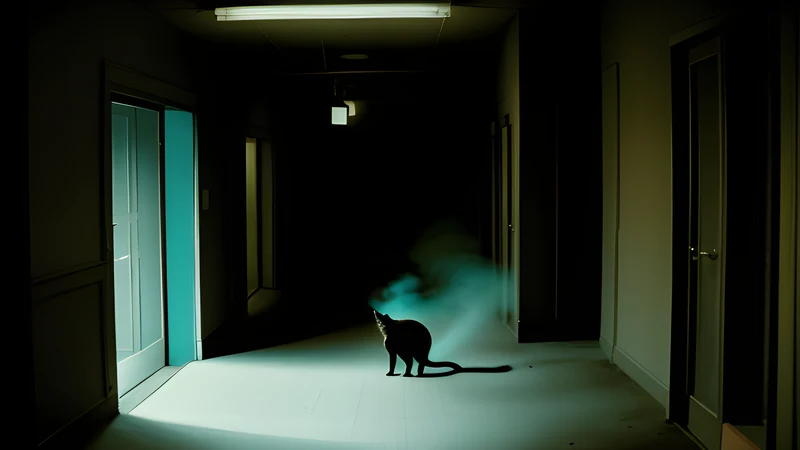
The cat is the film’s private joke and its best image. Andreotti loved cats, and Sorrentino keeps letting one cross a dark corridor — a small, silent, indifferent thing that goes where it likes, is impossible to catch, and answers to no one. There is a whole biography in it, and the film never says a word about it.
Related Content