I Saw the Devil: Revenge Pushed Past the Point of Sense
Kim Jee-woon and Lee Byung-hun turn vengeance into a catch-and-release nightmare with no exit
Contents
The revenge film has a built-in stopping point: the villain dies, the wronged man exhales, credits roll. I Saw the Devil, Kim Jee-woon’s 2010 shocker, is fascinated by what happens if you refuse that stopping point — if the avenger, having caught his man, decides that a single death is far too small a punishment, and keeps going, and going, and finds that the pursuit is remaking him into the very thing he is hunting. It is one of the most extreme films the Korean new wave produced, and its extremity is an argument rather than a stunt. This is a picture that means to make revenge unbearable, and it succeeds so completely that plenty of viewers cannot finish it.
A secret agent and a monster
Lee Byung-hun, five years on from A Bittersweet Life and again directed by Kim Jee-woon, plays Kim Soo-hyun, a National Intelligence Service agent whose pregnant fiancée is murdered in the film’s opening act by a serial killer working a lonely stretch of road. The killer is Jang Kyung-chul, played by Choi Min-sik — the star of Oldboy — as a squat, grinning engine of appetite, a school-bus driver who murders for pleasure and feels nothing that resembles remorse. Choi is extraordinary here, playing evil with a bored, matter-of-fact ordinariness that curdles the stomach.
Soo-hyun, using his agency’s resources, quickly narrows the field and finds Kyung-chul. And then he makes his fatal decision. Rather than kill the man, or hand him to the law, Soo-hyun begins a campaign of catch-and-release torment: he beats Kyung-chul, breaks him, then lets him go, tracks him via a swallowed GPS device, and pounces again each time the killer resumes his predation. The idea is to make the monster feel the terror and helplessness his victims felt — to inflict on him, over and over, the sensation of being prey. What Soo-hyun does not reckon with is that a released predator does not sit still, and that every day he keeps this game running, more innocent people wander into Kyung-chul’s path.
Why it works: the excess has a thesis
It would be easy to write I Saw the Devil off as an exercise in escalating gore, and it is certainly not for everyone; the violence is graphic, sustained, and sometimes genuinely hard to watch. But the film is built with real intelligence, and its brutality is load-bearing. The craft lesson worth stealing is the way Kim uses repetition to corrupt the hero. Each cycle of the catch-and-release scheme is staged a little more like the killer’s own methods, so that the visual language of hunter and hunted slowly converges. By the midpoint you can no longer cleanly tell which man’s cruelty you are watching, and that confusion is the entire point.
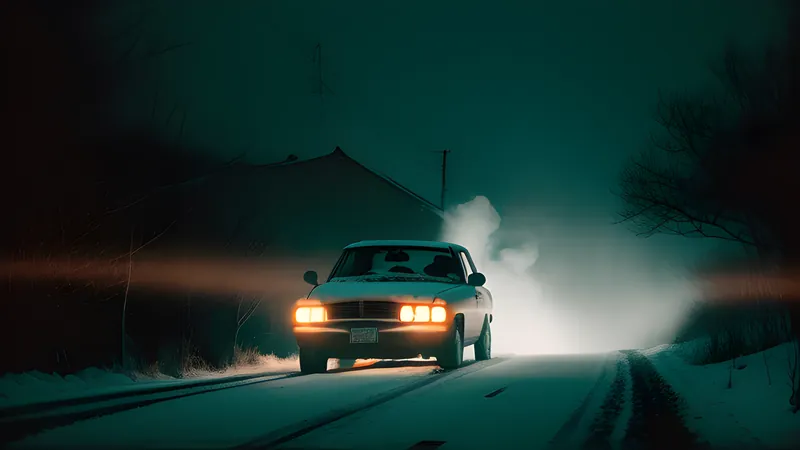
Kim Jee-woon remains one of cinema’s great stagers of violence, and he brings the same command of space he showed in A Bittersweet Life. The film’s standout set-piece is a fight inside a moving taxi, shot in a swirling, disorienting whirl as the camera circles the cramped interior while bodies collide — a technical marvel that also traps you inside the chaos with the characters. Elsewhere Kim uses cold blue winter light, empty rural roads, and clinically composed frames to lend the horror an awful beauty, the same aesthetic control he brought to his gangster film, now turned to far uglier ends.
The two lead performances are the reason it holds. Lee Byung-hun plays Soo-hyun as a man draining of humanity by degrees, his grief hardening into something mechanical and finally monstrous; the matinee cool he brought to Sun-woo curdles here into a frightening blankness. Choi Min-sik refuses to make Kyung-chul charismatic or clever in the manner of a movie serial killer, giving instead a portrait of pure appetite that makes Soo-hyun’s crusade feel both understandable and doomed. Watching two actors of this calibre circle each other for two and a half hours is the film’s grim pleasure.
The film’s structure is a deliberate provocation. At two hours and twenty minutes it is far longer than a revenge thriller needs to be, and the length is part of the argument: Kim refuses to give you the quick, cathartic kill the genre is built to deliver, and instead makes you live inside the grinding repetition until the appeal of vengeance rots in front of you. Each cycle buys Soo-hyun a little less satisfaction and costs him a little more of himself, and by drawing it out past the point of comfort Kim ensures you feel the diminishing returns in your own gut. It is a film engineered to exhaust rather than thrill, and the exhaustion is the message.
The films it comes from, and its close cousins
The essential cross-reference is right there in the casting. Choi Min-sik’s presence turns I Saw the Devil into a dark companion to Park Chan-wook’s Oldboy, the film that made him the face of Korean revenge cinema. Where Oldboy is a baroque tragedy about the trap of vengeance, Kim’s film is a colder, more clinical experiment with the same thesis — that revenge is a machine that consumes the one who operates it. The two are the definitive statements of the Korean revenge cycle, and they belong on the same shelf.
Within Kim Jee-woon’s own work, this is the vicious mirror of A Bittersweet Life: the same director, the same star, the same fascination with a controlled man undone by a wound, now stripped of that film’s romantic elegance and pushed into the abyss. And as a Korean serial-killer story, it shares terrain with The Chaser and the mournful procedural despair of Memories of Murder, though I Saw the Devil is the most nihilistic of the group by a wide margin.
For readers charting a course through this remarkable national cinema, the wider map is in Korean genre cinema: ten to start with. I Saw the Devil is on it, with a warning label attached.
The verdict
I Saw the Devil is a superbly made film that goes to a place many viewers will not want to follow, and it knows it. Its subject is the futility and self-annihilation of revenge, and it prosecutes that case through an escalating horror that leaves the avenger hollowed out and the audience wrung dry. Watch it for Choi Min-sik and Lee Byung-hun at full, terrifying stretch, and for Kim Jee-woon’s icy command of dread — but watch it knowing what it costs. This is revenge cinema at its most punishing, a film that stares at vengeance until vengeance stares back.
Spoilers below
The film’s grimmest joke is that Soo-hyun’s plan is self-defeating from the first day, and Kim makes sure we understand the body count it generates. Every time Soo-hyun releases Kyung-chul to prolong the torment, the killer immediately hunts again, and the innocents he butchers in the gaps — including a horrifying detour to the house of a cannibalistic acquaintance of Kyung-chul’s, one of the film’s most notorious sequences — are on Soo-hyun’s hands as much as the killer’s. The revenge scheme does not just fail to heal Soo-hyun; it multiplies the very evil it was meant to answer.
Kyung-chul, once he grasps the game, turns it back on his tormentor. Understanding that Soo-hyun’s pain is the lever, the killer targets Soo-hyun’s remaining family — his dead fiancée’s sister and father — engineering a final atrocity designed to make the avenger feel the exact helplessness he tried to inflict. It is the moment the film springs its trap on Soo-hyun: the man who set out to teach the devil what fear feels like has instead handed the devil the map to his own heart.
The ending withholds any release. Soo-hyun does finally engineer Kyung-chul’s death, rigging an elaborate, gruesome execution witnessed by the killer’s own relatives so that the death will carry the maximum weight of horror. And it settles nothing. The film’s closing image is of Soo-hyun weeping as he walks away, having won and lost everything, hollowed into a version of the emptiness he hunted. That final breakdown is the whole argument in one shot: he saw the devil, and by the end he is looking at himself. Pair it with Oldboy if your nerves can take it — the two together are the last word on what revenge does to the avenger.
Related Content