I Am the Pretty Thing That Lives in the House: Perkins's Ghost Elegy
The Netflix ghost story that dared to be almost nothing at all
Contents
Netflix dropped Osgood Perkins’s second feature in late October 2016, into the exact slot where a platform expects a horror film to do horror-film business, and the audience reaction was one of the more entertaining collisions of the decade. People had queued up for a haunted house and been handed eighty-seven minutes of a woman moving very slowly through rooms while a dead voice explains the situation. The reviews from viewers were savage. The film is, I think, the most purely beautiful thing Perkins has made, and its unpopularity is not a misunderstanding — it is an accurate response to a film that genuinely refuses to do what the genre promises.
The premise fits in a sentence. Lily Saylor, played by Ruth Wilson, is a live-in nurse hired to see out the last years of Iris Blum, a retired horror novelist with advanced dementia, in Blum’s large house in rural Massachusetts. Paula Prentiss plays Blum. Bob Balaban plays Mr Waxcap, the man who arranges the engagement and then leaves. That is the cast. Blum, when she speaks at all, calls Lily by the wrong name — Polly, the name of the woman at the centre of her most famous novel, The Lady in the Walls. Lily has never read it. There is a stain on the wall downstairs, and it is getting bigger.
A film that declines to be a film
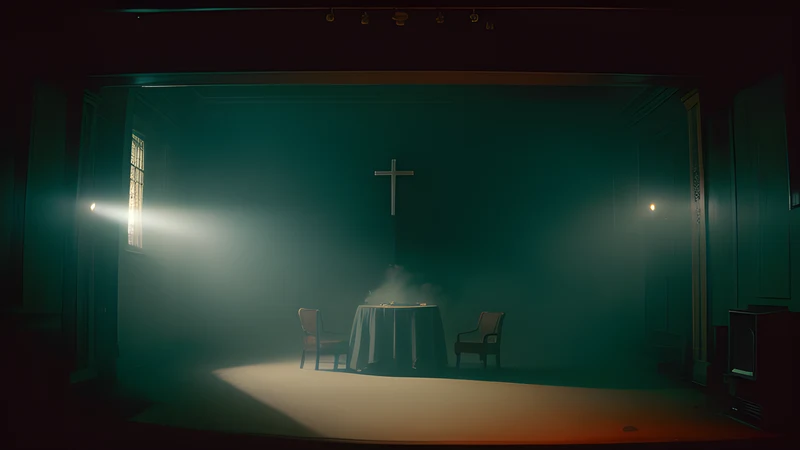
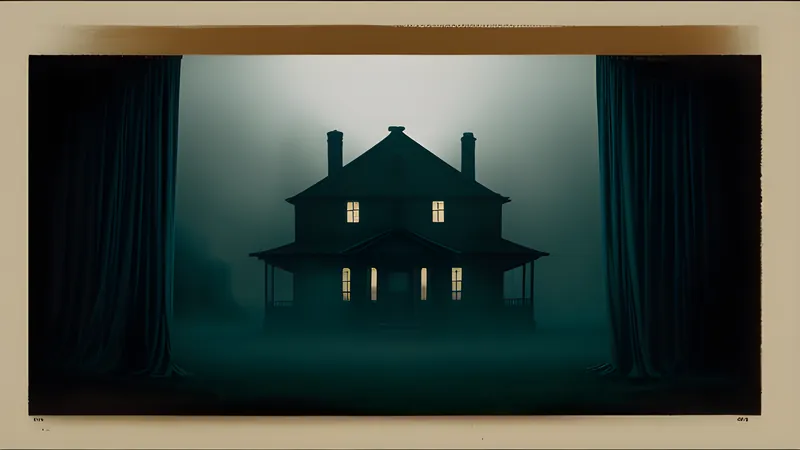
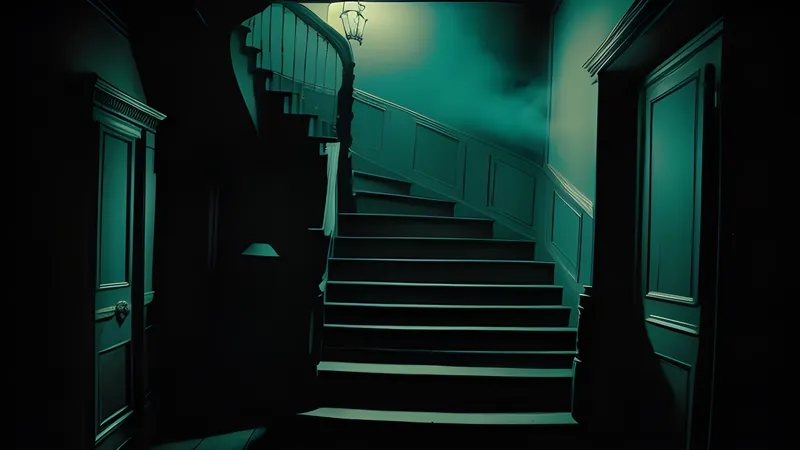
Perkins and cinematographer Julie Kirkwood shoot the house the way an architectural photographer would, if the architectural photographer were frightened. Long static compositions, doorways framed within doorways, a camera that moves so slowly and so rarely that when it does drift you feel it in your stomach. The palette is autumnal and drained; the house is genuinely lovely and utterly unwelcoming, which is a hard combination to photograph. Almost every shot is symmetrical, and Perkins uses the symmetry as a threat — a perfectly balanced frame has an obvious place for a second figure, and the film spends most of its runtime leaving that place vacant.
The stain is the film’s only real event, and it is a magnificent piece of horror thinking. A patch of mould creeping up a wall is a haunting with a timescale: it cannot jump out at you, it can only be further along than last time you looked. Perkins gives it perhaps six shots across the film. That is the entire escalation. He has replaced the genre’s apparatus of doors and mirrors and reflections with an image of slow organic damage, and it works because rot is the one supernatural threat everyone in the audience has actually met.
Elvis Perkins scores it as sparely as he scored The Blackcoat’s Daughter, though the register is different — where that film’s soundtrack was industrial and mechanical, this one is closer to a held breath, tonal drift with long silences that the sound design fills with a house’s ordinary noises. There is no sting anywhere in the film. Not one. Perkins removed the genre’s primary tool from his own toolbox and shot without it.
The narration is the trick
The film opens with Lily telling you, in voiceover, that she is twenty-eight years old and will never be twenty-nine. It is one of the most efficient opening gambits in modern horror, and the whole film is built on the tension it creates. You have been told the ending in the first minute. Everything after is a woman walking around a house you now know will kill her, and the suspense has been converted from what happens into how she does not see it.
That is the reason the pacing is defensible. A conventional ghost story withholds the outcome and spends its energy on dread of the unknown; Perkins gives you the outcome and spends his on dread of the known, which is a slower and more melancholy substance. Ruth Wilson’s narration is written as prose — recognisably a novelist’s cadence, full of circling, half-corrected observations about houses and death and being looked at. Perkins is writing in the voice of a woman inside a horror novel, and the film’s cleverest formal idea is that the narrator’s diction is contaminated by the book she has never read.
There is a structural consequence people miss. Because the outcome is fixed from the first minute, the film has no plot pressure, and Perkins has to generate interest from texture alone — which is why so much of the runtime is a woman doing domestic work. Lily cleans, cooks, reads aloud, changes a bed. A conventional ghost story treats that material as connective tissue between incidents; here it is the substance, and the film asks you to find a made bed ominous. That is an enormous demand, and whether the film succeeds depends entirely on whether you accept the opening contract. Viewers who treat the narration as a hook to be paid off later spend the film waiting. Viewers who treat it as a fact settle in and watch a dead woman keep house.
Wilson carries all of it. She had come from Luther and The Affair, and what she does here is almost entirely internal: a woman who is skittish, professionally kind, easily frightened, and privately certain that she is not the heroine of anything. She admits, in narration, that she is scared of everything and always has been. That confession is why the film works — a brave protagonist in this house would be intolerable, and Wilson plays Lily’s timidity as a form of accurate perception. She is frightened because she is right.
The real ancestor
Iris Blum is Shirley Jackson with the serial numbers barely filed off — a reclusive American woman who wrote the definitive novels of domestic dread and was, in her own life, largely trapped in a house. Perkins is being explicit about his lineage. The film’s manners come from the Jackson tradition and its adaptations, and the closest relatives are the two most disciplined ghost films in English: The Innocents, for the discipline of a haunting that lives in framing and in a woman’s face, and The Haunting, for the doctrine that the ghost you never see cannot be disappointing.
The other ancestor is Burnt Offerings, and this is the connection worth making. That 1976 film understood houses as organisms with a metabolism, buildings that consume their occupants to repair themselves. Perkins’s stain is the same idea rendered as a single image, and his house is doing exactly what Burnt Offerings’ house does: keeping people, and looking better for it.
The case against
It is thin. There is no way around that. Eighty-seven minutes is short and the film still has stretches where a viewer of entirely good faith will conclude that a beautiful shot is being asked to substitute for a scene. Perkins gives Prentiss’s Iris Blum almost nothing to play, which wastes a genuine presence — Prentiss was Paula Prentiss, from The Stepford Wives, and she is given perhaps three moments. Balaban is a cameo. The film is Ruth Wilson and a wall.
The narration is also a legitimate target. It is gorgeous and it is relentless, and there are passages where it explains a mood the image had already established perfectly well, which is the specific vice of a director who is also a very good writer. Trim twenty per cent of the voiceover and the film’s confidence in its own pictures would read as absolute.
But the reason to keep it on the shelf is that Perkins has made the rarest thing in the genre — a ghost story that is genuinely sad rather than merely frightening, and that treats a haunting as a bereavement problem. Where his debut ended on a woman destroyed by being emptied, this one ends on a woman absorbed by being kind. It is the same grief in a softer key, and the two films read as a diptych by a man who lost both parents young and has decided that the horror worth filming is the one where nothing can be done. If you go in wanting a haunted house to perform, it will humiliate you. If you go in wanting an elegy, it is close to perfect.
It lives on Netflix and has had disc releases. Watch it in the afternoon, oddly — the film is about daylight and decay rather than darkness. Watch next: The Innocents for the ambiguity, Burnt Offerings for the hungry house, The Blackcoat’s Daughter for the colder half of the pair.
Spoilers below
Polly Parsons was real. Iris Blum’s The Lady in the Walls was written about a woman who lived in that house and was murdered in it by her husband — walled up, on or around her wedding day, and left there. Blum did not invent Polly. She interviewed her, or something close to it, and wrote the book that made her career out of a ghost’s account of her own death. Lucy Boynton, who played Rose in Perkins’s debut, plays Polly. The reason Iris calls Lily “Polly” is that Iris’s dementia has stripped away the distinction between the woman she is looking at and the woman who has been in the house all along, and the reason that is frightening is that the dementia is arguably the most clear-sighted thing in the film.
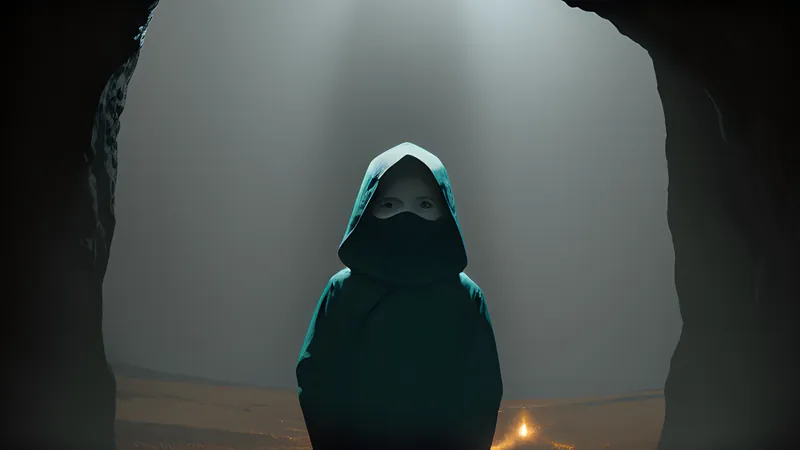
Lily dies. The narration told you in the first minute, and Perkins honours it exactly: she turns, and Polly is there, and the film gives you the least stylised, least emphatic ghost reveal imaginable — a figure with a covered face, badly lit, at a distance, gone. Lily is twenty-eight and never becomes twenty-nine, and the voice that has been guiding you through the film has been speaking from the other side of that moment for the entire runtime. The house has two of them now.
The final movement is where the title resolves and the film breaks your heart. Iris Blum lives on for years. Lily, dead, stays — narrating, tidying, keeping the house, still frightened of everything, still doing the job she was hired for. The stain keeps spreading. The pretty thing that lives in the house was never only Polly, and Perkins’s last move is to hand the title from one dead woman to another as though it were a shift rota.
What makes it land is the ending’s refusal of anger. Polly does not want revenge and Lily does not seek release; the house has simply added a resident, the way it has before and will again, and the horror is administrative. Perkins had shot a woman screaming into the snow for a devil that would not come back. Here he shoots a woman who dies gently, in a lovely house, doing her work, and is kept — and it is somehow worse.
Related Content