His House: A Ghost Story About Asylum and Debt
Remi Weekes turns survivor's guilt into a haunting
Contents
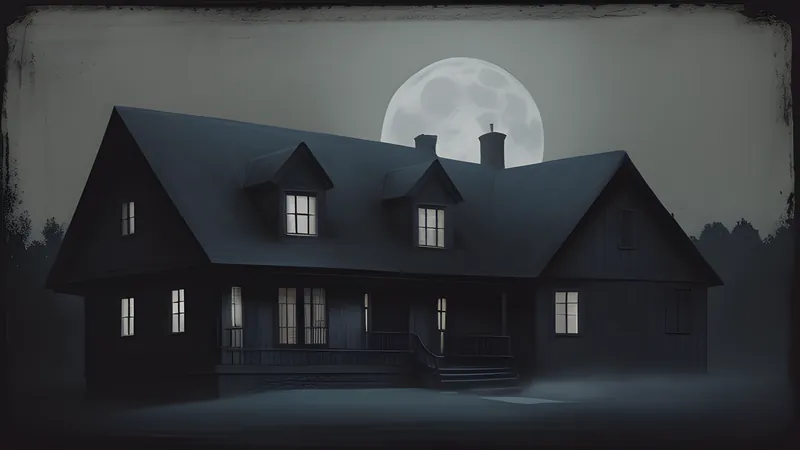
The best haunted-house films are never really about the house. They are about the people who cannot leave it, and why. His House, Remi Weekes’s astonishingly assured 2020 debut, understands this so completely that it builds its entire architecture — literal and dramatic — around a couple who are told, in plain bureaucratic English, that they are not permitted to move. Bol and Rial are asylum seekers from South Sudan, granted a fragile probationary status in England on the condition that they stay put in the dilapidated council house assigned to them. The ghosts arrive almost immediately. The trap was set before the haunting started, and it was set by an immigration officer with a clipboard.
The premise, and the second trap inside it
Bol (Sope Dirisu) and Rial (Wunmi Mosaku) have survived a journey that killed most of the people they set out with, including — the film reveals in fragments — a little girl. Resettled in a grim outer-London town, monitored by a weary caseworker (Matt Smith) who tells them to be “one of the good ones,” they are handed a house that is falling apart, larger than anything they have known and colder than anywhere they have been. Bol wants to assimilate at any cost: new clothes, English at the dinner table, a desperate performance of belonging. Rial cannot and will not forget where they came from, and she is the one who first names what is in the walls — an apeth, a night witch from their own folklore, a spirit that has followed them across the sea to collect a debt.
That is the genius of Weekes’s construction. The film has two traps nested inside each other. The outer trap is the asylum system, which forbids them to flee the house no matter what happens in it — a real horror-movie premise generated entirely by policy, the “why don’t they just leave” objection foreclosed by the state. The inner trap is guilt, the thing the ghost actually represents, which no amount of moving house could ever escape. Weekes lets the political and the supernatural reinforce each other so that you cannot separate them, and refuses to reduce either one to a metaphor for the other. The house is haunted and Britain is hostile, and both facts are literally true at once.
Why it works: the craft of the burrowing dread
Weekes came from short films and music videos, and his control of image is total from the first frame. The scares are built, in the early stretch, on the oldest haunted-house grammar — things glimpsed behind holes in the walls, a candle in the dark, a hand where no hand should be — but he shoots them with a patience and a precision that makes them land clean. The house’s walls are physically opened up by Bol, who tears at the plaster looking for the source of the voices, and the film turns those raw cavities into a recurring image of the couple’s own excavated memory: the more they dig into the structure, the closer they come to the thing they carried inside.
The masterstroke is how Weekes handles the flashbacks. This is a war-refugee story, and a lesser film would have front-loaded the trauma as a prologue and let the audience off the hook. Instead the horror set-pieces are the memory. The haunting keeps dragging the couple — and us — back to the boat, the water, the crossing, so that the ghost and the past become the same experience. When the film finally shows you what happened on that journey, it arrives as the scariest scene in the film, because Weekes has spent an hour teaching you that the supernatural and the remembered are one continuous darkness. Roque Baños’s score and the sound design work in a low, physical register that keeps the whole thing pressed against your chest.
Weekes is also careful about the geography of dread. The council house is shot as a maze of thresholds — doorways, the hole in the wall, the stairs, the flickering hallway — and the couple are forever caught between rooms, which is the film’s whole condition made spatial: they are people stuck between a country that will not fully have them and a home they can never return to. The town outside is barely kinder than the house inside. A scene in which Rial, lost, asks three young Black British boys for directions and is mocked in an accent she doesn’t share lands as its own small horror, a reminder that the hostility surrounding this couple is racial and communal as much as it is supernatural. Weekes keeps widening the frame so that the haunting reads as one pressure among many, and the ghost never has to carry the film’s meaning alone. That refusal to let the metaphor do all the work is exactly what separates His House from the tidier social-horror films that followed it.
Dirisu and Mosaku are the reason it transcends its cleverness. Mosaku in particular gives Rial a gravity and a grief that anchors every strange image; she carries the folklore of the film in her body, and her refusal to pretend she is somewhere she is not becomes the moral centre of the story. Dirisu plays Bol’s frantic assimilation as a kind of drowning, a man trying to outrun a ghost by becoming someone the ghost won’t recognise, and the strain of it shows in every forced smile.
Where it belongs on the shelf
His House is one of the strongest entries in the modern wave of horror that treats grief and guilt as the true hauntings — films where the monster is a feeling the family cannot put down. Its closest sibling is Hereditary, which also builds a domestic haunting on the machinery of loss and the way a household metabolises death, and The Babadook, the film that most cleanly established the grammar of a grief-creature that grows stronger the harder you deny it. As a piece of British horror it stands with The Descent as proof that the genre on this island keeps doing its best work when it puts real, specific human pressure under the scares. And for the way it uses a haunting as a device for mourning a drowned child, Lake Mungo is the aching cousin, a ghost story that is really a family learning to grieve.
The verdict: His House is one of the best horror debuts of its decade and one of the very few films to make the machinery of the modern asylum system into genuine, sustained terror without ever cheapening the people caught in it. It respects its horror as horror — the scares are real scares, built with craft and paying off as scares — and it respects its politics as politics, refusing easy uplift. That balance is rare and it is the whole achievement. It is on Netflix, where it has quietly become one of the platform’s most durable horror titles, and it deserves a dark room and your full attention. Everything past this line discusses the ending in full.
Spoilers below
The debt the apeth has come to collect is a specific, unbearable one, and Weekes withholds the truth of it until the film’s final movement. Through the haunting the couple are forced to relive the crossing, and the reveal reframes everything. The little girl, Nyagak, whom Rial has grieved as their daughter, was not their daughter. During the chaos of the flight, at the border, Bol seized the child from a stranger and claimed her as his own in order to secure the couple’s place on the bus out — a lie told to survive, which failed anyway, because the girl drowned in the Mediterranean crossing along with so many others. The ghost is her, and the ghosts are all of them: the dead the couple climbed over to reach safety.
The apeth offers Bol a bargain — give a life, and get his own peace back. In the shattering climax the witch presents him with the dead, and demands that Rial die to settle the account. Bol, who has spent the film insisting he owes the past nothing, finally refuses the terms, and the couple survive by choosing instead to carry the guilt rather than trade it away. The last scene is quiet and devastating in its ordinariness: the caseworkers return, ask how they are settling in, and Rial answers that the house belongs to them now — the ghosts included. Bol says the dead live with them, and it is not a horror-movie sting; it is a peace. The film’s final verdict is that you cannot outrun what you did to survive, and that the only livable option is to make room for the dead in the house rather than tearing out the walls to be rid of them. A ghost story that ends by keeping the ghosts — that is the difference between His House and every haunting that just wants the spirits gone.
Related Content