Hellraiser: Barker's Pleasure-and-Pain Theology
Clive Barker built a horror where damnation is a sensation, not a punishment
Contents
The Cenobites do not chase anyone. That is the first thing to understand about Hellraiser, and the thing that separates Clive Barker’s 1987 debut from every other horror film of its decade. The slashers of the era ran; Barker’s monsters process into a room like clergy, in leather vestments and ceremonial scars, and speak in the measured tones of theologians who have thought very hard about suffering and concluded it is holy. Adapted by Barker from his own novella The Hellbound Heart, and made in London for roughly a million dollars, the film proposed a genuinely new idea in a genre that mostly recycled: hell is not a punishment inflicted on the damned. It is a sensation the damned went looking for.
I first saw it too young, on a rental tape that felt genuinely forbidden, and it left a residue that the slashers never did. Freddy and Jason wanted to kill you. The Cenobites want to teach you something, and what they teach is that the border between agony and ecstasy is a fiction the living cling to out of cowardice. It is the most theological horror film of the 1980s, and it wears its theology on flayed skin.
The box, the appetite, and the covenant
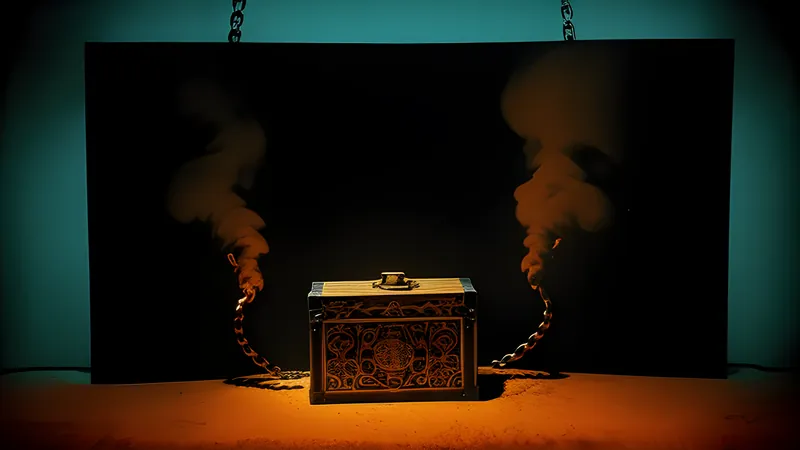
The engine of the film is the Lament Configuration, an ornate puzzle box that opens a door for anyone who solves it out of a hunger for sensation the ordinary world can no longer satisfy. This is Barker’s masterstroke. The box does not curse you; you summon it. It answers desire. Frank Cotton, a jaded hedonist who has exhausted every pleasure, buys the box precisely because he wants the experience that lies past pleasure, and the Cenobites arrive to grant his wish with a courtesy that is far more frightening than any snarl.
Their leader — billed only as the Lead Cenobite, and not christened “Pinhead” until the sequels and the marketing — is played by Doug Bradley with a stillness that reframes the whole genre. He delivers Barker’s famous self-description of the Cenobites as explorers in the further regions of experience, angels to some and demons to others, with the calm of a man reading scripture. There is no sadism in the ordinary sense, because sadism implies cruelty for its own sake. The Cenobites are curators. They believe, sincerely, that they are offering the ultimate refinement of feeling, and their sincerity is the horror. You cannot bargain with a torturer who thinks he is doing you a kindness.
A body-horror aesthetic that owes more to Bacon than to Romero
Visually, Barker was working from a different shelf than his American contemporaries. The Cenobites’ design — flesh reorganised into precise, surgical, almost devotional patterns, hooks and pins arranged with the care of religious ornament — draws on fetish subculture, on Francis Bacon’s screaming meat, on medieval martyrdom paintings where the saints display their wounds like medals. Bob Keen’s effects team gave it all a wet, ecclesiastical weight. When Frank regenerates from a stain on the attic floorboards, rising slowly as a skinless, sinewy thing, the practical effect has a grotesque grandeur, and the film shoots the resurrection like a sacrament.
This is the same argument for the handmade that runs through the era’s best body horror. The convulsing prosthetics of Carpenter’s The Thing frighten because a physical object really occupies the frame, casting real shadows and dripping real goo, and Hellraiser belongs to that same tactile tradition. Barker’s flesh is present in a way that later digital gore rarely is — you feel the latex and the blood, and the reality of the material is inseparable from the disgust. It’s the case study at the heart of any argument about what horror lost when the man in the suit died: the Cenobites work because they are craft objects, built to be lit and touched.
Christopher Young’s score seals it. Brought in after Barker’s first choice fell through, Young wrote a lush, mournful orchestral theme — strings and choir — that treats the material as tragedy and romance. The music refuses to signal “monster movie.” It signals grand opera, and it lifts the whole film onto a plane the budget has no right to reach.
The domestic rot underneath the mythology
For all its cosmic apparatus, Hellraiser is grounded in a sordid little domestic drama, and that grounding is why it holds. The supernatural plot braids into a story of adultery and appetite: Frank’s brother Larry moves into the family house with his second wife Julia, who once had an affair with Frank and never stopped wanting him. When Frank’s resurrection needs blood to complete itself, Julia becomes his procurer, luring men home to feed him. Clare Higgins plays her with a cold, growing hunger of her own, and the film’s real subject sharpens into focus: desire that has slipped its leash and started consuming everyone around it.
That braiding of the monstrous and the marital gives Hellraiser a foothold the pure gore films lack. The Cenobites are the extreme case of an appetite the whole household shares. Frank wants sensation past endurance; Julia wants Frank past all reason; and the box simply extends, to its logical and infernal conclusion, the ordinary human willingness to burn down a life for a feeling. The horror is a magnification of the domestic, which is why the domestic scenes are shot with as much dread as the hell scenes.
Where it belongs in the collection
Hellraiser is the aesthete’s entry in a decade of blue-collar slashers, and its influence runs sideways rather than straight down. It sits alongside the other great British-inflected horror provocations of the era, and it rhymes with the handmade delirium of Sam Raimi’s The Evil Dead and the dream-metaphysics of Wes Craven’s A Nightmare on Elm Street — three roughly contemporaneous films that each rejected the plain stalk-and-slash by giving horror a governing idea. Raimi’s idea was rhythm; Craven’s was dream logic; Barker’s was theology. Of the three, Barker’s has aged into the most distinctive iconography, which is also its curse: the sequels sanded Pinhead down into a quip-machine and buried the sombre, sacramental original under merchandise.
Why it still works
Strip away the franchise and the toys, and the first film remains a serious argument dressed as a shocker: that our appetites, followed far enough, arrive somewhere that looks exactly like damnation, and that we will keep solving the box anyway. Barker never lets you feel superior to Frank, because the film knows you’ve wanted something badly enough to risk yourself for it. That complicity is the theology, and it is why the film unsettles long after the gore has faded from memory. Hell, in Hellraiser, is a place you RSVP to, and the invitation was always addressed to you.
Spoilers below
Stop here if you haven’t seen it.
The moral machinery pays off through Kirsty, Larry’s daughter, played by Ashley Laurence. She discovers the horror in the attic — her skinned uncle Frank, and her stepmother Julia feeding him victims — and comes into possession of the box. Kirsty is the film’s Nancy, a young woman who survives by understanding the rules rather than merely running from them.
Her bargain with the Cenobites is the film’s cleverest turn. Having accidentally opened the box and summoned them, she buys her freedom by offering something they want more than her: Frank, who escaped their domain and is therefore an insult to their whole order. The Cenobites are creatures of covenant, and the covenant is the loophole. They agree to take Frank back if she can lead them to him.
The reveal that Frank has murdered Larry and is wearing his brother’s skin — passing himself off as Kirsty’s father — is the domestic betrayal made literal: appetite quite literally wearing the face of family. His undoing comes when he slips and speaks the phrase he always used with Julia, and Kirsty knows the thing in her father’s skin is her uncle. The Cenobites, once his identity is exposed, reclaim him with their hooks and chains, and he is torn apart mid-sentence — his last words a startled, blasphemous “Jesus wept.”
The film’s final grace note refuses tidy safety, in the tradition of its era’s best endings. Kirsty destroys the box, or believes she has, but it is retrieved by a scavenging figure who carries it back out into the world to tempt the next appetite. The covenant never closes. Somewhere, someone else is already turning it over in their hands, wanting more than the world can give — and the door is always exactly one solved puzzle away.
Related Content