Goke, Body Snatcher from Hell: The Bloodsucking Sky Horror
Shochiku's 1968 crash-site nightmare is the angriest science fiction Japan made that decade
Contents
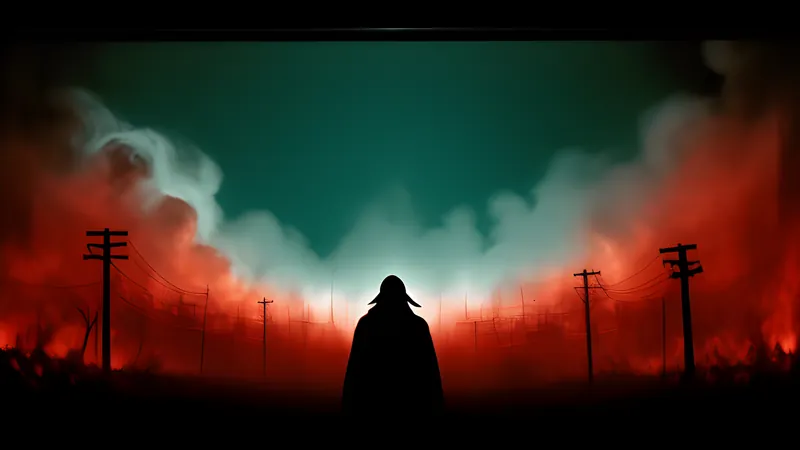
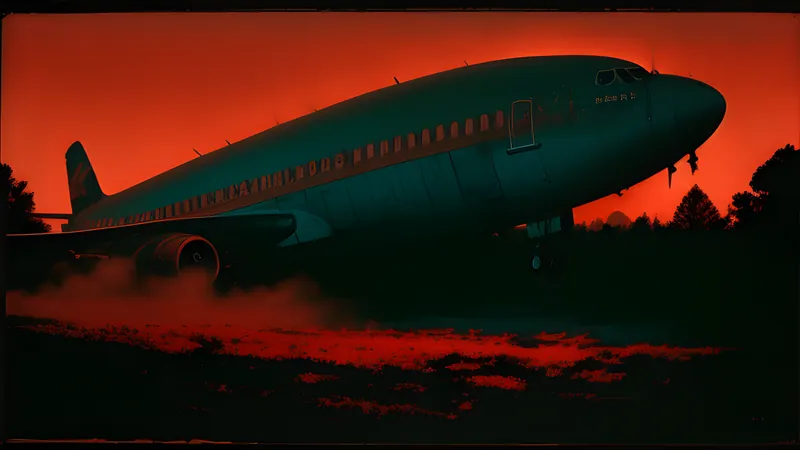
The opening two minutes of Goke, Body Snatcher from Hell are among the most confident in Japanese genre cinema, and they were made by a studio that had no business being good at this. An airliner flies through a sky the colour of arterial blood. Birds smash into the fuselage, one after another, dying against the windows. The passengers look out at a firmament that has gone wrong, and the film simply lets them look. No explanation arrives. None ever really does.
Quentin Tarantino lifted that red sky wholesale for the flight to Tokyo in Kill Bill Vol. 1, and that homage is how most Western viewers have heard of the film at all. It is a strange fate for a picture whose actual subject is that humanity has forfeited its right to the planet.
Shochiku’s fifteen minutes in the monster business
Some context, because it explains the tone. Shochiku was the prestige studio — the house of Ozu, the home of restrained domestic drama, the last outfit anyone expected to be building rubber aliens. In 1967 and 1968 the studio made a brief, strange lunge at the science-fiction and horror market that Toho and Daiei were profiting from, and produced a handful of films that look nothing like anyone else’s. The X from Outer Space, Genocide, The Living Skeleton and Goke came out of that experiment, and then Shochiku went back to what it was good at and never returned.
The result is genre film-making by people who did not grow up on genre film-making, which is exactly why Goke is so peculiar. Director Hajime Satō had no interest in the kaiju grammar Toho had spent a decade codifying. He treats the alien as a plot device and spends his energy on the passengers, who are, to a person, awful.
Satō is the other reason the film has the shape it does. He had come up making studio programme pictures — his 1966 undersea adventure Terror Beneath the Sea put a young Sonny Chiba through a mad-scientist plot with a straight face — and he was, by the standards of the assignment, a journeyman. Goke is what a journeyman does with a free hand and a bad mood. There is a recklessness in it that reads as someone who assumed nobody important would be watching, and who therefore put the whole of his opinion of the world on screen. He never got another film with this much room, and the career that followed drifted into television. Directors get one of these if they are lucky.
Eight people who deserve each other
An airliner comes down in a volcanic wasteland after a bomb threat and a hijacking. The survivors assemble, and the film’s real project begins: a systematic inventory of who these people are.
There is a corrupt politician. There is an arms-industry executive and his wife. There is a psychiatrist. There is an American woman whose husband has died in Vietnam. There is the hijacker himself. Satō distributes the guilt carefully, and the Vietnam material earns its place — the film was released in 1968, at the height of Japanese domestic argument about the American bases and the war being flown out of them, and its contempt for the arms trade is undisguised.
That date is worth sitting with. 1968 in Japan meant the student movement at full volume, the approaching renewal of the security treaty with the United States, and a national argument about complicity in a war being staged from Japanese soil. A commercial science-fiction picture built around an arms dealer, a bought politician and a war widow was making an entirely legible statement to its opening-weekend audience. The alien is the excuse that lets Satō assemble the defendants in one room.
The alien is a gelatinous blob of light that enters a human host through a slit that opens in the forehead. Once inside, it drinks. What is striking is how little the film cares about that process as spectacle. The possessed move slowly, the attacks are brief, and Satō consistently cuts away from the monster to watch the survivors negotiate over who gets sacrificed next. Each death is preceded by an argument, and the arguments are the horror.
Why it works: colour as a moral position
Goke is one of the great colour films of the period, and the palette is doing the thinking.
The sky is red. The wasteland is grey volcanic rock. The alien is a shimmering, poisonous yellow-green. There is no naturalism anywhere in the frame, and that is the argument — the film has stopped pretending this is a world worth photographing accurately. Cinematographer Shizuo Hirase shoots the crash site in flat, hot, hard light that gives the survivors nowhere to hide, then floods the possession sequences with saturated colour that belongs in a different film entirely. The clash is deliberate. The alien arrives with a visual language the human world cannot absorb.
The forehead-slit effect is the money shot and Satō knows to use it sparingly. It works because of the sound design more than the optics: a wet, unhurried noise, played against a face that has stopped registering anything. The horror is the calm.
The possessed themselves are played with a stillness that does more than the makeup does. A possessed passenger stops arguing. That is the tell, and it is a clever one in a film where arguing is the only thing anyone does — the moment a character falls silent and simply looks at you, the audience knows before the survivors do. Satō gets to skip the transformation scene entirely and let the actors carry it, which is both a budget decision and the best idea in the film.
Satō also does something quietly radical with the aircraft interior. Once the survivors leave the wreck, he keeps returning to it — a broken tube of civilisation lying in the rock, seats still in rows, the last piece of the ordinary world available to them. They shelter in it because there is nowhere else, and every time the camera goes back inside, the aircraft looks more like a coffin and less like transport.
The collector’s cross-reference
The direct ancestor is Nigel Kneale. Quatermass and the Pit had established the shape a year earlier in its film version — an alien intelligence that turns out to have been curating human violence all along, and a scientific frame that keeps the horror intellectual. Satō takes the Kneale premise and removes the scientists, which removes the hope.
The other ancestor is The Twilight Zone, specifically the strain of episode where the aliens land and then stand back to watch the neighbourhood tear itself apart. “The Monsters Are Due on Maple Street” is the template, and Goke is that idea given a feature length and a war to be angry about.
Its true sibling is Matango, Honda’s 1963 castaway film, which strands a comparable cross-section of Japanese society somewhere with no exit and reaches an equally low opinion of them. Watch the two together and you have a complete picture of what the Japanese genre film was quietly saying about the post-war settlement while the monster suits distracted everyone. The broader lineage is charted in our Japanese horror essential ten.
Downstream, the debt is mostly aesthetic. Tarantino took the sky. The wider strain of “small group of survivors at an apocalypse’s opening bell, discovering the species is the problem” runs through everything from Romero onwards — and Romero’s Night of the Living Dead came out the same year, on the other side of the world, with the same nerve and the same refusal to let anyone off.
The case against
The alien effects are cheap and occasionally silly. The possession makeup is a step down from what Toho could do. The English dub, which is how the film circulated for decades under the title Goke, Body Snatcher from Hell, is flat enough to sabotage the performances.
The deeper problem is the script’s efficiency. The characters are types, drawn quickly and sharply, and the film asks you to accept them as a representative sample of the species. That is a fair satirical move, and it also means nobody in Goke is a person. The film’s misanthropy is total, which makes it bracing and slightly airless — there is no one to lose, so the deaths land as arguments rather than as grief. Matango is the better film on that count, because Honda bothered to make you like a couple of them first.
The verdict
Goke is a 1968 film that looks and behaves like nothing else from 1968, made by a studio that had no tradition to protect and therefore broke every rule available. It is short, it is furious, and it has a final movement that almost no mainstream science fiction has dared to repeat. Arrow’s restoration of the Shochiku horror run is the version to find; the film is also a fixture on the cult-cinema streaming services, and any decent transfer will show you why the colour matters.
If you have only seen the red sky in Kill Bill, you have seen the packaging.
Spoilers below
The ending is the reason the film survives.
Two survivors — Sugisaka the co-pilot and Kazumi, the American widow — make it out of the wasteland and walk to the nearest road. The relief beat is set up perfectly: the ordinary world, tarmac, the promise of a town. What they find is a highway lined with abandoned cars and corpses. The Gokemidoro have been busy everywhere. The rescue that the entire film has been driving toward does not exist, because there is nothing left to be rescued into.
Then Satō pushes further. The camera pulls back and up, and the sky is full of them — a fleet of ships, arriving, unhurried. A narrator explains that humanity brought this on itself. The film ends on a shot of the Earth from space with the ships closing in, and that is the entire epilogue. No last stand, no coda, no survivors’ embrace.
What makes it land is the arithmetic the film has already done. For eighty minutes the survivors have demonstrated, in miniature, exactly why the Gokemidoro made this decision. The politician lies. The executive calculates. Everybody trades somebody. By the time the ships appear, the film has already put the case for the prosecution and rested it. The aliens are not a threat to the moral order in Goke. They are the auditors.
Romero ended Night of the Living Dead the same year by having a posse shoot the hero and burn him with the rest. Satō ended his by shooting the planet. 1968 was in a mood.
Related Content