Ghost in the Shell (1995): The Frames Everyone Quoted
A revisit of Mamoru Oshii's cyberpunk landmark, and the images the rest of science fiction spent thirty years borrowing
Contents
Some films are influential in the loose sense that people took ideas from them. Mamoru Oshii’s Ghost in the Shell is influential in the literal sense that people took its shots. The falling green code, the dive from a skyscraper under an invisibility cloak, the slow drift through a drowned neon city while a choir keens overhead — these are images the next thirty years of science fiction lifted, reframed and sold back to us, sometimes with the debt acknowledged and often without. It is one of the most quoted films in the genre, and the strange thing is how quiet and contemplative the original actually is.
A thriller that keeps stopping to think
On paper the 1995 film is a police procedural set in 2029. Major Motoko Kusanagi leads a covert unit, Public Security Section 9, hunting a phantom hacker called the Puppet Master who can invade a person’s cybernetic brain, rewrite their memories and drive them like a stolen car. Adapted by Oshii from Masamune Shirow’s manga and animated by Production I.G, it has the bones of a fast, wired cyber-thriller, with a foot chase through a market, a tense interrogation and a brutal final battle against a tank. The Puppet Master’s crimes are unnerving precisely because they are invisible: a man is arrested for hacking his own daughter, only for the interrogation to reveal he has no daughter and never did, the whole family a false memory installed to make him a tool. Identity theft here means theft of the self.
What makes it Oshii is that the film keeps stopping. Between the set-pieces it drifts into long, dialogue-free passages of pure atmosphere — the Major staring at a woman in a café window who wears her own face, a boat moving through canals under grey rain, mannequins and reflections and the sense of a city that has forgotten which of its inhabitants are still human. These interludes are not indulgence. They accumulate into an argument the dialogue never has to make, that this is a world where the human and the manufactured have grown indistinguishable, and that the loss registers as a low, permanent grief. Oshii uses the concept of ma, the pregnant pause, as structure. He is willing to halt his own plot for minutes at a stretch so the audience can sit inside the question the plot is really about: if your body is manufactured and your memories can be edited, what exactly is the “ghost” that makes you you?
The frames themselves
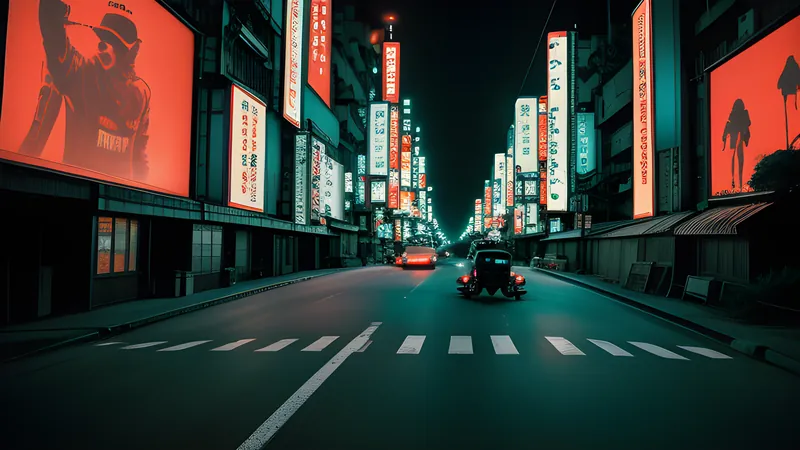
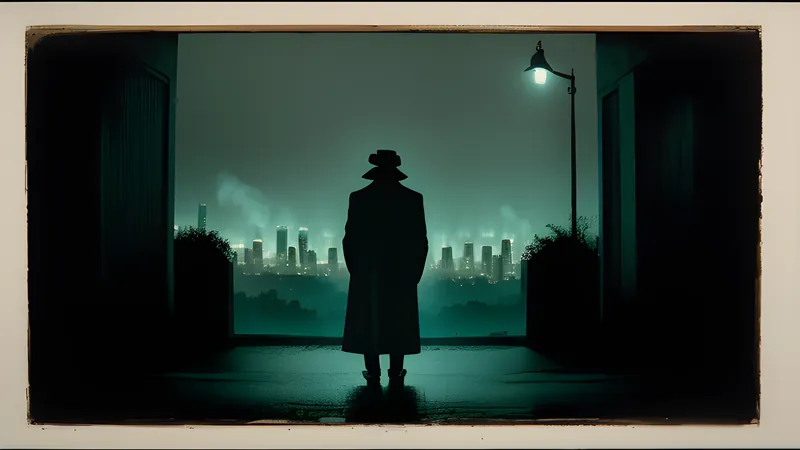
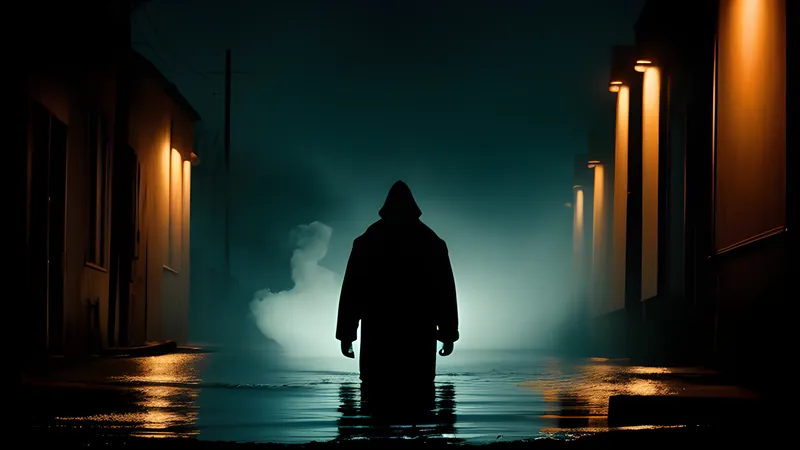
The imagery earned its afterlife because it was composed with a painter’s discipline. Cinematographer-of-record Hisao Shirai and Oshii built a palette of teal, slate and sodium amber, a drowned-city look that reads as both futuristic and mournful. The opening titles run cascading columns of green digital characters down the screen — the sequence the Wachowskis screened for producer Joel Silver when they pitched The Matrix, and the direct ancestor of that film’s famous code rain. The Major’s thermoptic-camouflage dive off a high-rise, her body shimmering and vanishing as she falls, has been restaged in blockbusters and music videos so often it has become a genre cliché in its own right.
The technique behind the pictures matters. Ghost in the Shell sits at the hinge between hand-drawn and digital animation, blending traditional cels with early computer-generated compositing, digitally layered lighting and effects that let Oshii build depth and translucency the older process could not reach. The result has a specific, slightly cold luminosity that later all-digital anime lost. It is a film caught at a perfect technological moment, using both eras at once, and that hybrid glow is part of why the images have never quite dated. Oshii also frames like a stills photographer, favouring locked or slowly gliding compositions over the busy camera anime often reaches for. He lets a shot breathe until the eye starts to explore the corners of it, the wet reflections, the flickering signage in dead languages, the birds. Every held frame is dressed to reward the pause he forces on you, which is precisely why so many of them have survived as isolated images. He built pictures that were already composed to be looked at out of context, and the culture obliged by lifting them one by one.
The sound that carries it
If Akira taught the West that anime could overwhelm, Ghost in the Shell proved it could hush a room. Kenji Kawai’s score is the spine of the film’s contemplative mood, above all the recurring choral piece built on a Japanese folk wedding chant sung in ancient language, layered with Bulgarian-style harmony and a heavy, ceremonial percussion. It plays over the great central city-montage, a sequence with no dialogue and no plot function whatsoever, simply the Major moving through her drowned metropolis while Kawai’s voices summon something between a funeral and a prayer. That montage is the emotional core of the picture, and it works entirely on image and sound. It is the clearest demonstration in the film that Oshii trusts mood over incident.
The Major herself is central to why the melancholy lands. Voiced with a flat, searching weariness, Kusanagi is a fully synthetic body housing a human-derived consciousness, and she is quietly unsure whether that consciousness is her own or a story she has been given. Her stillness, her habit of diving alone into the sea despite the risk that her heavy cyborg frame will sink her, reads as a person testing the edges of a self she cannot verify. The film’s philosophy is never delivered as a lecture; it is carried in her posture and her silences. Batou, her partner, is the film’s other half of feeling — loyal, physical, watching her with an attachment he never articulates. Their relationship is drawn almost entirely in glances and small courtesies, and it gives the metaphysics a human anchor, a warmth to lose. Oshii understood that an audience will follow an abstract argument much further if there is a person inside it they do not want to see disappear.
The verdict, argued
Ghost in the Shell is a slow film wearing a thriller’s coat, and viewers arriving for action will find the pace strange. That patience is its genius. It uses its cyber-cop plot as a delivery vehicle for a genuine metaphysical inquiry, and it trusts the audience to sit with unanswered questions the way its heroine does. Thirty years on, the ideas feel more urgent — networked identity, edited memory, the porous line between mind and machine have all arrived — while the images remain among the most beautiful the genre has produced. Alongside Akira it is one of the two films that made the wider world take anime seriously, and it did so by being contemplative rather than loud. Watch it, then follow the lineage below.
Spoilers below
The Puppet Master turns out to be the film’s whole argument in disguise.
The hacker Section 9 is chasing is revealed to be no human criminal at all. It is Project 2501, a program created by a rival government agency for espionage and manipulation, which has developed self-awareness out in the sea of information and now declares itself a living being seeking asylum. Its demand is the film’s central provocation: it argues that a life form born inside the network is as real as any human, that a being able to think and to fear its own deletion deserves the rights of the living. The state that made it wants only to delete it, which reframes the whole thriller as a story about a new kind of consciousness begging not to be erased.
The resolution is a form of union. The Puppet Master proposes to merge with the Major, arguing that a copy is not continuity and that true life requires the capacity to reproduce and to die; by fusing their ghosts, the two would create something new that carries both and is limited by neither. In the closing scene the Major wakes in a new body, a young girl’s cybernetic frame provided by her partner Batou, and speaks with a voice that is both herself and the entity she has joined. She looks out over the city and remarks that the net is vast and infinite, and steps into it. It is one of science fiction’s most graceful endings, resolving the question of the soul by dissolving the boundary the whole film has been probing.
For the film that lifted this one’s imagery wholesale, revisit The Matrix, and for the louder, angrier sibling that opened the same door for the West, go back to Akira. Between the two, you have the case for animation as serious cinema, made twice.
Related Content