Ghost Dog: Jarmusch's Samurai-Code Hit Man
Forest Whitaker, a rooftop full of pigeons, an RZA score, and a mafia that cannot pay its rent

Contents
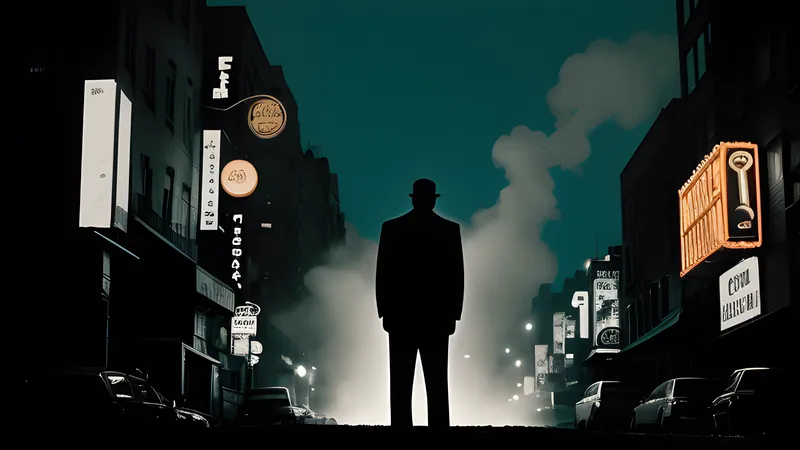
A man lives on a rooftop in an unnamed American city with a loft full of carrier pigeons. He works as a contract killer for the local mafia, and he communicates with his employer exclusively by bird. He has never used a telephone. He drives cars he steals with a laptop, kills with unfussy efficiency, and reads and re-reads an eighteenth-century Japanese manual on the samurai’s proper conduct, which he applies, without irony, to the business of shooting men in New Jersey.
Ghost Dog: The Way of the Samurai (1999) is Jim Jarmusch’s funniest film and his saddest, and the two qualities are produced by the same mechanism. Forest Whitaker plays it with total sincerity. Everyone around him is a shambles. That gap is the movie.
What it is
Ghost Dog (Whitaker) serves a mob soldier named Louie (John Tormey) because Louie saved his life years ago in an alley. In the retainer relationship as Ghost Dog understands it — from the Hagakure, Yamamoto Tsunetomo’s early-1700s compilation on the way of the warrior, which Jarmusch quotes on screen in intertitles throughout — that debt makes Louie his master for life. Louie, who is a middling wiseguy with a bad haircut and a boss he is frightened of, has never quite grasped what he has acquired.
The organisation Louie belongs to is falling apart. Ray Vargo (Henry Silva) is the boss, ancient and mostly silent. Sonny Valerio (Cliff Gorman) is his number two, who watches cartoons and raps along to hip-hop in his kitchen. They meet in the back of a Chinese restaurant, they are behind on the rent, and their soldiers are pensioners. A job goes wrong in a way that leaves the family with a reason to want Ghost Dog dead, and the film’s second half is the consequence.
Ghost Dog’s real life is elsewhere: on the roof with the birds; with Raymond (Isaach De Bankolé), a Haitian ice-cream vendor who speaks only French and understands not a word Ghost Dog says, and with whom he has the most successful friendship in the film; and with Pearline (Camille Winbush), a small girl with a lunchbox full of books, who is the only person he lends anything to.
Why it works: the mechanics of a straight face
The comedy is entirely structural. There is no joke in the dialogue. Jarmusch simply places a man who genuinely believes in feudal Japanese ethics inside an organisation of tired Italian-American men who believe in nothing at all, and lets the two systems fail to interface. Ghost Dog bows. Louie has no idea what to do with his hands. Ghost Dog announces that he is a retainer; the mob thinks he means an employee. Every scene between them is a translation error, and Jarmusch never once cues you to laugh.
Robby Müller shoots the ordinary world as if it were holy. Müller — who had just shot Dead Man for Jarmusch, and Breaking the Waves for Von Trier — lights the rooftop, the vacant lots and the ice-cream cart with the same reverence a lesser film would spend on the hits. The city is beautiful in a way nobody in it has noticed. That is what makes Ghost Dog’s discipline read as devotion rather than delusion: the camera agrees with him.
RZA’s score is doing the argument that the script leaves out. The film’s central proposition — that an eighteenth-century Japanese warrior code and late-90s American hip-hop are two expressions of the same thing, a discipline built by people with no institutional power — is never stated by any character. It does not have to be, because the Hagakure intertitles arrive over RZA’s beats, in the same rhythm, for two hours. Wu-Tang had been running Shaw Brothers samples through New York for years; Jarmusch cast the actual architect of that fusion to score a film about it. The idea lives in the sound design.
The violence is efficient and then it stops. Ghost Dog kills without ceremony — he is in the room, it is done, he leaves — and Jarmusch then holds on the aftermath a beat too long, on the mess, on somebody’s shoe. The most celebrated kill in the film comes up through a sink drain, and it is played entirely for plumbing. Reduce a hit to a piece of household maintenance and the audience stops enjoying it as spectacle.
Whitaker is the reason all of this stands up. He plays Ghost Dog heavy, slow, gentle, and completely certain, and he never signals that he knows the situation is absurd. A single wink and the film would collapse.
The real ancestor
Jarmusch has named Le Samouraï and everyone repeats it, correctly. Melville’s Jef Costello wears the trench coat, keeps the birds — a bullfinch, not a loft of pigeons — obeys a code, and dies of it. The surface debt is total, and if you want the case for that film as the coldest thing in crime cinema we made it at length in Le Samouraï.
But Melville’s world is immaculate. Costello’s Paris is spotless, the police are formidable, the underworld is efficient, and the code is beaten by a machine that works better than he does. Nothing in Jarmusch’s film works at all.
The real ancestor is Seijun Suzuki’s Branded to Kill (1967), the film that got its director fired for being incomprehensible. Suzuki’s killer belongs to a national ranking system of assassins, sniffs boiling rice for pleasure, and serves an organisation so ludicrous it eventually stops resembling a business at all. The joke is that a killer’s code is bureaucracy — a set of rituals invented to give a squalid job the dignity of a profession. That is precisely Jarmusch’s joke, transposed to a mafia that meets above a restaurant and cannot make the numbers work. Ghost Dog’s Hagakure and Hanada’s rice ritual are the same object.
The rest of the shelf: Murder by Contract is the 1958 American original of the killer-as-tradesman, made for pennies and better than it has any right to be. Dead Man is this film’s twin — Jarmusch made it four years earlier and it runs on the identical device: a man living by a text from another culture that he has read more carefully than anyone around him. Gary Farmer even turns up here as the same character, delivering the same line, which is either a joke about reincarnation or Jarmusch admitting he made the same film twice. And the spaghetti western’s debt to the samurai film covers the earlier round of the same cultural laundering, which Ghost Dog is knowingly completing.
The case against
The mafia material is thin. Jarmusch is writing gangsters as a genre in decline, which is defensible, and the result is that Vargo, Sonny and the rest are collections of tics rather than threats. The film has no antagonist worth Ghost Dog’s discipline, and a story about a code needs something to test it. What it has instead is a set of old men who are funny for ninety minutes and then have to become dangerous on cue.
The cool is also, occasionally, a substitute. Jarmusch’s deadpan is a superb instrument for the culture-clash comedy and a poor one for grief; when the film needs to feel something in its last twenty minutes, it reaches for a slow zoom and a Wu-Tang cue and hopes.
And the film is generous to its central idea in a way that a sharper picture might have interrogated. Ghost Dog has borrowed a code from a culture that is not his, filtered through a translated book, and applied it to murdering people for a criminal organisation. The film loves him for it. There is a version of Ghost Dog that asks whether the Hagakure is a route to dignity or a very elaborate way of not thinking about what you do for a living, and Jarmusch declines to make it.
The verdict
It has aged into the best thing on Jarmusch’s shelf after Dead Man, and the reason is Whitaker. He builds a man whose absurdity and whose nobility are the same fact, and he refuses to let you resolve it. Watch the scenes with Raymond: two men who cannot understand a syllable of each other’s speech, saying the same things at the same time, delighted. That is the film’s real thesis about codes — a system of meaning works because you commit to it, and the commitment is what other people can feel.
Everything around Ghost Dog is broke, stupid and dying, and he behaves impeccably in the middle of it. That is either a punchline or a way to live. Jarmusch spends two hours declining to choose.
It streams widely and has had a very good disc restoration; the RZA score justifies whatever your sound system can manage.
Spoilers below
The job that starts it: Ghost Dog is sent to kill Handsome Frank, a family man who has taken up with Vargo’s daughter Louise (Tricia Vessey). He does it correctly. The problem is that Louise is in the room — reading Rashomon, which the film hands to you with a completely straight face — and a witness makes the whole thing untidy. She gives Ghost Dog the book on his way out. He passes it to Pearline. Akutagawa’s story about four accounts of a killing that cannot be reconciled is now circulating through the film like evidence.
The family decides Ghost Dog has to go, which means Louie has to give him up, which under the code means Ghost Dog’s master has ordered his death. He accepts this without a flicker. Then he goes to work.
He kills the mob almost casually — through walls, through car floors, and in the film’s most quoted sequence, up through the drain of a bathroom sink while Sonny Valerio is standing over it. The organisation’s total inability to defend itself is the point. These men had a hit man because they had no capability of their own, and once he turns around there is nothing left in the building.
Raymond and the bear: Ghost Dog and Raymond come across two hunters standing over a black bear they have shot for entertainment. Ghost Dog asks why. They are contemptuous. He kills them both, without heat, and it is the only killing in the film he does for himself. It is also the only one the film endorses.
The ending is the code paying out. Ghost Dog walks into the street where Louie is waiting with Louise, having already emptied his own gun. He tells Louie the score has to be settled by the master, draws the empty weapon, and lets Louie shoot him twice. He dies on the pavement with Pearline watching, and Louie — who never understood a single thing about the arrangement — is left standing over the body of a man who has just committed suicide using him as the instrument, and does not know that is what happened.
Louise, who now runs the family, tells Louie the Hagakure is his. He hands it to Pearline. The last thing in the film is a small girl on a kerb, reading Yamamoto Tsunetomo, in a city where the mob is finished and the pigeons are gone. Jarmusch has spent two hours suggesting that a borrowed code is a joke. Then he gives it to the next reader, on the same page, and lets you decide what she is going to do with it.
Related Content