Get Carter (1971): Caine, Concrete, and No Redemption
Mike Hodges's Newcastle revenge picture stripped the British crime film of every last excuse
Contents
Michael Caine spent the 1960s playing charmers — the cheeky spy, the cockney lothario, the working-class boy with a twinkle. In 1971 he walked into Get Carter and turned all of that inside out. Jack Carter is charm weaponised: the same smooth voice, the same crisp suit, aimed now at hurting people. It is the best performance of Caine’s career, and it anchors what has a strong claim to be the coldest, hardest crime film Britain has ever produced.
Get Carter was the directorial debut of Mike Hodges, adapted from Ted Lewis’s 1970 novel Jack’s Return Home. The setup is pure revenge tragedy. Jack Carter is a London gangster’s enforcer who travels north to Newcastle for the funeral of his brother Frank, who has died in what the locals insist was a drunk-driving accident. Carter does not believe it. He starts asking questions, and the questions pull the lid off a squalid provincial underworld of pornographers, fixers and small-time bosses. The more he learns, the more implacable he becomes.
The north as a battlefield
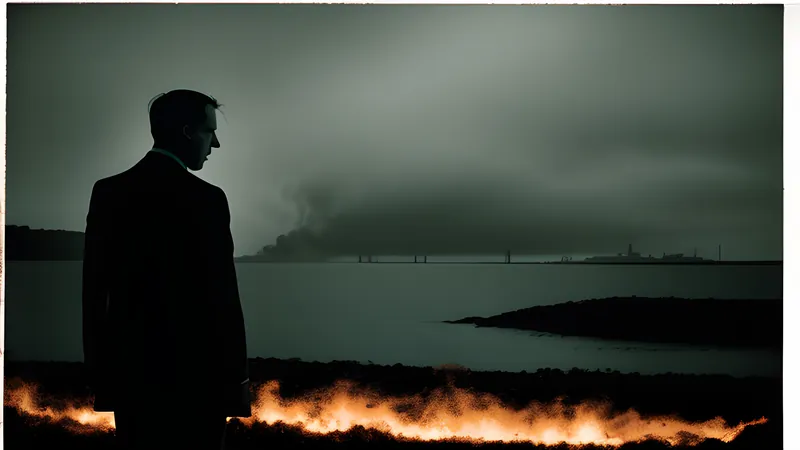
What sets Get Carter apart from the London-centric crime films around it is its landscape. Hodges shot on location in and around Newcastle and Gateshead at the start of the 1970s, and the film is soaked in a specific, vanishing world: terraced streets, smoking chimneys, the coal-blackened coastline, and the raw new brutalist architecture then rising over the old industrial north. The multi-storey Trinity Square car park in Gateshead — a grey concrete ziggurat, since demolished — becomes one of the film’s great settings, a monument to a bleak modernity.
Hodges uses this environment as more than backdrop. The concrete, the grimy rivers, the coal chutes tipping their black loads into the sea: these are the moral weather of the film. There is no beauty offered as consolation, no warmth to soften the violence. Carter moves through this landscape like a shark through cold water, and the place seems to have produced him. The film understands that the character and the country that made him are the same substance.
Roy Budd’s score is crucial to the effect. Working on a tiny budget, Budd built the main theme around a spare, hypnotic harpsichord-and-percussion figure, a piece of music at once elegant and menacing, and it plays under Carter’s opening train journey north like a countdown. It has since become one of the most recognisable pieces of British film music, sampled and imitated for decades.
Caine’s total coldness
The performance is a marvel of withholding. Caine plays Carter with almost no visible anger; he is polite, watchful, economical, and that is exactly what makes him terrifying. He is a professional, and he treats the people he threatens with the bored courtesy of a man doing paperwork. Caine himself said he wanted to make Carter genuinely frightening, a corrective to the glamorous gangsters British cinema had been serving up — a portrait of the reality behind the myth.
The film gives him one flicker of feeling, and it is worth flagging without spoiling: when Carter’s investigation leads him to a particular piece of evidence about what really happened to his family, the mask slips, and Caine lets a wave of genuine horror and grief break through the ice. It is the only moment Carter is not in control, and Caine plays it so nakedly that it recalibrates the whole film around it. Everything before is method; that one scene is the wound driving the method.
The women of Get Carter are worth pausing on, because the film’s bleakness extends to them without ever letting Carter off the hook. Britt Ekland appears as his boss’s mistress, conducting a notorious phone conversation with Carter that is all the more disquieting for its casual cruelty. Geraldine Moffat and Dorothy White play figures caught in the local rackets whom Carter uses and discards with the same coldness he shows the men. Hodges never asks us to admire Carter’s treatment of them; he simply records it, part of a wider refusal to let a single character in this world stand as a moral anchor. The playwright John Osborne, cast against type as the smooth crime boss Cyril Kinnear, completes the portrait of a north run by soft-spoken predators in nice houses.
Why it works
Get Carter works because of its absolute refusal of the escape hatches the genre usually offers. There is no redemption arc, no honour among thieves, no last-minute moral awakening. Carter is not a good man forced to do bad things; he is a bad man doing bad things for a reason we happen to sympathise with, and Hodges never lets us forget the distinction. The film’s violence is sudden, unglamorous and often committed against the nearly helpless. It denies the viewer the pleasure of clean vengeance even while delivering vengeance.
That austerity is the point. Hodges made a film about the machinery of revenge stripped of the usual lubricant of sentiment, and the result is bracing half a century on, when so many revenge pictures ask us to cheer. Get Carter refuses to let you cheer, and it is the greater film for it.
The real ancestor of this film is John Boorman’s Point Blank, the 1967 Lee Marvin picture that Hodges and his contemporaries clearly absorbed — the same figure of the implacable professional walking through a hostile modern landscape to collect a debt, the same refusal of psychological softening. Boorman fractured his revenge story into dreamlike shards; Hodges tells his in a cold, linear, procedural line, but the DNA is unmistakable. And Get Carter’s long shadow falls directly across the British gangster tradition that followed, above all The Long Good Friday, which took Carter’s concrete-and-class realism south to London and gave it an epic, political scale.
A verdict, argued
For years Get Carter was undervalued, dismissed by some contemporary critics as merely brutal. Time has been kind to it, and it now sits near the summit of British cinema — a film whose refusal of comfort looks braver, not lesser, with each passing decade. It is beautifully made, superbly acted, and utterly uncompromising, and it gave Michael Caine the role that proved how much menace lived under the charm.
If you have only ever seen the 2000 American remake with Sylvester Stallone, set it aside entirely; it misunderstood everything that made the original matter. Seek out the 1971 film, ideally in a restored transfer that lets Wolfgang Suschitzky’s cinematography breathe, and let Roy Budd’s theme carry you north. It is the hardest of all British crime films, and half a century on it has not softened by a single degree.
Spoilers below
The ending is the film’s whole moral argument, so stop here if you have not seen it.
Carter’s investigation eventually uncovers the reason his brother was killed. Frank had learned that his teenage daughter, Doreen — who may in fact be Carter’s own child — had been coerced into appearing in a pornographic film produced by the local crime boss’s operation. Frank was murdered to keep him quiet. When Carter is shown the film itself and recognises the girl, his composure finally shatters; it is the one moment the professional becomes a grieving man, and it is what turns his mission from a job into an annihilating rage.
From there Carter becomes an engine of destruction, working his way up the chain and killing everyone responsible with methodical cruelty. He drowns one man, forces a fatal overdose on the woman who abetted the scheme, and hunts the rest across the industrial coast. There is no triumph in any of it. Hodges shoots the violence as grim labour, and Carter’s success only deepens the sense that he is beyond saving.
The final scene is the masterstroke and the reason the film refuses redemption. Having killed the last of his targets on a bleak, coal-blackened beach — tipping the body into the sea amid the industrial slag — Carter stands victorious at the water’s edge, his revenge complete. And then a hired sniper, arranged by the very forces Carter thought he had beaten, takes aim from the coastal machinery and shoots him dead. Carter never even sees it coming. He collapses on the shingle, his gun dropping into the tide, and the film simply ends.
It is a devastating final rhyme. Carter spent the whole film as the unstoppable predator, the man always one step ahead, dispensing death to lesser men. And in the last seconds he is revealed as just another body on the same conveyor belt, killed as casually as he killed others, on the same grey coast, by the same indifferent machine. There is no justice in it and no meaning offered — only the concrete, the cold water, and the tide coming in over a dead man who thought he had won.
Related Content