From Beyond: Gordon and Yuzna's Sensory Nightmare
The follow-up to Re-Animator turned a two-page Lovecraft story into a fever of pineal glands and pink light
Contents
Stuart Gordon adapted his first Lovecraft film from a story the author wrote as a joke. For his second he did something harder. “From Beyond” is barely two thousand words long, a slip of a tale Lovecraft drafted in 1920 in which a scientist builds a machine that stimulates a dormant sense in the human brain and shows two men the seething, invisible life that fills the air around them. There is almost no plot in it, only a premise and a shudder. Gordon and his Re-Animator team saw in that shudder a whole film, and in 1986 they turned a footnote into one of the strangest studio-orbit horror pictures of the decade.
The reunion is the first thing to note. Jeffrey Combs returns, playing the timid Crawford Tillinghast rather than a driven genius; Barbara Crampton returns as the psychiatrist Dr Katherine McMichaels; Brian Yuzna produces again and Dennis Paoli writes again; Richard Band scores again. This is the Re-Animator repertory company doing a second play, and part of the pleasure is watching the same actors invert their previous roles. Combs, who played the man dragging everyone into damnation, is here the man being dragged.
The Resonator, and horror you can almost smell
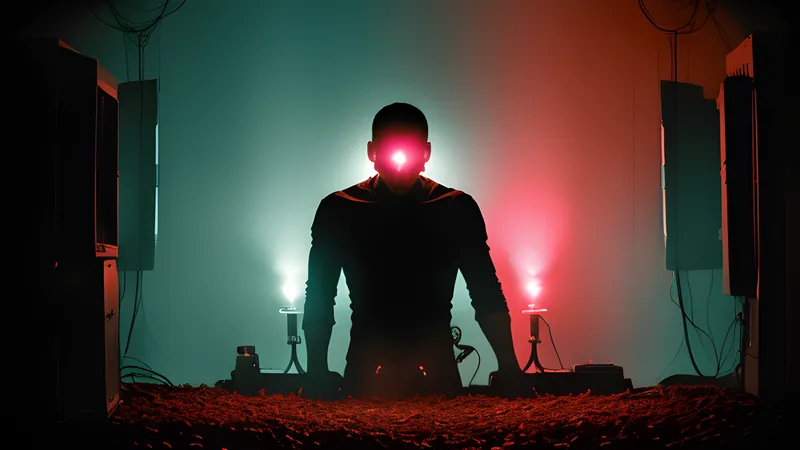
The device at the film’s centre is the Resonator, a humming brass-and-glass contraption that stimulates the pineal gland, the pea-sized organ Descartes once nominated as the seat of the soul. Switch it on and the characters can perceive a parallel plane crawling with translucent, eel-like creatures that have been sharing the room all along. That is the film’s engine, and it is a beautiful piece of science-fiction logic, because it makes horror a matter of perception rather than invasion. The monsters were always here. The machine only opens your eyes. The pineal gland is a real inspiration for the conceit, a light-sensitive organ buried deep in the brain that has attracted mystical claims for centuries, and Paoli’s script wrings genuine unease from making that speck of tissue the switch between our world and the abattoir next door.
What Gordon does with the premise is aim it squarely at the body. Where Re-Animator was a farce about death, From Beyond is a delirium about the senses, and specifically about the way pleasure and pain sit next to each other in the nervous system. Stimulating the pineal gland does not only reveal the creatures; it awakens appetites, and the film follows its characters as the machine remakes them from the inside. Crawford’s forehead begins to bulge as his own pineal gland swells and eventually protrudes, a wet stalk questing out of his skull, and the image is both ridiculous and genuinely unnerving because Gordon shoots it with the same theatrical seriousness he brought to the first film.
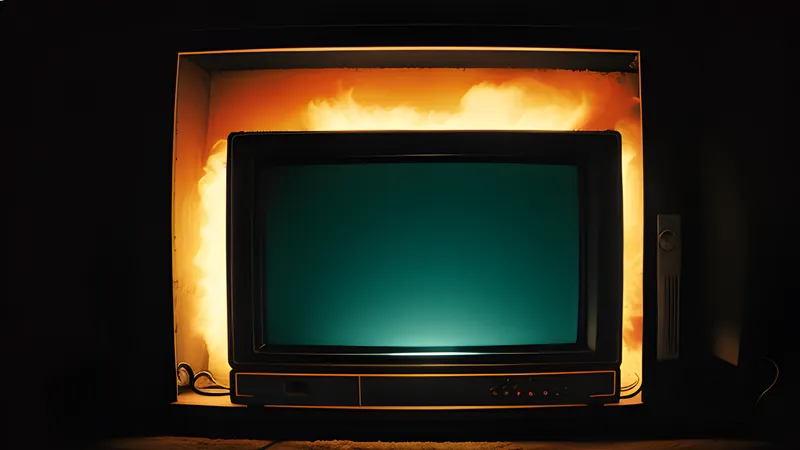
The colour is the great formal achievement here. Cinematographer Mac Ahlberg drenches the Resonator scenes in throbbing magenta and violet, a bruised, glandular pink that no other horror film of the period was using, and it turns the screen into something you feel in your teeth. Long before the monsters arrive, the light tells you the air itself has gone wrong. This is horror as a full sensory assault, and it earns comparison with the way Cronenberg made the television screen carnal in Videodrome: both films argue that a machine can reach into the body and rewrite what it wants.
Effects that push past taste on purpose
The creature and makeup work, overseen by a large effects crew, is where From Beyond stakes its cult reputation. Ted Sorel plays Dr Edward Pretorius, the mentor whose experiment opens the film, and his transformation across the running time is a study in escalating grotesquerie, a man becoming a mound of hungry, mutating tissue that reaches for the other characters like something turned inside out. Ken Foree, the level-headed hero of Romero’s Dawn of the Dead, is here as Bubba Brownlee, the muscle brought along to keep everyone sane, and the film enjoys putting the calmest man in the room through the worst of it.
The effects are relentless, and some of the most extreme material was trimmed before release to secure a rating, which is why the restored versions circulating now feel noticeably more savage than the cut many of us first rented. What matters is that none of it is played for the wink. Gordon’s discipline is consistent across both Lovecraft films: keep the actors sincere, keep the camera steady, let the horror be as excessive as the effects team can manage, and never signal to the audience that it is allowed to relax. That refusal to release the tension is what separates his work from the knowing splatter comedies that flooded the shelves beside it.
Yuzna’s fingerprints matter too, and they point forward. As a producer he was clearly absorbing lessons about how far a body could be pushed on screen, and three years later he would direct Society, a film whose climactic melt of intertwined flesh is unimaginable without the apprenticeship of From Beyond. If you want to trace how a single creative circle developed a grammar for the mutable body across the eighties, this is one of the load-bearing films.
Combs and Crampton are the reason the excess never tips into camp. In their first film they anchored a farce; here they anchor a delirium, and the trust the audience has already invested in them from Re-Animator is quietly load-bearing. When Crampton’s composed psychiatrist begins to unravel, we believe it because we watched her hold the centre once before, and Gordon is clearly aware that casting the same two faces buys him a shorthand no new actors could. The repertory-company approach is not nostalgia; it is an efficient way to make an outlandish premise land, because familiar performers let a director spend his running time on transformation instead of introduction.
Where it sits on the shelf
From Beyond is the more ambitious of Gordon’s two Lovecraft pictures and the less perfect, and both statements are true because it reaches for something the first film never attempted. Re-Animator is a machine that runs flawlessly on a single joke. From Beyond is trying to dramatise perception, addiction and desire all at once, and it occasionally strains under the load, particularly in a middle stretch where the psychiatric framing threatens to slow the delirium. When it works, though, it reaches a register of hallucinatory dread that its predecessor never wanted.
Its true ancestors lie outside cinema, in the fiction it comes from, that strain of Lovecraft obsessed with hidden dimensions pressing against our own. Its cousins are the sensory science-fiction horrors that treat the mind as a door: the Clive Barker adaptations arriving at the same moment, Ken Russell’s Altered States a few years earlier, with its own scientist chasing a forbidden state of consciousness and paying in flesh. And its children are every later film that argues the real horror lies in the machine that lets you see it.
Where to watch: seek the fully restored version that reinstates the effects footage removed for the original rating, since the film’s whole argument is about excess and a sanitised cut undercuts it. Watch it late, watch it loud, and let the pink light do its work.
Spoilers below
The transformation of Crawford Tillinghast is the film’s spine and its saddest idea. Combs begins as a nervous, sympathetic man and is remade by the Resonator into something that craves the very stimulation destroying him, and the pineal stalk erupting from his forehead becomes a grotesque new sense organ that pulls him toward the creatures rather than away. The film’s cruellest turn is that this new appetite is sexual and predatory, and it corrupts him by degrees; Katherine’s own arc, as the machine draws out desires her clinical composure had buried, is the film’s genuinely unsettling core, and Crampton commits to it without flinching.
Pretorius is the warning made monstrous. Killed in the opening minutes, he is transformed, existing now on the other side of the Resonator’s veil as a shifting mass that keeps reaching back through, hungry to pull the living across. He is what Crawford is becoming, and the film’s structure is essentially a countdown to see whether Crawford can be stopped before he completes the same journey. The horror is dynastic: the mentor’s fate is the pupil’s future, and the machine is the inheritance.
The climax, in which Crawford consumes the swollen pineal matter and the whole enterprise collapses into a final devouring image, refuses the clean victory. Katherine survives physically, but the film’s last beats leave her marked and unwell, carried off having seen and felt too much, and the implication is that no one who switches on the Resonator comes back whole. That is the difference between the two Gordon Lovecrafts in one gesture. Re-Animator ends on a scream that promises the joke will continue. From Beyond ends on damage that cannot be undone, a nervous system permanently rewired, and it lingers precisely because it will not let you laugh your way out.
Related Content