Found Footage After Paranormal Activity
Blair Witch taught the camera to run. Oren Peli taught it to sit still, and that is the change that lasted
Contents
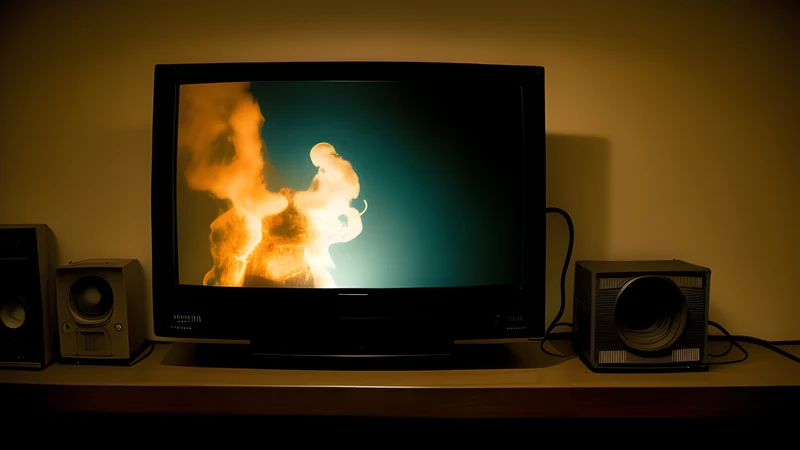
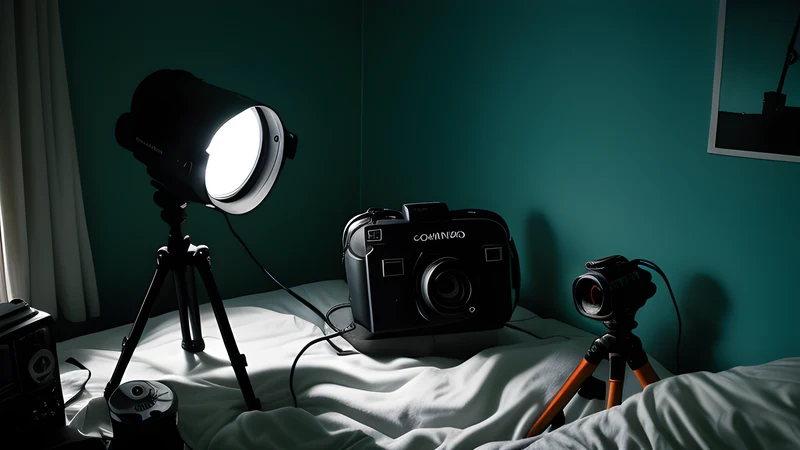
The most influential shot in twenty-first-century horror is a bedroom with nobody moving in it. A tripod at the foot of the bed, a wide-angle lens taking in the door to the landing, a timecode ticking in the corner, two people asleep. Nothing happens for a long time. Then the duvet moves.
Oren Peli shot Paranormal Activity in his own house in San Diego in 2007 for a figure usually put at around fifteen thousand dollars, screened it at Screamfest that October, and then watched it sit on a shelf for two years while a studio worked out what it had. When Paramount finally put it out wide in the autumn of 2009 — after a demand-it campaign that let audiences vote their own towns into the release — it took something close to 193 million dollars worldwide. Everybody drew the obvious lesson, which was that found footage is cheap. Almost nobody drew the interesting one, which is that Peli had changed what the form was for.
Blair Witch runs, Paranormal Activity waits
Ten years earlier, The Blair Witch Project had established the grammar everyone imitated: handheld, mobile, panicked, a camera operated by someone who is themselves terrified. The horror is in the motion — the whip pan into darkness, the frame that will not hold still long enough to show you the thing. Its imitators inherited the shake and, mostly, the nausea.
Peli threw all of that away. His camera is on a tripod for most of the film’s key sequences, and it is on a tripod for a reason that exists inside the story: Micah has set it up to record the house at night. That single decision reorganises everything. A static wide shot with a timecode is surveillance. And a surveillance frame changes the job of the audience, because when the camera stops choosing what you look at, you have to choose, and the choosing is where the dread lives. You scan. You check the corridor, the door, the gap under the bed, the black rectangle of the hallway. You find nothing, over and over, and the finding of nothing is worse than a monster, because it means you have to keep looking.
This is the creature restraint principle enforced by camera position rather than by directorial discipline. The film cannot show you the thing, because the thing is not in front of the lens and the lens will not move. It is the technique of Cat People rebuilt out of a consumer camcorder and a shelf bracket, and it works on exactly the same nerve.
Peli’s second innovation is the timecode itself. The number in the corner is the film’s metronome. It jumps from 1:32 a.m. to 3:14 a.m. and the audience does the arithmetic before the characters do; it speeds up in the mornings and crawls at night. Nobody had used a diegetic clock as a suspense instrument this efficiently since the countdown became a cliché, and the reason it works is that it converts nothing happening into a measured quantity. You are watching the waiting be counted.
The escalation ladder, which is the film’s real structure
Paranormal Activity has a structure so clean it could be taught. Each night is a beat, each beat is one increment above the last, and the increments are almost comically small at first: a door moves a few inches, a light goes on, keys are found where they should not be. The film’s discipline is that it never skips a rung. By the time something drags a woman out of frame by her ankle, the audience has been trained across an hour to treat a three-inch door movement as an event, so the ankle is an atrocity.
The sequels understood this and did the one thing sequels always do, which is add. Paranormal Activity 2 (2010) has a whole bank of security cameras, and the multiplication is a loss — six angles means the audience is shown rather than left to choose. The exception, and it is a real one, is Paranormal Activity 3 (2011), where Henry Joost and Ariel Schulman mounted a camera on the base of an oscillating desk fan so that the frame slowly, mechanically pans between the kitchen and the lounge and back. It is the best formal idea the franchise produced. The camera is now a clock and a wipe: the horror is what will have arrived in the room when the frame swings back. That rig belongs in any honest account of what the form is capable of, and it sits comfortably alongside the entries in ten found footage films that actually work.
The franchise died the way this desk keeps warning franchises die. Paranormal Activity: The Ghost Dimension (2015) put on 3D glasses and showed you the demon. It made the least money of the run. The series’ whole value was the empty frame, and the last instalment filled it.
What the flood produced
The two years after 2009 were a gold rush, because the arithmetic was irresistible: no lighting package, no dolly, a cast of unknowns, a camera you can buy at a supermarket. Most of what came out of it is unwatchable. The Devil Inside (2012) is the emblem — it opened at number one in the United States, took roughly thirty million on a budget around one, and ended by cutting to a website address instead of a third act, which produced audible booing in cinemas and one of the worst exit polls on record. That film did more damage to the form’s reputation in ninety seconds than a decade of imitators managed.
But the same window produced the best work the mode has. REC (2007) solves the form’s oldest problem — why is he still filming? — by making the cameraman a professional whose job it is, and by making his camera light the only light in a sealed building. Lake Mungo (2008) abandons the camcorder entirely for the register of a television documentary and produces the saddest horror film of its decade. Noroi: The Curse (2005) had already got there from Japan, assembling a mock investigative programme so patiently that its final act lands like an actual discovery. Creep (2014) reduces the whole apparatus to two men and a hired camera and gets its terror out of social awkwardness. The Borderlands (2013) puts head-cams on Vatican investigators in a Devon church and earns one of the most genuinely upsetting endings in British horror. The Taking of Deborah Logan (2014) uses a student documentary crew as cover for a film about dementia, which is the smartest thing anyone did with the mockumentary frame in that decade.
The mode also travelled better than almost any other, because it needs no infrastructure. Gonjiam: Haunted Asylum (2018) rebuilt the whole thing as a live-streamed ratings stunt with face-mounted rigs. The Medium (2021) ran a Thai possession narrative through a documentary crew and let the crew’s own presence become the moral problem. Whatever else you say about found footage, it is the one form where a country with no film industry can make a film that plays anywhere, which is why it keeps returning — an argument this desk has made at length in why found footage refuses to die.
The tax the form always pays
Every found-footage film pays the same tax, and it is worth stating plainly because the mode’s defenders tend to skip it. The tax is the question: why is this person still filming? Every time the answer is weak, the film dies, because the audience stops watching a document and starts watching an actor holding a prop.
The strong films pay the tax up front by giving the camera a job that survives the plot. In REC the operator is on shift and his lamp is the only illumination in a quarantined building; putting the camera down means going blind. In Creep the whole premise is a paid commission, so filming is literally the protagonist’s contract. In Host the camera is a Zoom window nobody is holding at all. The weak films hand a character a camcorder in act one and then require them to keep it raised while running for their life, and no amount of shaking disguises the implausibility.
There is a second tax, which is on performance. Found footage demands naturalism of a very specific and difficult kind — improvisation that sounds like nothing, delivered by people who must never appear to know where the lens is. It is closer to what a documentary subject does than to acting, and most casts cannot do it. When it works the effect is unmatched: Peli’s leads bicker about the washing-up with the plausibility of a couple who have had that argument before, which is why the ankle-drag lands. When it fails you get a group of drama-school graduates enunciating exposition into a camcorder in a derelict hospital, and the film has lost before anything supernatural arrives.
The third tax is on the image, and this is where the form’s critics have their best shot. Ugliness is the mode’s native register, and a great many directors have used “it’s meant to look like that” as cover for having no eye whatsoever. The counter is the small number of films that are composed despite the constraint. Peli’s bedroom wide is a real composition — the door placed at the golden third of the frame, the bed as foreground mass, the corridor a black void with no visible end. Somebody chose that. The fan rig in the third film is choreography. The distinction between a found-footage film and a badly shot film is whether anybody made a decision, and the audience can always tell.
The screen replaced the camcorder
The genuinely new development after Peli is that the camera stopped being an object somebody holds. Unfriended (2014) is a horror film that takes place entirely inside a laptop display — a Skype call, a browser, a chat window, a cursor hesitating over a message it will not send. The cursor is the performance. You watch someone type, delete, retype, and you know exactly what they are afraid to say, which is a piece of characterisation no dialogue could achieve. Searching (2018) proved the same grammar works for a straight thriller.
Then the world shut, and Host (2020) closed the loop. Rob Savage made a fifty-seven-minute horror film in lockdown, over Zoom, with a cast rigging their own effects in their own houses, and it is one of the most efficient frighteners of the decade because every single limitation was already the audience’s daily life. Nobody had to accept a premise. The premise was Tuesday. The film sits in the same tradition of screens-as-haunted-objects the desk traced in the haunted technology film, and it is the clearest proof that the mode adapts to whatever the audience is currently staring at.
The verdict
Paranormal Activity has real weaknesses, and they are the ordinary ones. Its performances are thin, its middle sags, and its frights work as a demonstration of a principle where a story ought to be. What it is, precisely, is a great instrument — the single most efficient device ever built for making an audience search an empty frame — and the instrument outlived the film by fifteen years and counting.
The lesson Peli taught is the one every generation has to relearn: the camera’s most powerful move is refusing to move. The rest of the form’s history is the story of directors rediscovering that under whatever technology happens to be lying around, from a rented camcorder to a Vatican head-cam to a laptop webcam in a locked-down flat. Watch the original with the lights off and the timecode visible. Then watch Host. Thirteen years apart, same tripod logic, same empty doorway, same person in the audience refusing to look away from a corner where nothing is happening yet.
Related Content