Female Prisoner Scorpion: The Pinku Revenge Landmark
How Shunya Ito and Meiko Kaji turned a women-in-prison quickie into expressionist myth
Contents
Toei handed Shunya Ito a genre assignment in 1972 and expected a cheap thriller. Women-in-prison pictures were a reliable earner for the studio’s pinky-violence line, a run of tough exploitation films built on brawling, betrayal and a heroine who suffers before she strikes back. What Ito delivered instead was one of the strangest and most beautiful debut features of the decade, a film that keeps the disreputable machinery of the genre and pushes it toward the territory of myth. Female Prisoner 701: Scorpion is exploitation cinema that behaves like an art film when nobody at the box office was asking it to.
The raw material came from Tōru Shinohara’s manga Sasori (Scorpion), a lurid serialised revenge saga. The star, Meiko Kaji, had just crossed over from Nikkatsu, where she had built a following in the studio’s Stray Cat Rock series before it pivoted to softcore Roman Porno and she left. At Toei she became Nami Matsushima, prisoner number 701, better known by the nickname that clings to her: Sasori, the Scorpion. Over four films she barely speaks. The performance is built almost entirely from a downward tilt of the head and a stare fixed through a curtain of hair, and it made her one of the great icons of Japanese genre cinema.
The film, kept above the line
Nami is a woman wronged. She is inside because of a man who used her and then discarded her, and the prison she lands in is run as a small cruel kingdom by guards and a favoured trusty. The plot, above the spoiler line, is the simple armature of every revenge story: a debt of humiliation, a slow accumulation of pressure, a heroine who absorbs punishment and waits. The Warden runs the block like a fiefdom, the other inmates fracture into alliances, and Nami sits at the centre refusing to break, refusing to talk, planning.
What raises it clear of a hundred similar quickies is the presentation. Ito treats the prison less as a real institution than as a stage for a fable about power. He is willing to abandon realism for a single expressive image and hold it long past the point a normal thriller would cut away. Everything above this paragraph is safe to read before watching; the film’s method is escalation, and I will keep its most startling flourishes below the line.
Why the pinky-violence label undersells it
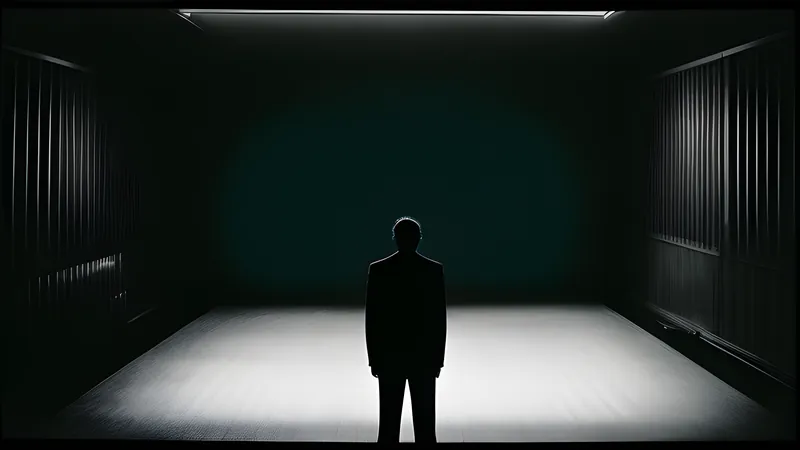
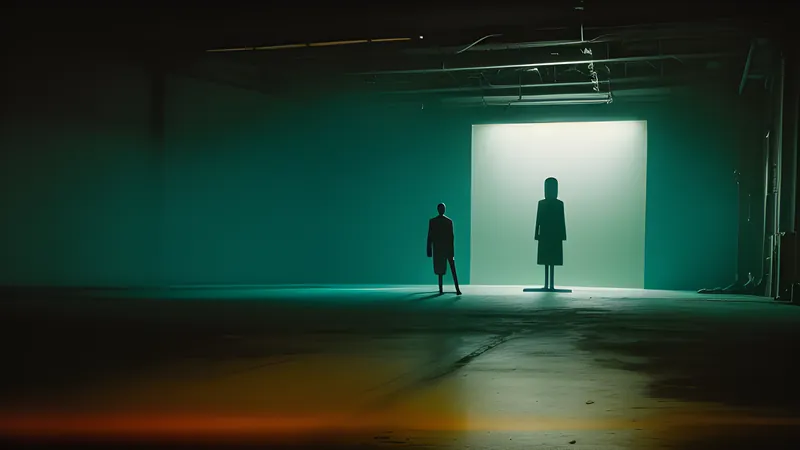
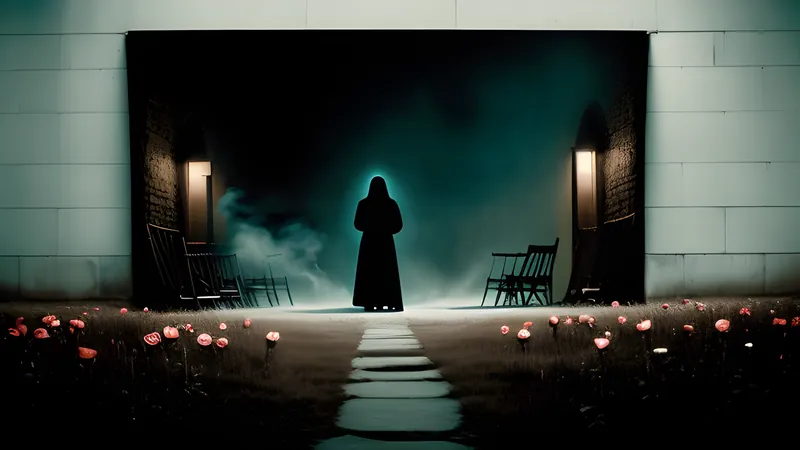
The genre tag does the film a disservice, because the craft on display is genuinely ambitious. Ito came out of Toei’s assistant-director ranks and shot Scorpion with the freedom of someone who assumed nobody important was watching, which turns out to be the ideal condition for invention. He and cinematographer Hanjirō Nakazawa light the prison in blocks of saturated, unmotivated colour — a corridor drowned in red, a cell washed in cold blue — in a way that owes more to theatrical lighting than to any documentary idea of a jail. When a character recalls the past, the set can tilt, the walls can fall away, and the frame reorganises itself around the emotion rather than the room.
The most famous formal gambit arrives in the second film, Jailhouse 41, where Ito builds a revolving set and shoots an entire flashback as the floor rotates beneath the actors, the story of each woman’s crime told in a single unbroken theatrical turn. The first film is more contained but the instinct is already there: the interest in staging over coverage, the willingness to let a shot become a tableau. This is why the series survives when its sister films rot. Ito was smuggling avant-garde technique into a drive-in product, and the tension between the two registers gives the picture its charge.
The violence, meanwhile, is stylised to the point of abstraction. Blood arrives in unrealistic arterial jets, framed for graphic impact against those coloured backdrops, closer to a woodblock print than to anything the eye would credit as real. This matters for the ad-safe question a modern viewer brings to the film: the brutality is presented as design, held at the distance of expressionism, and the camera’s sympathy sits with the punished woman rather than with anyone enjoying her punishment. It is a hard film, but it is a legible one, and its cruelties are aimed at a point.
Meiko Kaji and the power of the withheld
The engine of the whole series is a performance of subtraction. Kaji reportedly cut Nami’s dialogue down herself, on the theory that a woman consumed by a single purpose would have no small talk left in her, and the calculation is exactly right. By refusing the heroine speech, the films force everything into the face, and Kaji’s face is an extraordinary instrument — watchful, unhurried, carrying the certainty of someone who already knows how the story ends and is simply waiting for the rest of the cast to catch up.
She also sings. The theme song, “Urami Bushi” — a ballad of grudge and resentment — is performed by Kaji over the credits, and its slow, aching fatalism became as much a signature as the stare. If that combination of the near-silent avenger and the mournful theme song sounds familiar, it should: Quentin Tarantino borrowed both Kaji’s iconography and her music culture wholesale for Kill Bill, lifting “The Flower of Carnage” from her other 1973 vehicle Lady Snowblood and modelling the revenge-woman’s implacable calm on the template she perfected here. The Bride is Sasori with a better travel budget.
The reason the persona works is that Kaji plays vengeance as a form of stillness. Lesser revenge films confuse fury with volume, giving the heroine screaming fits and speeches. Kaji understood that the frightening thing is composure, the sense of a person who has already decided and cannot be argued out of it. When she finally moves, the release lands because the film has spent an hour teaching you how much she holds back.
Where it came from, where it went
Placed in its moment, Scorpion belongs to a specific reckoning inside Japanese studio cinema, when the majors were losing audiences to television and turned to sex and violence to keep the theatres open. Toei’s pinky violence and Nikkatsu’s Roman Porno were the two big commercial responses, and the interesting thing is how often real talent got laundered through this disreputable product. The same current that let Ito make an expressionist prison film also let art-house directors work in ero-guro registers next door — the tactile, obsessive chamber horror of Yasuzō Masumura’s Blind Beast came out of the very same studio ecosystem three years earlier, and Nagisa Ōshima carried the impulse to its most serious art-cinema conclusion in In the Realm of the Senses. The border between exploitation and art was porous in Japan in a way it rarely was in the West, and Scorpion lives directly on that border.
For a viewer building a collection, the useful genealogy runs sideways as well as back. The women-in-prison template that Ito inherited had already been bent to a genuine thesis elsewhere — the Japanese nunsploitation landmark School of the Holy Beast does something comparable inside the convent, using a trash genre to say something real about institutional power over women’s bodies. And for the deeper roots of the film’s stylisation, its debt to a native tradition of stark, stagey visual horror, the reed-field expressionism of Onibaba sits directly upstream: the same trust in a single held image, the same conviction that a genre subject deserves the full weight of composition.
The verdict is that Female Prisoner Scorpion is the rare exploitation series worth taking seriously on formal grounds, a film whose reputation as pulp undersells how much invention its young director packed into the margins. It is not a comfortable watch and it was never meant to be, but the artistry is real, the iconography permanent, and the influence on everything from Tarantino to a generation of revenge cinema entirely earned. If you come to it expecting cheap sensation, the surprise is how carefully it is made.
Spoilers below
The lasting image of the first film is Nami’s method of endurance under the Warden’s regime, and Ito shoots her patience as something almost supernatural — a woman crouched and silent through humiliations designed to break her, refusing to give the guards the reaction that would justify them. The betrayals stack up: fellow inmates are turned against her, an escape attempt is used to lure her into the open, and the men who put her inside keep reappearing as the true targets under the immediate ones. The prison drama is only ever a holding pattern for the reckoning with the man who ruined her.
Ito’s expressionism pays off hardest in the flashback that explains Nami, staged with the set falling away around her so that the origin of the Scorpion reads as myth rather than backstory. By the time she walks free at the end, knife in hand and coming for the source of the wrong, the film has earned an ending that a realist treatment could never reach: the sense that she is less a character than a force the story has summoned. The sequels chase that mythic register further — Jailhouse 41 is the artistic peak, Beast Stable the bleakest — and Kaji’s departure from the role after the fourth film is why later attempts to revive the character never take. The Scorpion was a persona, and it belonged to her.
Related Content