Escape From New York: Carpenter, Snake, and the Dystopia on a Budget
How six million dollars and a good eyepatch built the coolest future in genre film
Contents
John Carpenter wrote Escape From New York in the mid-1970s, in the sour aftermath of Watergate, and could not get it made. Studios found it too bleak, too cynical, too convinced that the American future was a prison. It took the success of Halloween to give him the leverage, and even then he made it for around six million dollars — pocket change for a film that had to convincingly turn all of Manhattan into a maximum-security penal colony. That gap, between the scale of the vision and the poverty of the means, is the whole story of why Escape From New York (1981) works, and why every ambitious low-budget genre film since has quietly studied it.
1997, and the island prison
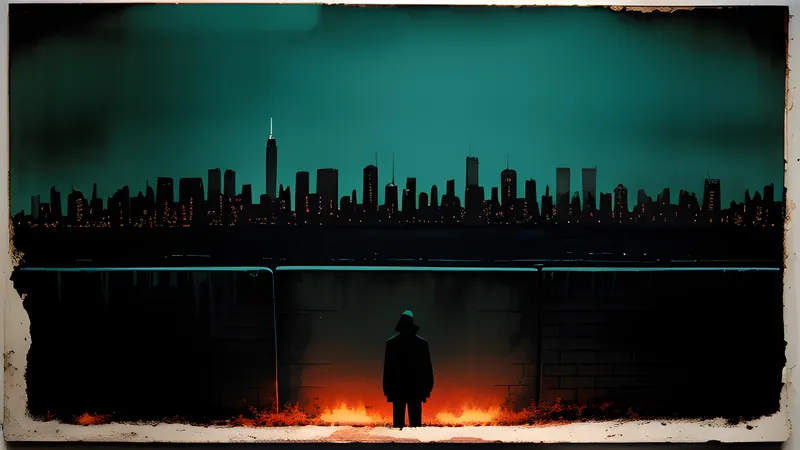
The premise is a piece of pure pulp genius. In a near-future 1997 imagined from 1981, crime has risen so catastrophically that the United States has walled off the entire island of Manhattan and converted it into one giant prison with no guards inside — the convicts are simply dropped in and left to run their own feral society. When Air Force One is hijacked and crashes inside the walls, the President is taken hostage by the prisoners, and the authorities have a matter of hours to get him out before a crucial summit collapses.
Their instrument is Snake Plissken, a decorated war hero turned criminal, played by Kurt Russell in the performance that reinvented him. The police commissioner Hauk (Lee Van Cleef, importing a spaghetti-Western gravity) offers Snake a deal: go in, retrieve the President, come out within twenty-two hours and earn a pardon. The insurance is a pair of micro-explosives injected into Snake’s neck, primed to kill him if he misses the deadline. He glides a stealth craft onto the roof of the World Trade Center, drops into the ruined city, and the countdown runs.
Why the poverty is the aesthetic
Carpenter could not afford to build a convincing near-future, so he did the smartest thing a broke filmmaker can do: he set the film at night, in the dark, in real ruins. Much of it was shot in St. Louis, which had suffered enough urban fire damage to double for a devastated Manhattan with minimal dressing. The darkness hides what the budget cannot supply and turns limitation into atmosphere; the city becomes a place of pooled shadow, distant fires, and figures emerging from black, which is far more frightening than any fully lit set could have been. The famous shot of Snake gliding toward the Trade Center towers was achieved with models and — in a detail beloved of trivia hounds — early wireframe-style effects work that a young James Cameron contributed to as part of the effects crew. It is craft as compression: every dollar is on screen because no dollar is wasted on daylight.
The deeper craft argument is about worldbuilding by implication. Carpenter never explains how America got here in more than a few brisk strokes; he trusts a handful of vivid figures to imply an entire society. The Duke of New York (Isaac Hayes), cruising the ruins in a Cadillac decked with chandeliers, tells you everything about how power works inside the walls. Cabbie (Ernest Borgnine), still cheerfully driving his taxi through the apocalypse, tells you about the strange normality people build inside catastrophe. Brain (Harry Dean Stanton) and Maggie (Adrienne Barbeau) sketch the survivor’s economy of knowledge and protection. Each is a single strong idea, and together they conjure a whole world the budget could never have built brick by brick. This is the same trick Carpenter’s whole generation learned from the B-picture: suggestion is cheaper and stronger than depiction. Watch how rarely the film shows you the prison’s population in bulk — a shuffling crowd here, a torch-lit gathering there — and how completely you nonetheless believe the island is teeming. Carpenter builds a city of millions out of a few dozen extras and a great deal of well-managed dark, and the illusion never cracks because he never over-reaches it.
And then there is the score. Carpenter composed it himself, as he usually did, and the pulsing synthesiser theme does more to establish the film’s cool, doom-laden mood than any amount of production design. It is the sound of dread with a swagger, and it is inseparable from the film’s identity. The same instinct — a director scoring his own paranoia — powers The Thing, the masterpiece he would make the very next year, and you can hear the two films rhyming in their electronics.
Snake Plissken, the anti-hero as attitude
The film’s most lasting invention is Snake himself. Russell built the character out of a rasping near-whisper, a permanent scowl, an eyepatch, and a total refusal to care about the mission he has been blackmailed into. Snake is not a hero in any conventional sense; he wants the pardon, he despises the government that owns him, and he would happily let the whole rotten system burn if it were not wired to his neck. Russell reportedly modelled the laconic delivery in part on Clint Eastwood’s Man with No Name, which closes a lovely circle given that Lee Van Cleef, Eastwood’s co-star in the Leone films, is standing across the room from him. Snake is a spaghetti-Western gunslinger relocated to a science-fiction ruin, and the transplant took so well that the archetype — the burnt-out professional who saves the day out of spite — became a genre staple for the next two decades.
The verdict
Escape From New York is one of the great examples of vision outrunning money, and winning. It is not flawless; the middle sags in places, some of the supporting action is stiff, and the science-fiction furniture is thin if you poke it. But none of that matters, because the film has something most bigger productions never achieve: a completely coherent mood and an icon at its centre. Carpenter took a premise he could not afford and made its cheapness into its style, and Russell took a thankless anti-hero and made him one of the coolest figures in the genre. The film’s DNA is everywhere now — every walled-city dystopia, every reluctant blackmailed operative, every neon-and-shadow future owes it something.
For where to go next, the essential companion is Carpenter and Russell’s other, sunnier collaboration, Big Trouble in Little China, which flips Snake’s grim competence into affectionate comedy. And for another late-1970s genre vision of an American city collapsed into stylised myth, it pairs perfectly with The Warriors, Walter Hill’s neon gang odyssey from two years earlier.
Where to watch: seek a good restoration that respects the film’s deliberate darkness — the shadows are the design, and a badly brightened transfer ruins it. Watch it at night, with the sound up for that score.
Spoilers below
The engine of the film is the neck bombs and the countdown, and Carpenter plays them for genuine tension: Snake has under a day to live unless he delivers, and Hauk holds the antidote as leverage. Inside the walls Snake locates the President (Donald Pleasence), held by the Duke of New York as the ultimate bargaining chip. The rescue costs him: Brain and Maggie both die getting the President to the wall, Cabbie is killed, and the Duke pursues them across the mined bridge out of the city in the film’s climactic chase.
The two details that make the ending sing are both about disillusionment. The first is the President’s response once he is safe. He carries a cassette tape crucial to the summit — the whole reason for the mission — and in the chaos of the escape the real tape is lost and swapped. More telling is his utter indifference to the people who died saving him; asked to say something for the survivors, he offers a hollow, rehearsed platitude, and Snake watches a man he bled for reveal himself as a bloodless functionary. The rescued leader is as worthless as the system that sent Snake in.
The final move is Snake’s quiet revenge, and it is the coldest, funniest beat Carpenter ever wrote. Having recovered the vital summit tape, Snake pulls a switch of his own before he hands it over, so that when the President plays it before the assembled world powers, the recording is worthless — Snake has quietly sabotaged the mission he completed. He walks away into the ruined dawn, pardon in hand, having saved the man and destroyed his purpose in the same gesture. It is the perfect ending for a hero who despises everyone employing him, and it seals Snake Plissken as the anti-hero who wins by making sure the people who used him lose too.
Related Content