Enemy: Villeneuve's Spider, the Double, and the Dread
Before Arrival and Dune, Denis Villeneuve made his strangest, most private film
Contents
Denis Villeneuve is now the most reliable maker of large, serious science fiction alive — Arrival, the two Dune films, Blade Runner 2049 — a director trusted with the biggest canvases in the genre. Enemy, made in 2013 in the gap before all of that, is the film that explains him, and it is the least like any of them: small, sick-yellow, sparsely scored, ninety minutes of mounting dread with barely a plot to hold on to. It is the one where you can watch him work out, in private, the obsessions the blockbusters would later dress in scale. If you want to know what Villeneuve is actually afraid of, this is the file.
Adapted from José Saramago’s novel The Double, and shot in Toronto by cinematographer Nicolas Bolduc under a jaundiced haze that makes the whole city look like a photograph left in the sun, Enemy gives Jake Gyllenhaal two roles and lets the space between them do the terrifying. It is science fiction in the way Cronenberg is science fiction — an idea about identity taken literally enough to become body-horror of the soul. And it opens with a line of text, borrowed from Saramago, about chaos being order yet undeciphered, which is both a promise and a warning: the film is a cipher, and it means to be.
Two men, one face
Adam Bell is a history lecturer in Toronto, grey and depressive, cycling through the same joyless routine — the same lecture on how dictatorships control their populations, the same evenings, the same girlfriend, Mary (Mélanie Laurent), whom he touches like a man performing intimacy from a manual. On a colleague’s offhand recommendation he rents a film and spots, in a bit part, an actor who is his exact physical double. The actor is Anthony Claire (also Gyllenhaal), glossier, more confident, married to the pregnant Helen (Sarah Gadon). Adam becomes obsessed with tracking his double down. When the two men finally meet, the encounter unbalances both their lives, and the film tightens into a study of two versions of one man circling the question of who gets to be the original.
Gyllenhaal is extraordinary, and the performance is a masterclass in playing sameness with difference. Adam and Anthony share a face, a scar, a body, and yet you never once lose track of which man you are watching, because Gyllenhaal locates the distinction in posture and appetite — Adam collapsed inward, Anthony leaning out to take. It is the kind of dual performance that could tip into gimmick and never does, because Villeneuve refuses to let the film treat the double as a twist to be sprung. The doubling is the premise, present from the start, and the dread comes from watching two men who cannot both be real behave as if only one of them should exist.
Why the dread works
The craft here is atmospheric engineering of a very high order, and almost none of it is plot. Villeneuve builds fear out of colour, sound and a single recurring image. The colour is the yellow — Bolduc’s grading pushes Toronto into a bilious amber that reads as illness, as a city holding its breath, as a photograph of a memory rather than a place. Every frame feels slightly toxic, and the discomfort accumulates below the level of narrative, so that by the halfway point you are anxious without being able to point to a scene that frightened you.
The sound does the rest. The score by Danny Bensi and Saunder Jurriaans is mostly a low, string-driven dread-drone, a texture of unease that swells at moments the plot does not obviously justify, training you to expect a horror the film keeps just off screen. Villeneuve withholds catharsis with real discipline; the music promises a release the story declines to give, and that withheld release is the mood.
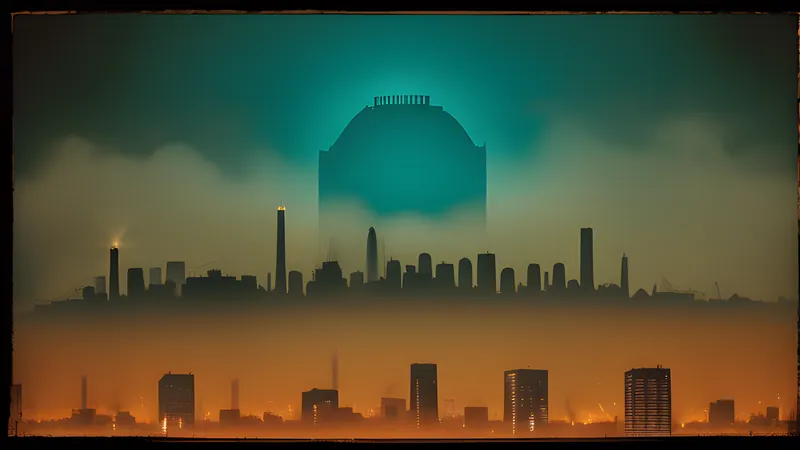
And then there is the spider, the film’s organising image and its master-stroke of craft. Villeneuve seeds arachnid imagery through the whole film — a business trip glimpsed, a woman’s gesture, a shape over the city skyline, a moment in a private club that reads like a fever — long before the film pays it off, so that the motif works on you subliminally. The spider becomes the film’s emotional weather system, a figure for something the men are both fleeing and building, and because Villeneuve trusts the image over explanation, it lodges in a way a monologue never could. This is a director learning that a symbol repeated with conviction can carry more terror than any event.
The construction is precise beneath the murk. That lecture Adam delivers on control and repression, the recurring surveillance-camera framing of the men in their apartments, the sense of two lives running on the same track — Villeneuve is laying a grid you only see once the film ends and you are forced to reread it. Enemy is built to be watched twice, and its first-viewing opacity is a deliberate provocation.
Villeneuve’s private cinema
For the collector, Enemy is the Rosetta Stone of Villeneuve’s genre work. Watch it beside Arrival and you find the same fascination with a mind reorganised by something it cannot at first parse, the same willingness to make the audience do interpretive labour, the same faith that dread and awe live close together. Watch it beside Blade Runner 2049 and you see the identical patience — the long, quiet, colour-saturated hold, the refusal to hurry, the question of whether a man is the original or a copy of himself running underneath both films. Enemy is where Villeneuve first insisted that a genre film could move at the speed of thought and trust silence to do the frightening.
The literary ancestor is Saramago, but the cinematic family tree runs through the great doppelganger tradition — Poe’s “William Wilson,” Dostoevsky’s The Double, and on screen the paranoid identity-thrillers where a man discovers the city has quietly duplicated or replaced him. In that light Enemy rhymes powerfully with Dark City, another film about a man trapped in an engineered, sickly urban labyrinth that has been rearranged around him without his consent, where the architecture itself is the antagonist. And for the tradition of science fiction that treats the self as the true frontier — the interior made monstrous — set it beside Solaris, where the thing that returns to haunt you is a copy of your own guilt made flesh. Villeneuve is working the same seam: the enemy is always the version of yourself you built and then had to live beside.
The verdict, above the line: Enemy is Villeneuve’s most divisive film and, for my money, his most purely cinematic — a genre exercise in dread that trusts image over plot to a degree his later blockbusters could never risk. It rewards patience, punishes the literal-minded, and delivers one of the most talked-about final shots in modern film. Go in cold. Then read on, because the ending demands company.
Spoilers below
To discuss Enemy honestly you have to discuss its last shot, which has launched more competing readings than almost any image of its decade — and to be clear about the interpretive rules first. Villeneuve has offered his own gloss, and the film supports a coherent reading, though it deliberately leaves the mechanism ambiguous. What follows is the strongest account of what the film is doing, laid out as argument rather than decoded certainty.
The most persuasive reading is that Adam and Anthony are one man, and the “double” is a psychological split rather than a literal twin. Adam is the timid, faithful self; Anthony is the appetite Adam has tried to wall off — the philandering, controlling self he was before he tried to reform into a dull, monogamous academic. The clues support it: the men share a scar, Adam’s mother refers pointedly to his habit of fantasising and to a job he abandoned, and Anthony’s wife Helen intuits, on meeting Adam, that this stranger is somehow her own husband. The spider imagery gathers around the women in both lives, and the film’s controlling anxiety is male dread of commitment, fatherhood and the trap of a shared life closing around a man who fears being consumed.
The plot’s second half tightens the noose. The two men, having discovered each other, propose to swap: Anthony wants a night with Mary, using Adam’s identity, and the exchange ends in catastrophe — Anthony and Mary die together in a car crash, leaving Adam to step, quietly and without protest, into Anthony’s marriage and impending fatherhood. Read literally, one self has been killed off and the other has taken his place. Read psychologically, the reckless appetite has been purged in violence, and the tamed self must now inhabit the domestic life he was terrified of all along, wearing the dead man’s ring.
Which brings us to the final image. Adam, having accepted the swap, finds Helen’s slipper and a note that suggest another assignation looms, and he goes to the bedroom to tell her — where he finds, in her place, a giant tarantula the size of the room, which recoils from him. And Adam’s reaction is the whole film: a small, weary, resigned sigh, a man who has seen this before. The spider is the domestic trap and the fear of women and commitment made monstrous, the thing Adam has been building and fleeing across the entire film; and his lack of surprise tells you the cycle is closing again, that the appetite is already stirring, that the split self will re-form and the whole dread will begin once more. The lecture from the opening — that dictatorships work by control, by keeping people distracted and repeating patterns until they submit — turns out to have been about Adam’s own psyche all along.
That is why Enemy is the key to Villeneuve. The blockbusters ask what it costs to comprehend the alien, the future, the copy of a man. This small yellow film asks the same question turned inward, and answers it with a shrug and a giant spider: the hardest thing to decipher, and the thing you can least escape, is the version of yourself you keep having to live next to. Watch Arrival and Blade Runner 2049 again afterwards and you will see the spider’s legs under both of them.
Related Content