Dawn of the Dead (1978): The Mall as the Real Monster
Romero's zombies come back to the shopping centre because they always did
Contents
There is a moment early in Dawn of the Dead when the survivors, having taken refuge on the roof of a suburban shopping mall, look down through the skylights at the dead shuffling aimlessly across the polished floors of the shops below, drawn to the place by some dim reflex. One of them asks why they are there. The answer — that this was an important place in their lives, that they are following an instinct worn into them, a memory of what they used to do — is the entire film compressed into a line. George A. Romero made a zombie epic in 1978 whose real subject is the mall itself, and whose great, obvious, still-devastating joke is that the shoppers were already the walking dead before anyone rose from the grave.
Dawn of the Dead is the middle film of Romero’s zombie cycle, the follow-up to the 1968 landmark Night of the Living Dead, and it takes everything that was accidental and low-budget about the first film and turns it into deliberate, sprawling, blood-soaked argument. It runs well over two hours across several competing cuts, it is by turns terrifying and slapstick, and it remains the most influential horror satire ever made, because it located the monster in the retail cathedral itself, the place the corpses cannot stop visiting.
The mall is the point
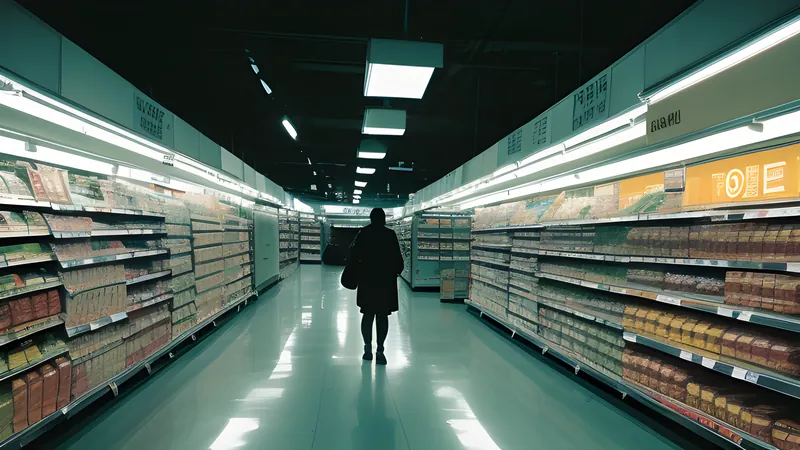
Romero shot the film inside the Monroeville Mall outside Pittsburgh, at night, after the shops closed, and the location does more thematic work than any script could. The setting gives him the fountains, the escalators, the piped instrumental music, the mannequins, the endless branded storefronts — the full apparatus of late-1970s American consumption — and then fills it with the dead. His four survivors, two SWAT officers and a television-station couple fleeing the collapse of society by helicopter, seal themselves inside this consumer paradise and discover that having everything is its own kind of death. They raid the boutiques, wheel shopping trolleys through the aisles, drape themselves in furs and jewellery and cash that no longer means anything, and slowly go numb.
The satire is not subtle, and it is not trying to be. Romero’s argument is delivered with a broad, comic-book directness: the zombies press their faces to the glass because the mall is where the living once pressed their faces to the glass, and once the survivors have looted it and secured it, they too begin to drift through it emptily, their faces slack, indistinguishable from the things outside. The film’s most quietly horrible images are the calm ones: a survivor riding the store escalators for no reason, or ice-skating on a rink amid the ruins, human beings with nothing left to want in a place designed to manufacture wanting. The zombie is the customer, patient and mindless and forever returning. That reading has only sharpened with every decade of retail history since. Romero grasped, years before the phrase existed, that a shopping mall is a machine for keeping people moving and buying without ever letting them arrive anywhere, and that a crowd of the dead performing that same aimless circuit is barely a distortion of the living original. The horror is recognition.
Splatter as comedy, gore as craft
The other reason Dawn of the Dead endures is Tom Savini, the special-effects and makeup artist who gave the film its infamous violence and, crucially, its tone. Savini, a Vietnam combat photographer, brought a grotesque, cartoonish invention to the gore — exploding heads, a machete embedded in a skull, a memorable helicopter-blade decapitation — that tips the film repeatedly from horror into black comedy. The zombies themselves are a garish, unnatural blue-grey, the result of a rushed makeup schedule that Romero embraced rather than corrected, because the comic-book unreality suits the satire. These are not the rotting, tactile corpses of later films. They are colour-plate ghouls, closer to a EC horror comic than to a documentary, and the artificiality is a feature.
The music helps enormously. The Italian prog band Goblin, brought in by Dario Argento — who co-produced and cut his own faster, more visceral European version, released as Zombi — supplied a driving, synth-heavy score, and the film also leans on cheap library muzak that plays over scenes of carnage with a deadpan cruelty. Slaughter set to shopping-centre lift music is one of Romero’s sharpest inventions, the sound of commerce continuing indifferently over the end of the world. The competing cuts, Romero’s slower and more satirical, Argento’s leaner and gorier, are both worth seeing precisely because they reveal the two engines idling inside the film: the essay and the splatter, running at once.
Where it comes from, and what it fathered
The ancestor of Dawn of the Dead is Romero’s own Night of the Living Dead, which established the modern zombie as a shambling, flesh-eating collective and, almost incidentally through its casting and its bleak ending, as a vehicle for social fury. But Night was a claustrophobic siege in a single farmhouse. Dawn takes the same monster and gives it a thesis, expanding the siege into a sustained allegory. The deeper root is the tradition of horror-as-satire that runs back through the EC Comics of the 1950s, with their moral cruelty and their punchline dead, and Savini’s aesthetic is a direct homage to those pages.
Romero’s mall reshaped everything downstream. I have written elsewhere about how George Romero used the dead as a social mirror across his whole career, each film loading the zombie with a new anxiety, and Dawn is the purest example of the method. Its comic gore lineage runs straight to the deliriously wet slapstick of Braindead, Peter Jackson’s splatter comedy that pushes Savini’s cartoon violence to its logical, hilarious extreme. And its emotional core — the idea that a zombie film could be about people, about a small group trying to preserve their humanity inside a collapsing world — flowers decades later in Train to Busan, which swaps Romero’s satire for melodrama but keeps his conviction that the interesting horror is what the living do to each other, and to themselves, once the dead arrive.
The verdict
Dawn of the Dead is a messy, overlong, tonally reckless film, and every one of those qualities is load-bearing. Its sprawl is what lets the satire breathe; its lurches between terror and farce are the point; its blue-faced ghouls and library muzak are exactly calibrated to make consumer society look ridiculous and doomed at once. It is the rare horror film whose ideas have outrun its shocks — the gore now reads as gleeful period craft, while the central metaphor of the mall as a place the dead cannot stop returning to has only grown more legible as the physical shopping cathedral itself dies out. Romero built a monument to a form of consumption that is now itself deceased, which gives the film a second, unintended layer of haunting.
Watch it for the location, which is the best-used building in horror since the Overlook, and for Savini’s inventive carnage. Then follow Romero’s method across his career, follow the splatter-comedy strain into Braindead, and follow the humane strain into Train to Busan. What happens to the survivors, and the ending Romero fought over, is below the line.
Spoilers below
The finale is where the film’s argument about the mall pays off, and where Romero’s famous pessimism bends, just slightly, toward mercy.
The survivors’ fortress is breached by the living rather than the dead. A marauding gang of bikers, gleeful and anarchic, smashes their way into the mall to loot it, tearing down the barricades the survivors spent so long building and letting the zombies flood back in. It is Romero’s bleakest point stated plainly: the dead are a manageable, predictable hazard, and it is other people — greedy, destructive, unable to leave the treasure alone — who bring the whole fragile refuge down. The bikers do not want to survive; they want to take, and their looting is indistinguishable from the shopping the survivors themselves indulged in, which is the whole grim rhyme.
Roger, one of the SWAT officers, has already died and returned earlier, a slow and genuinely mournful sequence. In the chaos of the biker raid, Stephen, the television pilot, is bitten and turns, and in a horrible touch he leads the dead to the survivors’ hidden refuge out of the same worn instinct that drew the zombies to the mall in the first place — even in death he goes home. That leaves Peter and the pregnant Fran. Romero originally planned a nihilistic ending in which both die; what he shot instead is deliberately ambiguous and finally, faintly, hopeful. Peter, having decided to shoot himself, changes his mind at the last second, and he and Fran lift off in the helicopter with almost no fuel, an uncertain amount of daylight, and nowhere obvious to go. They escape the mall, which is the one unambiguous good: to survive, in Romero’s world, you have to be willing to abandon the temple of everything and fly off with nothing. The helicopter rising over the ghoul-filled car park, its rotor low on fuel, is the closest this furious, funny film comes to grace.
Related Content