Dark City: The Older Cousin The Matrix Never Credited
Alex Proyas built the reality-is-a-lie thriller a year early, on sets the Wachowskis would borrow
Contents
Fourteen months before The Matrix taught a generation to ask whether the world was real, Alex Proyas had already answered the question and shown the machinery behind the curtain. Dark City opened in February 1998 to modest business and a shrug, and then spent two decades being rediscovered as the film that got there first — the reality-is-a-lie neo-noir the later blockbuster stands on. The overlap is not coincidence and not quite theft. Both films were shot at Fox Studios Australia, and some of the standing sets Proyas built for his eternal night were reused, redressed, for the machine world the Wachowskis unveiled the following year. The older cousin never got the credit, and the family resemblance is impossible to miss once you have seen both.
What makes the neglect a genuine loss is that Dark City is the richer, stranger, more beautiful of the two, a film so committed to its atmosphere that it almost drowns in it. It is a detective story, a science-fiction horror, and an expressionist painting held together by pure visual conviction. If you know Proyas only from The Crow, this is the film where his gothic instincts found a story worthy of them, and if you have never seen it at all, it is one of the great “how did I miss this” experiences the 1990s left behind.
A city with no morning
John Murdoch (Rufus Sewell) wakes in a hotel bathtub with no memory, a dead woman in the next room, and a ringing telephone warning him to run. He is told he is a serial killer. He does not feel like one, and the film follows him through a city where something is deeply, structurally wrong: it is always night, nobody can quite remember their childhood, and no one can recall how to get to a sunlit seaside resort called Shell Beach that everyone insists they know. The chase pulls in a limping, whispering psychiatrist named Dr Schreber (Kiefer Sutherland), a nightclub singer who may be Murdoch’s wife (Jennifer Connelly), and a worn detective (William Hurt) who is starting to notice the same wrongness Murdoch feels.
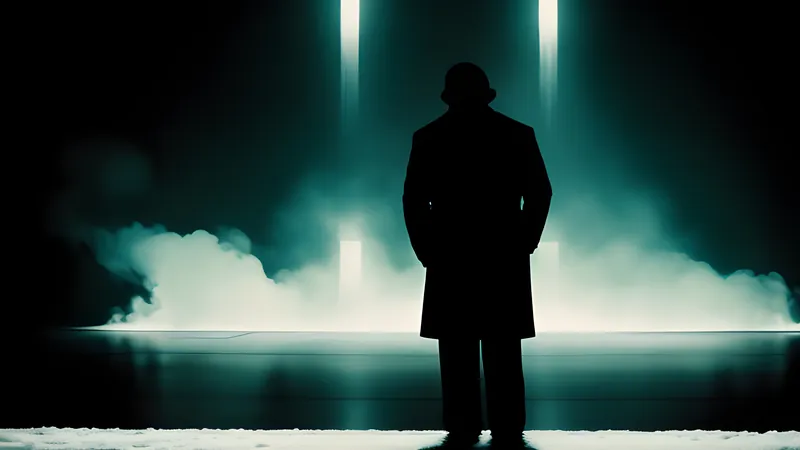
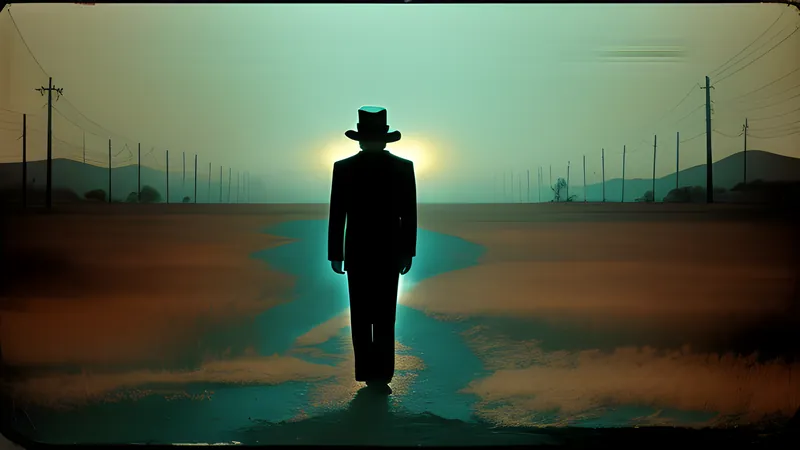
Behind it all are the Strangers — pale, bald figures in black coats and hats who move as one, inhabiting human corpses, gliding through the city while it sleeps. At the stroke of midnight they “Tune”: time stops, the population drops unconscious, and the Strangers rebuild the city by sheer will, growing new buildings and shuffling the streets, while Schreber injects the sleepers with fresh memories and new identities. A poor man becomes rich, a couple becomes strangers, a childhood is written from scratch. The Strangers are a dying collective intelligence conducting a vast experiment on human beings, trying to isolate what makes a person a person — the soul, if there is one — by endlessly swapping the memories and watching what stays. Murdoch’s crime is that he woke up mid-Tuning, and worse, that he is developing the Strangers’ own power to reshape reality with his mind.
Why it works
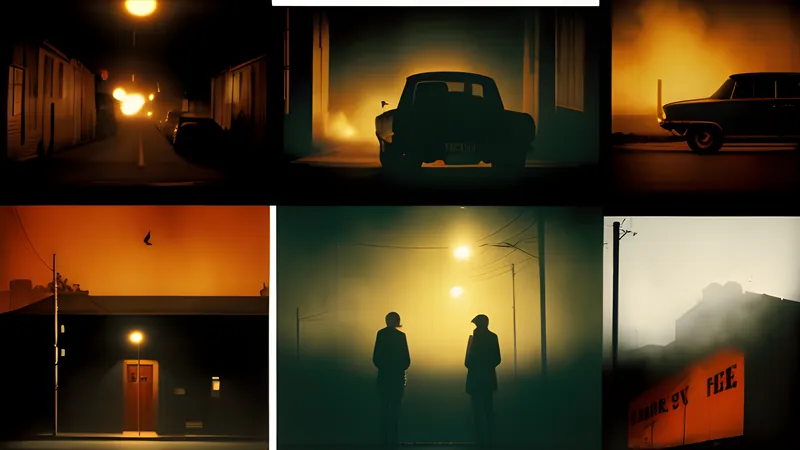
The craft is total-commitment world-building, and it is what elevates the film above its pulp bones. The city is a delirium of borrowed styles — 1940s hats and cars, film-noir shadows, Deco spires stacked into a skyline that could not exist, all of it drenched in perpetual dark. Dariusz Wolski’s camera never stops moving, craning and swooping through streets that feel simultaneously vast and airless, so you register the wrongness of the place long before Murdoch names it. The design is doing the narrative work: a city assembled from the leftovers of memory, from everyone’s idea of a city and no one’s actual home.
Proyas turns the film’s central idea into pure cinema in the Tuning sequences, which remain the reason to watch. Buildings groan upward out of the pavement, spiral staircases screw themselves into the air, a modest flat swells into a mansion while its occupants lie dreaming — reality remodelled like wet clay, in front of you, with no cut to hide the impossibility. It is a visual argument about memory and identity: if your past can be rebuilt overnight while you sleep, and rebuilt again tomorrow, what exactly is the “you” that persists? The film keeps asking, and it stacks the deck with a scholar’s care. The psychiatrist is named Schreber after Daniel Paul Schreber, the German judge whose 1903 memoir of paranoid delusion — a world of persecutors rearranging his reality — became one of psychiatry’s most famous case studies. Proyas hands his exposition to a man named for the archetype of the persecuted mind, and the joke has teeth.
The film’s one genuine flaw was inflicted from outside. New Line, nervous that audiences would be lost, forced an opening voiceover — Schreber narrating the entire premise, the Strangers, the memory experiments, the twist about Murdoch — over the first minutes, gutting the mystery before a single scene can breathe. Proyas hated it, and his 2008 Director’s Cut removes the narration and restores the film to the slow dawning of dread he intended. That is the version to watch. Roger Ebert, one of the film’s earliest and loudest champions, recorded a commentary and named it the best film of its year; he was watching a picture that trusted its audience, which is not the one that opened in cinemas.
The family tree
The obvious relative is the one the film is usually measured against, and the comparison rewards both. Set Dark City beside The Matrix at 25 and what the sequels misread and you can watch two films chase the same terror — that the world is a constructed prison run by an inhuman intelligence — down opposite roads, Proyas into gothic melancholy and the Wachowskis into kinetic pop myth. Neither cancels the other; the double bill is one of the great “reality is a cage” evenings.
Trace the roots further back and Dark City is unmistakably the grandchild of Godard’s noir at the end of the future, the earlier dystopia where a controlling intelligence governs a shadow-drenched city and edits what its citizens are allowed to remember. And it shares a bloodline with the decade’s other elegant, period-dressed dystopia, Gattaca and its quiet future sorted at birth — both films smuggle tomorrow inside 1940s tailoring, both distrust a world that decides in advance who you are allowed to be. For the deep noir-sci-fi lineage that feeds all of them, the touchstone remains Ridley Scott’s much-revised classic, where even the question of which cut is the film becomes the subject.
The verdict
Dark City is a cult masterpiece that has earned its cult, and the only thing wrong with calling it that is the word “cult”, which undersells how accomplished it is. It is more visually inventive than the film that eclipsed it and more emotionally haunted, a genuine work of expressionist science fiction from a decade that produced few. Its reputation problem was bad luck and bad timing — a studio that muffled the opening, a release that vanished, and a juggernaut arriving a year later to say the same thing louder. Seen now, in Proyas’s cut, it looks like exactly what it is: the older, sadder, more beautiful cousin who did it first.
Watch it in the dark, without the trailer, on the Director’s Cut. Then run The Matrix to see the idea go supernova, Alphaville to find the grandfather, and Gattaca to complete the set of dystopias dressed in yesterday’s suits. And keep the turns below the line, because the pleasure of Dark City is discovering the shape of its prison at the same speed Murdoch does.
Spoilers below
Read on only after watching — the film’s whole design is built to reveal its secret slowly.
The reveal is that Shell Beach does not exist, and never did. When Murdoch and the detective finally force their way toward the sunlit resort everyone remembers, they reach the edge of the city and tear through a wall — to find nothing behind it. The city is a construct adrift in space, a great disc of stolen buildings floating in the void, sealed off from any sun. Shell Beach is a shared false memory the Strangers implanted, a childhood postcard none of these people ever actually visited. The homesickness the whole city feels is manufactured, an ache for a place that was written into them.
The climax turns the experiment against its authors. Murdoch masters “Tuning” himself, matching the Strangers’ power, and in the confrontation he learns the truth about their study: they have been searching human memory for the seat of the soul and failing, because the thing that makes a person is not located in the memories they can swap in and out. Murdoch proves it. He wills the machinery of the city to his own ends, pierces the shell around their false world, and turns the dead disc toward the star it has been hiding from — bringing, for the first time, actual daylight and a real ocean into being by sheer force of mind. He builds Shell Beach into reality, then walks out toward the water and the woman he loves, who no longer remembers him. Proyas leaves the sting intact: the world is saved and remade, and the love at its centre still has to begin again from a blank page, because memory was never where the self was kept.
Related Content