Contact: The Sci-Fi Film About Faith and Evidence
Robert Zemeckis, Carl Sagan and a scientist asked to believe without proof
Contents
Most first-contact films are about the aliens. Contact (1997) is about us — about what a species does with a signal, and about the argument that breaks out the moment the universe answers. Robert Zemeckis, working from Carl Sagan’s novel, made a big studio science-fiction film whose real subject is epistemology: how we decide what to believe, what counts as proof, and whether the two great human engines for making sense of existence, science and religion, are asking the same question in different languages. It is a talkier, stranger, more argumentative blockbuster than its marketing ever admitted, and that is exactly why it lasts.
A career spent listening
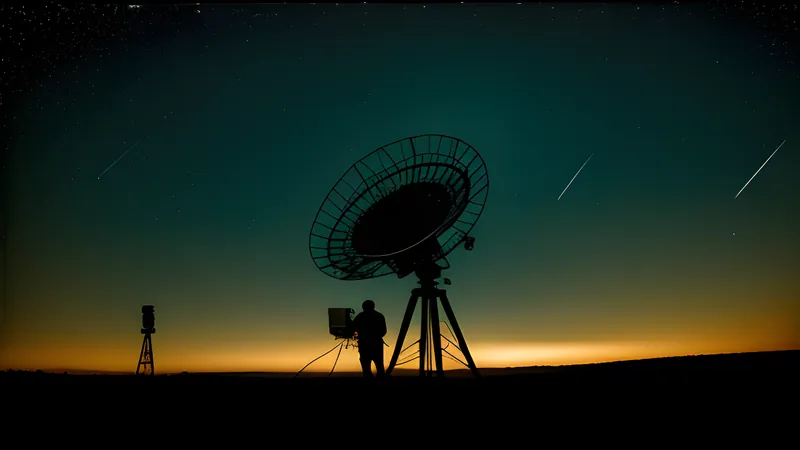
Jodie Foster plays Dr Ellie Arroway, a radio astronomer who has staked her professional life on SETI — the search for extraterrestrial intelligence — at a time when serious scientists regard it as career suicide. She listens to the sky for a living, headphones on, waiting for a pattern in the noise. The film gives her a childhood built for this: a beloved father who taught her the stars and an amateur radio set, and who died young, leaving her with a lifelong ache to reach across a distance and be answered.
Foster’s performance is the film’s spine. She plays Ellie as brilliant, prickly, impatient with authority and armoured in rationalism, a woman who has decided that only what can be measured is real because the alternative — faith, the unprovable — once failed to save the person she loved most. When the signal finally arrives, pulsing out of the Vega system in a sequence of prime numbers that can only be the work of intelligence, her vindication is total. And then the film does the interesting thing: it spends the rest of its runtime taking that certainty apart.
The argument at the centre
The signal turns out to carry more than a greeting. Buried in it are the blueprints for a machine, a vast and enigmatic device apparently designed to transport a single human being somewhere. The discovery detonates a global argument, and Sagan and Zemeckis stage it as a genuine debate rather than a backdrop. Who speaks for Earth? Should a religious government even build a device it cannot understand? Matthew McConaughey’s Palmer Joss, a writer and theologian who has become a kind of public conscience, presses Ellie on the thing her rationalism cannot cover: she demands evidence for everything, yet she cannot prove she loved her father. The film keeps returning to that gap between what is true and what can be demonstrated.
This is the reason Contact belongs in a very specific tradition of science fiction — the kind that uses the genre to interrogate belief itself. It sits in close conversation with Tarkovsky’s Stalker, another film in which the encounter with the unknown becomes a test of faith and the characters argue their way toward a threshold none of them can cross with proof in hand. Its modern successor is Denis Villeneuve’s Prisoners, a thriller soaked in the same American tension between reason and religion, where faith is both a comfort and a trap. Contact is the rare studio SF film brave enough to let its scientist heroine be the one whose certainty is challenged.
Why the craft works
Zemeckis was, by 1997, one of the most technically accomplished directors alive, and Contact deploys that skill with unusual restraint. The film’s most famous shot is a slow pull-back from Earth that recedes through the solar system and out into the galaxy while the soundtrack layers decades of human broadcast chatter thinning into silence — a single image that dramatises the entire premise, our noise radiating outward, waiting to be heard. There is a bravura reverse zoom through a bathroom mirror that people still study for the sheer nerve of it. The effects serve the ideas rather than smothering them.
Crucially, Zemeckis grounds the cosmic material in a convincing texture of how big science and big government actually behave. The film is sharp about institutional politics — the credit-hungry supervisor, the security state’s paranoia, the religious right’s reaction, the way a discovery of infinite significance gets processed through committees and press conferences and funding fights. That procedural realism is what makes the wonder land when it comes. Set beside Spielberg’s Close Encounters of the Third Kind, which reached first contact through pure awe and a child’s openness, Contact reaches it through bureaucracy, scepticism and argument, and arrives somewhere just as moving by a colder road.
The 1990s vintage and what it foreshadowed
Contact came out in a decade when mainstream science fiction was mostly about spectacle and disaster, and its willingness to be quiet and cerebral made it an outlier even then. Sagan died shortly before its release, and the film carries the weight of his particular project: a lifelong effort to make people feel the awe of a scientific cosmos without needing the supernatural, while treating the religious impulse with respect rather than contempt. The film’s refusal to declare a winner in the faith-versus-evidence bout is Sagan’s own generosity encoded into the plot.
You can draw a clean line from here to the most acclaimed cerebral first-contact film of the following generation, Villeneuve’s Arrival, which also centres a lone female scientist, also treats communication with the unknown as its true subject, and also fuses the cosmic with a private story of loss and a father-daughter grief. Arrival refined the model; Contact built it. And behind both stands 2001: A Space Odyssey, the film that first insisted an encounter with a higher intelligence could be a spiritual event a mainstream audience would sit still for.
Where it stumbles
Contact is not a flawless film. It is long, and its final act asks a great deal of the audience’s patience. The romance between Ellie and Palmer is underwritten and occasionally forced, a screenplay obligation rather than a living thing. Some of the political villainy is broad. And the film’s attempt to hold science and faith in perfect balance can tip, in places, into a fence-sitting tastefulness that dulls its own edge.
But the ambition dwarfs the flaws. This is a two-and-a-half-hour studio tentpole that trusts its audience to follow an argument about the limits of empirical knowledge and the nature of proof, and to find that argument thrilling. It gave Foster one of her best roles and gave the genre a template for the smart, sober, grief-haunted first-contact film that the following decades would keep returning to. For anyone who wants their science fiction to think as hard as it dreams, it remains essential viewing.
Spoilers below
The machine is built — after the first attempt is destroyed by a saboteur, a secret second device funded by the reclusive billionaire Hadden allows the project to proceed — and Ellie is chosen to make the journey. What follows is the film’s most daring and divisive sequence. Strapped into the pod, she is dropped through the machine and experiences a passage through a series of wormholes, a voyage across unimaginable distances, arriving at what appears to be a serene beach modelled on a childhood drawing. There an alien intelligence meets her wearing the form of her dead father, chosen, it explains, to make the encounter bearable. It offers her not answers but a first contact, a single step, with the promise that humanity will take the rest in its own time.
Then the gut-punch. From the perspective of everyone on Earth, Ellie’s pod simply dropped straight through the machine and splashed into the sea. No time passed. There is no physical evidence that she went anywhere at all. The scientist who has spent her life demanding proof returns with the most extraordinary experience imaginable and nothing to substantiate it — she is placed before a government inquiry and asked, essentially, to admit she hallucinated the whole thing, to recant. And she cannot. She will not deny what she knows she experienced, even though she of all people understands she is now asking the world to take her word on faith.
The film’s final, quiet irony is perfect. The very rationalist who scorned belief without evidence ends up in exactly the position of the faithful — certain of a transformative encounter she can never prove to a sceptic. Sagan’s argument closes by refusing to crown a winner, resting instead on the recognition that the two positions have met. A buried detail seals it: the recording device Ellie carried captured roughly eighteen hours of static — far too much for a journey that officially lasted a second — a fact the inquiry quietly suppresses. The evidence exists; it has simply been hidden from her, and from us. It is the kindest and cleverest way the film could have ended, letting Ellie keep her integrity and letting the audience keep the faith that she was, all along, telling the truth.
Related Content