Classe tous risques: The Other Great French Crime Film
Claude Sautet made a gangster picture about fatherhood in 1960 and Godard buried it by accident

Contents
In 1960 two French crime films opened with Jean-Paul Belmondo in them. One was Breathless, and it detonated a movement, made its director immortal, and is still being cited in film schools sixty-five years later. The other was Classe tous risques, and it vanished so completely that it took four decades and an American repertory re-release to get it looked at properly. Godard did not mean to bury Claude Sautet. He simply arrived at the same moment with a manifesto, and manifestos travel faster than craftsmanship.
The film that got buried is one of the best crime pictures France has ever produced, and its subject is something the genre almost never touches: a gangster with school-age children and no childcare.
The premise nobody else would use
Abel Davos (Lino Ventura) is a French criminal living in exile in Milan with his wife and two small sons. He has been condemned to death in absentia at home. The Italian police are closing in, and Davos needs to get back to France — a country where his execution is a matter of administrative scheduling — because there is nowhere else left.
To fund the journey he and his partner Raymond stage a robbery in Milan. The job is done in daylight, on a busy street, quickly and badly, and Sautet shoots it with a documentary flatness that has none of the grammar of a set piece. It is over in moments and it goes wrong in a way that reorders the rest of the film.
What follows is a fugitive journey with the wrong cargo. Davos is a professional criminal moving across Europe with two children who need feeding, sleeping and explaining to. Sautet’s genius — and this is why the film matters — is to treat the logistics with total seriousness. The children are not symbols. They are two small people who are tired, who ask questions, and whose presence turns every criminal decision into a domestic one. No other crime film of the era would have dared to make the hero’s central problem a nap.
The abandonment
Back in France, Davos calls his old friends, the men he came up with, the ones who owe him. They are established now, comfortable, running businesses. They discuss him.
The sequence in which these men decide what to do about Abel Davos is one of the coldest things in French cinema, and Sautet plays it entirely without villainy. Nobody sneers. Nobody betrays. They are simply reasonable — the risk is too high, the timing is bad, the man is under a death sentence and being near him is fatal. They arrange, instead, to send help: a stranger, hired, who owes Davos nothing.
The stranger is Eric Stark (Belmondo), young, cheerful, capable and entirely without a stake in any of this. He turns up in an ambulance to drive a condemned man and two children across France, and he does the job well, for money, and then keeps doing it after the money has stopped being the reason. The friendship that develops between Ventura’s granite and Belmondo’s quicksilver is the warmest thing in the picture and the film’s only source of light.
Belmondo is superb here in a register his Breathless reputation obscured for decades. Michel Poiccard is a poseur playing at being a gangster. Eric Stark is a man doing a job. The performances were shot within months of each other and they could be different actors.
The craft: Sautet’s refusal of style
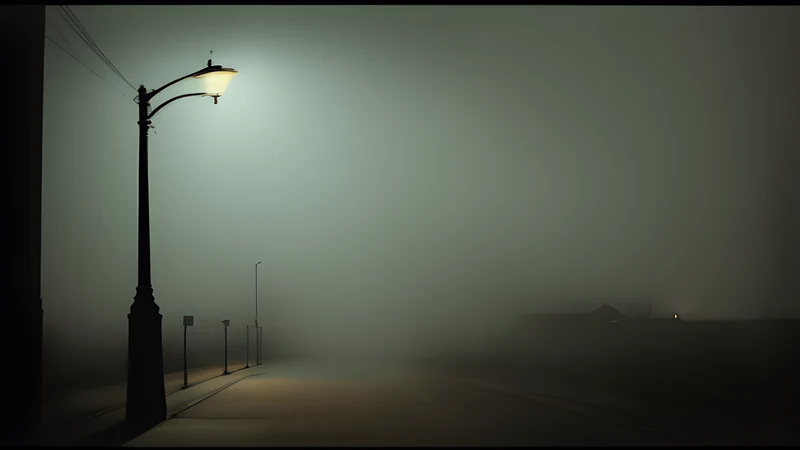
Ghislain Cloquet’s photography is plain in a way that was deeply unfashionable in 1960 and looks extraordinary now. There is no Melvillian fog, no expressionist shadow, no fedora ritual. Sautet shoots France as France — ordinary roads, ordinary bars, ordinary rain — and the effect is to strip the criminal life of every romantic protection the genre usually supplies.
The one place he lets himself be lyrical is the score. Georges Delerue writes something aching and unhurried against the action, and it functions as the film’s only editorial comment: nobody on screen ever says that this is sad, so the music does it.
Sautet’s most radical decision is what he does with violence. The film has two or three moments of it and each is over almost before you have registered it, shot without coverage, and then absorbed into the ongoing business of the day. People die and the survivors have to keep driving, keep eating, keep dealing with the children. This was Sautet’s actual interest — he spent the rest of his career making character dramas like Les Choses de la vie and César et Rosalie, and Classe tous risques is already that director, working in a genre that happens to have guns in it. José Giovanni wrote the source novel from his own experience of the underworld, and the film’s fidelity to the boredom and the paperwork of a criminal existence comes straight from him.
How a film disappears
The burial is worth understanding, because it was not a judgement on quality. Classe tous risques opened in 1960 into a French film culture that had, that season, decided what the future looked like, and the future was handheld, insolent and twenty-nine years old. Sautet was a craftsman in his mid-thirties who had spent years as a script doctor and assistant, and he had made a well-built genre film in a form the Cahiers generation had just finished declaring dead. The critics who set the agenda were the people who had written the manifesto. They were not going to praise the thing the manifesto was against.
Sautet took the lesson and left crime behind. The films that made his name — Les Choses de la vie, César et Rosalie, Un cœur en hiver — are chamber pieces about middle-class people failing to say what they mean, and they are recognisably by the same man: the same plainness, the same refusal to italicise, the same interest in what people do while the important thing goes unmentioned. The rescue came four decades later, when Rialto put the film back into American cinemas in the 2000s and a generation of critics who had never heard of it discovered that the other 1960 Belmondo film was, by some distance, the better constructed one.
The real ancestor
Jacques Becker’s Touchez pas au grisbi is the direct forebear, six years earlier — the ageing gangster, the loyalty tested, the criminal milieu photographed as a workplace full of tired men. Becker established that a French crime film could be about fatigue, and Sautet took the idea and added dependants.
The essential companion is Melville’s Le Deuxième Souffle, also from a Giovanni novel, also starring Ventura, also about a criminal learning what his friends’ loyalty is actually worth. The two films share an author, a star and a thesis, and they diverge completely on temperament: Melville turns the material into ritual and myth, Sautet keeps it at the level of a man who has not slept. Set beside Le Doulos, Sautet’s film looks almost documentary — Melville’s underworld has a code, Sautet’s just has arrangements. And Ventura’s later work in Army of Shadows is the same face carrying the same weight in a war.
A verdict, argued
Classe tous risques is the film to reach for when someone claims the French crime tradition is all style and fedoras. It is a genuinely humane picture about people who do terrible things, and its argument is unsentimental and durable: the underworld’s talk of brotherhood is a convenience, and it dissolves at the exact moment it costs anybody anything.
The case against is that it lacks a signature. Melville’s films are instantly identifiable from four frames; Sautet’s are not, and the absence of a style has cost him seventy years of reputation. There is no Classe tous risques shot that a poster can be built from. Some viewers find the plainness inert, and I understand the reaction, though I think it mistakes discretion for absence.
Ventura’s performance settles it. He is a big, slow, unhandsome man playing a killer who is also, visibly and inconveniently, a father, and he does it without a single moment of pleading for our sympathy. The film simply places the children in the frame and lets you work out the arithmetic yourself.
It circulates now in a good restoration, largely thanks to the American re-release that rescued it in the 2000s. Watch it after Breathless rather than before, and consider which of the two has more to say about the actual condition of being a criminal.
Spoilers below
Stop here if you have not seen it. The ending is what the film has been arguing towards.
The Milan robbery costs Davos his wife. She is killed during the flight out of Italy, along with Raymond, and Sautet does it in seconds, with no build and no aria — a woman simply falls and does not get up. From that moment the two boys have one parent, and that parent is a man with a death sentence and no legal existence. The film’s whole remaining structure is the problem of what to do with them.
Davos’s revenge on the friends who abandoned him occupies the last movement, and it is startling for how little satisfaction Sautet allows it. The killings are quick, unglamorous and pointedly unrewarding. Nothing is restored. The men who declined to help him were correct about the risk, which the film has the nerve to acknowledge.
The ending is the great one. Davos, cornered, hands his sons over — they go into care, into an ordinary institutional French childhood, and the last thing the film gives us is Stark watching them go and Davos going to whatever the state has scheduled for him. There is no last stand, no blaze, no myth. A man’s criminal life is settled, and the actual consequence of it is two boys in a building with a stranger’s name on the door.
Sautet’s final image lands the whole thesis: the gangster’s tragedy is not that he dies. It is that he was somebody’s father, and the profession has no arrangement for that at all.
Related Content