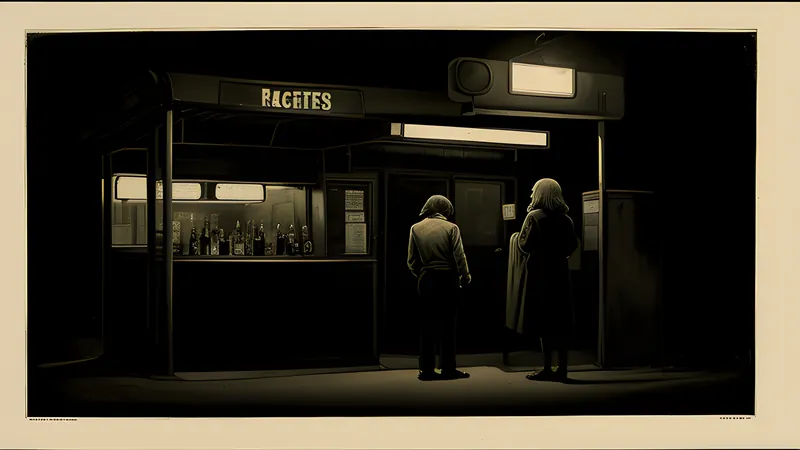
Charley Varrick: The Last Independent Against the Mob
Don Siegel, Walter Matthau and a small-town robbery that steals the wrong money

Contents
Don Siegel called Charley Varrick (1973) one of the films he was proudest of, and it is easy to see why. It is a crime picture built entirely out of competence — the hero’s, the villains’, and above all the director’s — and it moves with the unfussy professionalism it keeps praising in its characters. Coming a year after Siegel and Clint Eastwood remade the American cop movie with Dirty Harry, this is the quieter, cannier cousin: a small, hard, funny thriller about a man who accidentally steals from people you cannot steal from, and has to out-think everybody in the frame to stay alive. Its unlikely secret weapon is Walter Matthau, playing dead straight, in a role he reportedly never warmed to and never bettered.
The wrong bank
Charley Varrick is a crop-duster by trade and a bank robber on the side, and the sign on his van reads “Last of the Independents” — a boast, a business slogan, and the film’s whole thesis in four words. He hits a sleepy bank in small-town New Mexico expecting a modest haul, and the job goes wrong in the first reel: there is gunfire, a police officer dies, and Charley’s wife, who was driving, is fatally hit. He gets away with far more money than a bank that size should ever hold, and the size of the take is the trap. Charley works out fast what his partner refuses to — that this was a quiet drop for laundered Mafia cash, and that the syndicate will want it back, along with the head of whoever took it.
From there the film becomes a three-way chess match. The mob dispatches an enforcer named Molly (Joe Don Baker), a big, affable, methodical sadist who works his way toward Charley by hurting the people in between. The bank’s crooked executive (John Vernon) has his own reasons to keep the theft quiet. And Charley, saddled with a hot-headed young partner (Andy Robinson) who wants to spend the money immediately, has to engineer a way out that satisfies a criminal organisation which does not accept the return of its cash as sufficient apology. The pleasure of the film is watching a modest, ageing man with no muscle and no allies solve a problem that should kill him, using nothing but patience and craft.
Why it works: professionals all the way down
Siegel’s great subject across his career was the professional under pressure, and Charley Varrick is his most concentrated statement of it. Almost everyone here is good at their job, and the film’s tension comes from watching competing competences grind against each other. Molly is a superb piece of villain construction precisely because he is not a snarling thug; Joe Don Baker plays him as a genial travelling businessman who happens to deal in violence, unhurried and thorough, and the calm is what frightens. He is the kind of antagonist Anton Chigurh would later make canonical — the implacable professional who cannot be reasoned with because he is only doing his work — and the lineage runs straight from here to No Country for Old Men.
Against him, Matthau is the film’s masterstroke. He was a comic actor of genius, all rumpled hangdog timing, and Siegel casts that surface as camouflage. Charley looks like a man you could push over, and every antagonist underestimates him for it, and that underestimation is his only weapon. Matthau plays him almost without affect — watchful, economical, giving nothing away — so that you spend the film a step behind his thinking, realising only afterward that each apparently passive choice was a piece of a plan. It is a performance built on withholding, and it works because the actor trusts the audience to lean in.
The filmmaking matches the hero. Siegel shoots in clean, functional wide-screen, cuts on information rather than flash, and wastes nothing. There is no fat on this picture. Set-pieces are staged for legibility so that you always understand the geography and the stakes, which is what makes the suspense bite. Siegel belonged to the same craft tradition as the men in his films, and Charley Varrick is the work of a director as unshowy and effective as its hero. The economy is the style.
The last of the independents
That slogan on the van is doing real thematic work, and it is why the film has aged into something more resonant than a lean 1970s thriller has any right to be. Charley is a genuine anachronism — a self-employed criminal, a one-man operation, running his small racket in a country being swallowed by organisations too large to fight. The bank is a front for a syndicate; the syndicate is a corporation; the police are a bureaucracy; and Charley, the crop-duster with a sideline, is the last man doing it for himself. Siegel and Matthau make his independence heroic without ever making it sentimental. He is a thief who got a police officer and his own wife killed, and the film does not let you forget it. But his refusal to be absorbed — by the mob, by his greedy partner’s fantasies, by the machine closing around him — carries a real charge in a decade that was watching the individual lose everywhere.
That is the note the whole 1970s American crime cycle keeps sounding, and it is why Charley Varrick sits so comfortably among its peers. It shares Get Carter’s vision of a lone operator moving through a corrupt landscape, though Siegel swaps Carter’s cold fury for a survivor’s patience. It rhymes with the deromanticised, workmanlike criminality of The Friends of Eddie Coyle, where the mob is a bureaucracy that grinds up the little man. And within this season’s trio of revisits it is the sly one — the film where craft beats muscle — set against the fatal stasis of Mikey and Nicky and the sun-scorched flight of The Getaway. All three watch a man try to slip a trap; only Siegel lets his hero out-think it clean.
The verdict
Charley Varrick is a small film that gets almost everything right, and its modesty is the point. It has no grand statement to make and no visual flourishes to sell; it just tells a tight, surprising, grimly funny story with total control and a hero you underrate at exactly the rate the villains do. Matthau against type, Joe Don Baker as one of the great unhurried menaces, and Siegel at the peak of his unshowy craft add up to a picture that plays better every time. Reach for it when you want a thriller that respects your intelligence and its own economy in equal measure.
Where to watch: it turns up on physical media and the classic-film streaming services in a clean widescreen transfer that its compositions reward. Everything below the line gives away how Charley gets out.
Spoilers below
The plan is the payoff, and Siegel withholds it until the last possible moment, which is why the film improves on rewatch — the second time through, you can see Charley assembling the escape in plain sight. His problem is specific and brutal. Returning the money will not save him, because the mob has to make an example; the only survival is to convince them the man they want is already dead. So Charley engineers his own disappearance, and the machinery he builds to do it runs through everyone who has underestimated him.
He uses his partner without pity. Harman, the hot-headed young man who wanted to flaunt the cash, becomes a piece Charley sacrifices — feeding the syndicate a body and an identity so that the hunt closes on the wrong man. It is a genuinely cold move from a hero the film has kept just sympathetic enough, and Siegel refuses to flinch from it. Charley is a professional, and a professional spends what he has to. The forged papers and the switched identity are assembled quietly across the film’s middle, details you barely register until they detonate.
The climax is a duel between a light aircraft and a car, Charley in his crop-duster against Molly on the ground, and it is a small masterpiece of staged suspense — legible, escalating, resolved with a twist of craft rather than a barrage. Charley wins the way he has won all along, by having thought one move further ahead than the man trying to kill him, and by letting his opponent’s confidence do half the work. Molly, the implacable professional, is beaten by a better professional who never looked the part. And then Charley simply drives away — the money laundered back into legitimacy, the syndicate satisfied with a corpse that is not his, the last independent still independent. Siegel gives him a clean exit, which after the wife, the dead officer, and the sacrificed partner reads less as a happy ending than as the grim reward the film has argued for throughout: in a world of organisations, the only man who walks free is the one who trusts no one and plans everything.
Related Content