Charisma: Kiyoshi Kurosawa's Forest Parable
A burnt-out detective, a tree that may be poisoning a forest, and a director who refuses to tell you what any of it means
Contents
A hostage negotiation goes wrong in the first few minutes of Charisma, and both men die. The detective who failed them, Goro Yabuike, is sent away — quietly set aside rather than formally disciplined, the way an institution deals with a man it has no further use for. He wanders into a forest. In a clearing he finds a tree. The tree is ugly, half-dead, and roughly the size of a person, and several people in that forest are prepared to kill over whether it should live.
That is the whole film, and describing it that way makes it sound like a fable with a lesson at the end. Kiyoshi Kurosawa spends the next ninety-odd minutes systematically confiscating every lesson you reach for.
The note
The dead hostage-taker leaves a scrap of paper behind, and its contents follow Yabuike into the forest and out the other side of the film: restore the rules of the world. Kurosawa hands you this in the opening movement, before you have any idea what the film is about, and it functions as the only instruction you are ever given. Every faction in the forest believes it is following it. All of them mean something different by it. None of them is obviously wrong.
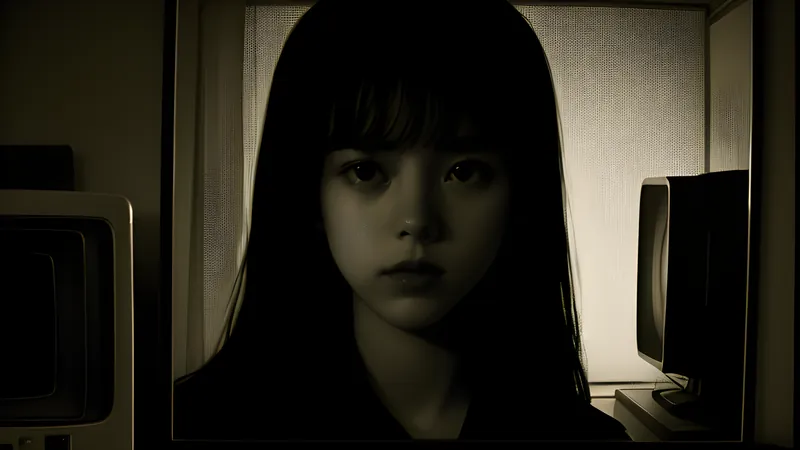
Kôji Yakusho plays Yabuike, and it is one of the great performances of Kurosawa’s great run — a man so thoroughly hollowed out that he becomes a kind of weather system, drifting into other people’s convictions and taking their shape briefly before drifting on. Yakusho had already given Kurosawa the empty centre of Cure two years earlier, and Yabuike is that detective’s cousin: a policeman whose professional function is to restore order and who has no personal conviction about what order would even be. The two films rhyme so precisely that watching them together feels like a diptych the director never announced.
The forest contains a young man who guards the tree and insists it is precious. It contains a botanist who has studied the surrounding woodland and concluded the tree is poisoning everything within reach of its roots, and who wants it destroyed for the forest’s sake. It contains men who want to dig it up and sell it, because a thing this rare has a price. And it contains a sanatorium full of people whose relationship to the outside world has already been severed.
The allegory that will not close
Here is the move that makes Charisma endure, and it is a genuinely difficult thing to pull off. The tree is a perfect allegorical object. It is so perfect that within twenty minutes any reasonably alert viewer has assembled a reading: the exceptional individual versus the collective, the invasive species versus the ecosystem, the artist versus the society that cannot afford him, capital versus the commons, Japan’s post-war settlement versus whatever was there before.
Every one of those readings works. That is precisely why none of them is the answer. Kurosawa builds an object that generates interpretations faster than the film can dismiss them, and then he lets the characters argue their interpretations at each other with total sincerity, and the arguments are all coherent, and they are all incompatible, and people begin dying over the incompatibility. The film is about the violence of insisting on a reading. Handing the audience a reading would be the one unforgivable move, and Kurosawa never makes it.
This frustrates people, reasonably. Charisma premiered in the Directors’ Fortnight at Cannes in 1999 and has spent the quarter-century since being described as his most difficult film, which usually means his least resolved. The resolution is there. It just is not the kind you can carry out of the cinema in a sentence.
Why the flatness works
The craft argument sits in the compositions, and it is the thing that separates Kurosawa from every other director who has pointed a camera at a forest and hoped for dread.
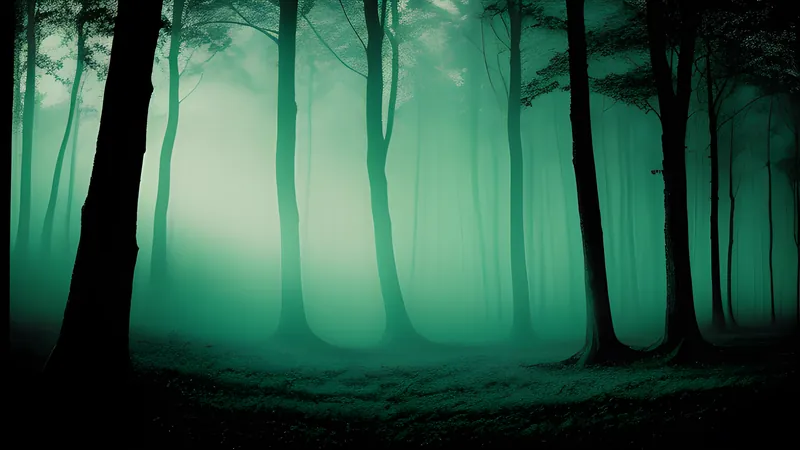
Kurosawa shoots this material almost entirely in flat, wide, static or slowly drifting frames, from a middle distance, with the camera at a slightly wrong height and the subject placed slightly wrong within the frame. There are no reaction close-ups to tell you how to feel. There is no score cueing menace. The forest is photographed in a washed grey-green daylight that flattens depth, so the trees stop reading as receding space and start reading as a wall of vertical lines with people standing in front of it.
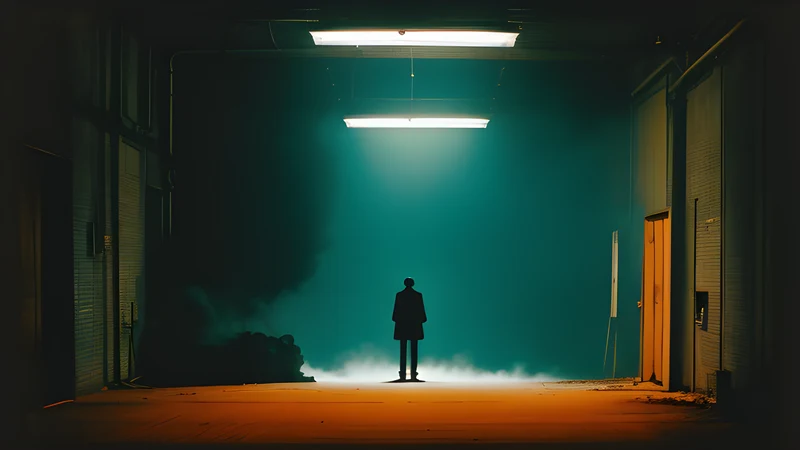
The effect is specific and it is not decorative. A close-up creates identification; a flat wide shot creates observation. By refusing to move in, Kurosawa denies you a character to stand behind, and the film’s argument — that every faction here has a defensible position and no position deserves your loyalty — is enforced by the lens rather than stated by the dialogue. When violence arrives it happens at that same middle distance, in the same daylight, without emphasis, and it is far more disturbing than a cut-in would make it. You are watching something happen in a place, and the film declines to hold your hand about it. This is the whole technique catalogued in Kurosawa’s dread without a jump scare, applied here to daylight and shrubbery instead of ghosts and dark corridors, and it turns out to work identically.
The real ancestor
The reflex comparison is Tarkovsky, and it is fair: a damaged man walks into a zone where the ordinary rules are suspended and an object at the centre promises meaning to anyone who reaches it. Stalker is unmistakably in the room. Kurosawa’s forest is a Zone with a tree in it, and Yabuike is a man who has come to the Zone because he has nowhere else to be.
The stranger and more useful ancestor is documentary. There is a strain of cinema that photographs landscape until it stops being landscape and becomes evidence of some other planet’s logic — Herzog’s Fata Morgana is the purest example, a film that finds science fiction in the Sahara simply by looking at it long enough and refusing to explain. Charisma does that to a Japanese hillside. It is filed as sci-fi because there is nowhere else to file a film in which the physical world is quietly, unaccountably wrong and nobody has a device to measure it with.
That is also the through-line to the apocalypse Kurosawa would stage two years later. Pulse ends the world with the same flat grey light and the same refusal to raise its voice, and the two films share a conviction that the end of things will arrive without a score, in the middle of the afternoon, while people are still arguing about something else.
The case against
The film asks a great deal and offers little in the way of momentum. The middle section circles — factions restate positions, alliances shift for reasons that are more temperamental than dramatic, and if the central image has not gripped you by the forty-minute mark there is nothing else on offer. The sanatorium thread is thinner than the material around it. And Kurosawa’s refusal to resolve, which is the film’s thesis, is also indistinguishable from a lack of an ending if you are not in a receptive mood.
It is the least ingratiating film in a period when he was making some of the most ingratiating dread in the world. That is the deal.
The verdict, spoiler-free
Charisma is the strangest thing Kurosawa made in his strongest decade, and the one that has aged furthest forward. Twenty-five years on, a film about people who have each derived a total and irreconcilable reading of the same object, and who cannot coexist with anyone holding a different one, does not require any translation at all.
Watch it after Cure, which shares its detective and its emptiness and is the easier way in. It circulates on disc in restored editions and drifts through the arthouse streaming services; it has never been the easy one to find, which is entirely in character.
Spoilers below
The botanist’s case against the tree is the film’s most persuasive argument, and Kurosawa spends the second half dismantling the idea that being persuasive is the same as being right. Her research says the tree secretes something that kills the surrounding woodland; destroy the one, save the many; the arithmetic is clean. Yabuike, drifting, is convinced by her, and then convinced by the young man guarding it, and then convinced by nobody, because Yabuike’s condition is that he cannot hold a conviction long enough for it to become a self.
What the film does with the tree itself is the masterstroke. It refuses, permanently, to adjudicate. We never learn whether the tree is poisoning the forest. We never learn what it is, where it came from, or why it exerts the pull it does. The characters who are certain of its nature are the characters who kill for it, and their certainty is offered as the symptom rather than the insight. When the tree is finally destroyed — and it is, in a scene played with almost no ceremony — the forest does not recover. The problem was never located in the tree.
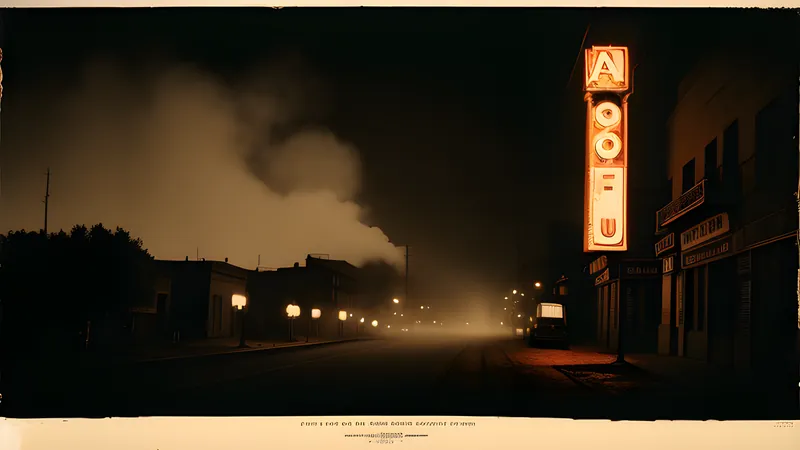
Then the ending pulls the frame back and detonates the entire allegory. Yabuike walks out of the forest and back toward the city, and Kurosawa shows him the horizon: smoke rising, the sky wrong, something enormous and unspecified happening to the world beyond the treeline. The rules have not been restored anywhere. The tiny local war over one object, which the film has treated with the seriousness of a moral crisis, turns out to have been a scale model of something already consuming everything, and the film ends on Yakusho’s face registering roughly nothing, because a man who cannot hold a conviction cannot hold a catastrophe either.
That final image is the argument. The dead man’s note asked someone to restore the rules of the world, and every person who took the request seriously ended up killing over which rules, and the world burned down behind them while they debated. Kurosawa does not tell you this is a parable about anything. He just leaves it on the horizon and lets you carry it home.
Related Content