Cemetery Man: The Philosophical Zombie Romance
Michele Soavi's Dellamorte Dellamore is the strangest, saddest, funniest film the Italian horror boom ever produced
Contents
The Italian horror industry was more or less finished by 1994, its great directors ageing or working in television, its cheap-and-lurid model killed off by home video and shifting tastes. And then, at the very end, it produced Cemetery Man, a film so odd, so beautiful and so quietly heartbroken that it plays like the whole tradition sitting up one last time to say something it had never quite managed before. Released in Italy as Dellamorte Dellamore, “Of Death, Of Love”, Michele Soavi’s film is a zombie comedy, a doomed romance and a philosophical shrug about the pointlessness of everything, and it holds all three in the same hand without dropping any.
The premise is a deadpan marvel. Francesco Dellamorte is the watchman of the cemetery in the small town of Buffalora, where, for reasons no one investigates, the dead return to life on the seventh night after burial. Dellamorte’s job is simply to kill them again before they wander off, a chore he performs with the weary efficiency of a man unclogging a drain, assisted by his monosyllabic manservant Gnaghi. He has stopped finding it strange. That flat acceptance of the impossible is the film’s comic engine and, gradually, its tragedy.
Rupert Everett as the most tired man alive
Casting Rupert Everett as Dellamorte is the film’s masterstroke, and there is a lovely piece of history behind it. The novel Dellamorte Dellamore, written by Tiziano Sclavi, drew on Sclavi’s own hugely popular Italian comic Dylan Dog, whose paranormal-investigator hero had been drawn to resemble Everett from the start. The film closes the loop by casting the man the comic had always looked like, and Everett repays it with a performance of magnificent, elegant exhaustion. His Dellamorte is beautiful, courteous and utterly defeated, a man going through the motions of an absurd existence because no better option has presented itself.
Everett plays the horror straight and the comedy dry, and that restraint is what lets the film’s wilder swings land. When he shoots a returning corpse in the head over breakfast, he does it the way you might swat a fly, and the joke is entirely in his indifference. As the film’s romantic engine kicks in and Dellamorte falls, repeatedly and catastrophically, for a woman played in several guises by Anna Falchi, Everett lets you see the flicker of hope each time and the deeper resignation each time it collapses. It is a genuinely great performance in a genre that rarely asks for one, and it anchors everything strange around it.
Falchi, for her part, has the film’s most difficult task, appearing as a series of women who may be the same woman reborn or simply the same longing projected onto new faces, and she gives each a distinct erotic and melancholy charge. François Hadji-Lazaro’s Gnaghi, meanwhile, is the film’s secret heart, a hulking, near-speechless innocent whose own grotesque love story runs in gentle parallel to his master’s and somehow ends up the tenderest thing in the picture.
Soavi, the last of the line
Michele Soavi is the crucial name for placing this film, because he is the bridge between the Italian horror masters and their end. He came up as a protégé and assistant to Dario Argento, working on the great man’s films through the eighties, and he absorbed the Italian tradition’s command of colour, camera movement and set-piece atmosphere before making his own features. Cemetery Man is the film where he stepped fully out of Argento’s shadow, taking the visual sophistication he had learned and pointing it at material with a soul the giallo rarely bothered with.
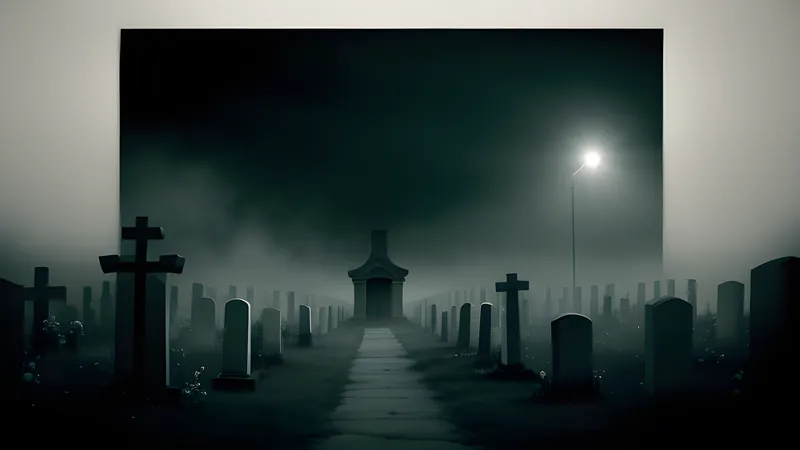
You can feel the whole lineage in the images. The cemetery is a gorgeous gothic set of mist and marble and moonlight, lit with the painterly care Soavi inherited from Argento and, further back, from Bava, whose fashion-house murders in Blood and Black Lace established that Italian horror would always be about beauty first. But Soavi spends that beauty on a story about loneliness and mortality, and the combination is unlike anything else in the canon. The film looks like a nightmare and feels like a depression, and it is often, in the same breath, very funny. Soavi had already shown a knack for the elegant set-piece in his earlier features, the operatic slasher StageFright and the Argento-produced The Church, but nothing in that work prepared anyone for the emotional reach of this one. He would step away from cinema soon after to care for his ill son, which lends the film a further melancholy in hindsight: it stands as the last full flowering of a talent the genre never got to see mature.
The comedy is where it touches hands with the wider zombie tradition, and specifically with the splatter-comedy peak the form reached the same decade. Peter Jackson’s Braindead had, two years earlier, pushed the reanimated-corpse film to a delirium of practical gore played for laughs, and Cemetery Man shares that willingness to find the absurd in the undead. Where Jackson goes for gleeful excess, though, Soavi goes for something quieter and sadder, using the same premise, the dead who will not stay dead, to muse on whether the living are really any more alive.
Why the strangeness works
The reason Cemetery Man survives its own tonal madness is that Soavi commits absolutely to the internal logic of a dream. The film does not explain why the dead of Buffalora return, and it is right not to, because an explanation would drag it back toward being a normal horror film with rules and stakes. Instead the returning dead are simply a fact of Dellamorte’s world, a recurring inconvenience that frames his real problem, which is that he cannot find a reason to care about being alive. The zombies are the metaphor made literal: everyone in Buffalora is, in some sense, going through the motions of a life that keeps looping back on itself.
Structurally the film grows steadily more unmoored as it goes, sliding from episodic dark comedy into something closer to a fugue, and the audience’s footing dissolves along with Dellamorte’s. That progression is deliberate and beautifully controlled, and it asks a patience that the film richly rewards. This is a horror film that turns, by the end, into a philosophical object, and viewers arriving for straightforward zombie thrills sometimes find themselves stranded. The ones who stay find one of the genre’s genuine treasures.
Its truest cousins sit outside horror entirely, among the melancholy surrealists: the Jean Cocteau of Orphée, wandering the borders of death; the absurdist existentialism of Beckett, all repetition and futility and grim comedy; the loop-bound fatalism that later films would build whole plots around. Cemetery Man got there by way of a graveyard and a shotgun, and it remains the most literate, least likely masterpiece the Italian horror boom left behind as it died.
Where to watch: seek a good uncut transfer that preserves Soavi’s careful colour and, ideally, the original Italian and English tracks, since the film was shot with Everett performing in English and the texture of his weary delivery is part of the performance. It rewards a second viewing more than almost any film in its genre.
Spoilers below
The film’s descent into full unreality is the point, and it is worth tracing. After Dellamorte loses the woman he loves, again and again, in a series of increasingly catastrophic romances, he begins to unravel, and the film unravels with him. He decides, at one bleak juncture, that it might be simpler to kill the living before they die rather than wait to shoot them once they return, and the moral logic of the film curdles into something genuinely disturbing, a man so numbed by a meaningless cycle that murder becomes just another form of tidying up.
The ending is one of the great closing images in horror, and it recasts everything before it. Dellamorte and Gnaghi, having fled Buffalora and driven to the edge of the world, reach a point where the road simply stops at a precipice, and beyond it there is nothing, no landscape, only void. The final shot pulls back to reveal that the whole of their reality sits inside a small model, a snow-globe world, and that there was never anywhere to escape to. The cemetery, the town, the endless returning dead, all of it was a closed system with no outside, and Dellamorte’s despair was, in the most literal sense, inescapable.
It is a devastating idea delivered with a shrug, which is the film’s whole register. Dellamorte is a man trapped in a toy, condemned to repeat his griefs forever, and Soavi lets the horror of that land softly rather than screaming it. The film ends on a kind of cosmic resignation, the sense that love and death are the only two events available and that they will keep happening, in the same order, without end. For a genre so often content to make you jump, Cemetery Man dares to make you grieve, and that is why it endures while flashier films have rotted away.
Related Content