Casshern: The Live-Action Anime Fever Dream
Kazuaki Kiriya built an entire world inside a green-screen box, then buried a good film somewhere in it
Contents
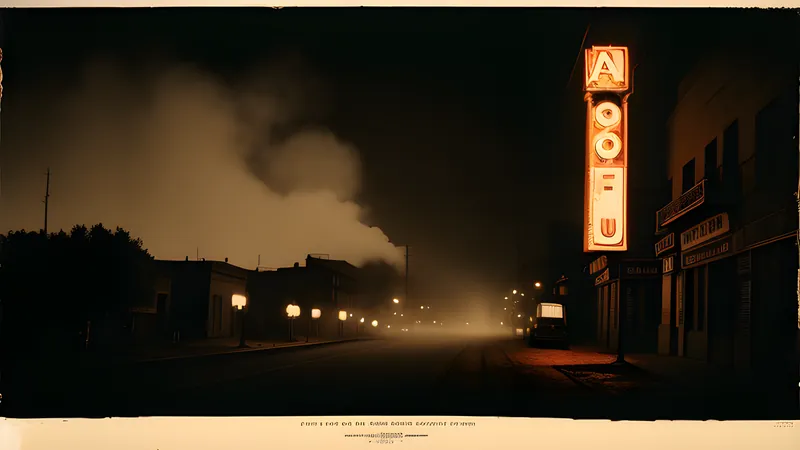
There is a shot early in Casshern — a city of impossible spires and iron balconies, drowned in sepia, lit from somewhere behind the smog by a light that has no plausible source — that does not look like anything else in cinema. Hollywood futurism of the period ran to polished chrome; the Blade Runner school ran to lived-in grime. This looks like a Weimar propaganda poster that has been left in the rain and then hand-tinted by someone in love with it. Kazuaki Kiriya’s 2004 debut is full of images like that. It is also, and there is no getting around this, close to incomprehensible for long stretches of its two-and-a-half-hour running time.
Twenty years later the film has settled into an odd, durable place: too gorgeous to dismiss, too broken to defend, permanently interesting to anyone who cares how the images got there. It is the film people cite when they want to argue that anime can survive the jump to live action, and simultaneously the film people cite when they want to argue that it cannot.
The music-video director and the green box
Kiriya came to features from photography and music video. He had shot promos in Japan through the late 1990s and early 2000s, and he arrived at Casshern with a music-video director’s core conviction: the image is the argument. He also arrived with a technical proposition that was, in 2004, genuinely radical. Almost the entire film would be shot on digital video against green screen, with the world built afterwards in the computer.
It is worth pausing on the timing, because it is the most underrated thing about the film. Casshern opened in Japan in April 2004. Sky Captain and the World of Tomorrow — the American film that got the credit for inventing the all-digital backlot — opened five months later. Bilal’s Immortel (ad vitam) arrived the same year, Sin City the year after. The technique that would define a whole strand of mid-2000s genre film was being worked out simultaneously in three countries, and the Japanese entry got there first and is almost never mentioned in the lineage.
What Kiriya did with it also differs from what the Americans did. Sky Captain used the digital backlot for pastiche — a loving reconstruction of 1930s serial cinema, everything soft-focused and burnished. Kiriya used it to build a place that could not exist and had never existed: a retrofuture assembled out of Prussian militarism, Soviet monumentalism, art nouveau ironwork and a colour palette drawn from decaying photographs. The city has no historical referent. That is the point of it. The war it is fighting has no map.
The story it is telling, more or less
The public record here is simple enough, even if the film’s telling of it is not. A fifty-year war between a Greater Eastern Federation and a territory called Europa has poisoned the world; the survivors live under permanent chemical dusk. Dr. Azuma (Akira Terao), a scientist whose wife is going blind, is developing “neo-cells” — tissue capable of regenerating any part of the body. The military funds him for reasons that are obviously not humanitarian. Something goes catastrophically right in the lab, and the tank of raw material births a population of fully formed adult beings, the neo-sapiens. The army massacres them almost immediately. A handful escape to a ruined fortress, find an army of dormant machines, and start planning what any reasonable survivor of a massacre would plan.
Azuma’s son Tetsuya (Yusuke Iseya) had enlisted against his father’s wishes and died at the front. His body comes home. His father, who has just watched the state slaughter the life he accidentally created, does the thing a grieving scientist in a story like this always does.
That is roughly the first act, and it is coherent. The problem is the other ninety minutes, in which the film keeps introducing conspiracies, factions, prophecies and reversals at a rate no audience can metabolise, while the images continue to be extraordinary. Kumiko Aso, as Tetsuya’s fiancée Luna, spends much of the film being asked to carry emotional weight the script has not built a floor under. Toshiaki Karasawa, as the neo-sapien leader Burai, gives the most legible performance in the film largely because his character wants one thing and says so.
Why the sepia actually works
Here is the craft argument, and it is better than the film’s reputation suggests. Green-screen features of this era almost universally fail on a specific technical problem: the actors and the environment have different light. You feel it before you can name it — the performer sits on the world rather than in it, and the brain rejects the composite.
Kiriya’s solution was to make the mismatch impossible to see by draining the whole frame toward a single narrow band. Everything in Casshern is pushed toward sepia, ochre, iron-grey and a bruised amber, with colour arriving only in violent isolated bursts — a red, a green flare, the neon of a sign. When the entire image lives inside a two-stop range of the same dirty gold, the seam between the actor and the painting behind him disappears, because there is not enough tonal information anywhere in the frame for the eye to catch the join. The heavy grain layered over the whole thing does the rest, adding a common texture that binds foreground to background the way a photographic negative would.
This is the same instinct Rodriguez applied to Sin City with monochrome, and it is a genuine insight about digital compositing that the industry took another decade to learn properly: unify the grade and the grain, and the audience stops looking for the edges. Kiriya got there through a photographer’s eye rather than a supervisor’s pipeline, and the result has aged considerably better than the era’s more expensive composites.
The ancestor nobody names
Everyone reaches for Blade Runner and Metropolis when describing this film’s look, and the Metropolis comparison is fair as far as the architecture goes. The real ancestor is somewhere else, and it is not a live-action film at all.
Casshern descends from the Japanese animated features that spent the 1980s and 1990s working out how to shoot a war city — the Otomo lineage, the machine-and-ruins tradition. The specific quality Kiriya is chasing, that combination of enormous mechanical dread and mournful human scale, is the exact register of Akira and of the anthology work collected in Memories and Robot Carnival. Its political texture — the fairy-tale fascism, the beautiful uniforms of an indefensible state — is Jin-Roh with a camera instead of cels.
Which is the whole trouble in miniature. Kiriya was adapting the feeling of an entire animated tradition rather than the 1973 Tatsunoko television series that gave him his title, and animation solves the problem of tonal excess automatically. A drawn frame can hold operatic emotion, absurd scale and a five-minute philosophical monologue without straining, because nothing in it is pretending to be photographed. Point a camera at a real actor doing the same thing and the register collapses. This is the recurring fault line running through anime’s live-action curse, and Casshern fails on it more interestingly than almost any other example, precisely because it is trying so hard.
The case against, honestly
The film is exhausting. Its editorial rhythm has no low gear — every scene arrives at maximum intensity and stays there, so the climaxes have nothing to climb from. The lore keeps expanding when it should be contracting. Characters explain their motivations in speeches that would sit comfortably in a manga panel and sit terribly in a human mouth. The last half hour reaches for cosmic profundity and mostly finds fog.
And the sincerity that makes the film moving in flashes is the same sincerity that makes it insufferable in bulk. Kiriya believes every word of the anti-war argument he is making, which is admirable, and he makes it roughly forty times.
The verdict, spoiler-free
Casshern is a failure that is worth more than most successes. It got to the all-digital feature before Hollywood did, solved the compositing problem with a photographer’s trick that still holds up, and built one of the few science-fiction worlds of the 2000s that does not look borrowed. It also cannot tell a story, and it does not know when to stop.
Watch it the way you would look at an illustrated plate book: for the pages. Then watch the animated work it descends from to see the same material handled by a form that can actually carry it — Jin-Roh for the politics, Memories for the scale. It streams and circulates on disc in more than one cut; the longer Japanese version is the coherent one to seek out, on the grounds that if you are going to be lost you may as well be lost in the director’s actual film.
Spoilers below
The resurrection is the film’s best sequence and its clearest thinking. Dr. Azuma, having watched the state butcher the beings his research accidentally created, lowers his dead son into the neo-cell tank. Tetsuya comes back — restored, superhumanly strong, and fundamentally wrong, a body assembled out of the same material as the people the army has just exterminated. The armour he eventually wears is a containment measure as much as a costume. Kiriya stages the whole thing with genuine horror, and the moral architecture is clean: the father who mourns his son is the father who created the massacre victims, and the son he brings back is made of them.
Where the film loses its grip is the revelation about what the neo-cells actually are, and where they came from. The answer reaches back into a cosmic register — an ancient cycle, a prior civilisation, the suggestion that the war and the massacre and the resurrection are all iterations of something that has happened before and will happen again. It is delivered largely in monologue, over imagery that abandons the film’s own hard-won visual logic for something closer to a light show, and it arrives at a point where the audience has been asked to absorb four separate conspiracies already.
The last movement commits fully to the anti-war thesis. Tetsuya learns that his own hands are dirty — that the soldier who did the atrocity and the avenger hunting the atrocity are the same person, and that the neo-sapiens’ revenge and the Federation’s genocide are the same act wearing different uniforms. Burai, the neo-sapien leader, turns out to be the most morally coherent figure in the film, which is a real achievement given that he spends most of it commanding a robot army. The final images push toward reincarnation and cosmic renewal, a cycle of violence dissolving into light, and they are ravishing and almost totally unearned.
What lingers, twenty years on, is the shape of the ambition rather than the resolution of it. Kiriya wanted to make an anti-war epic about the impossibility of clean vengeance, in a world he built entirely from nothing, using a technology nobody had yet proved. He achieved two of those three. The one he missed happens to be the story.
Related Content