Carnival of Souls: The Cheap Film That Haunted Everyone
A $30,000 industrial-film crew from Kansas made a dream that Romero, Lynch and half of modern horror never shook off
Contents
In 1962, a man who made industrial and educational films for a company in Lawrence, Kansas, took roughly three weeks and thirty thousand dollars and directed a ghost story that has outlasted almost everything from its year. His name was Herk Harvey, Carnival of Souls was his only feature, and by any reasonable accounting it should have vanished. It flopped, fell into public domain, drifted through late-night television and cut-price video bins for decades — and in that drifting it seeded itself into the imaginations of some of the most important filmmakers who came after. George Romero, David Lynch, the makers of a hundred dream-logic horrors: all of them carry a little of this cheap, strange, unshakeable film.
Its poverty is the point. Carnival of Souls has the texture of a nightmare precisely because it could not afford to look like anything else, and horror has been trying to fake that texture ever since.
An organist, a bridge, a pavilion
Candace Hilligoss plays Mary Henry, a church organist who is one of three young women in a car when it plunges off a bridge during a drag race. The car sinks; the search parties drag the river; and then, hours later, Mary walks dazed out of the water, the only survivor, unable to say how she got out. She leaves town to take a job as an organist at a church in Utah, trying to start over. But something has followed her out of that river.
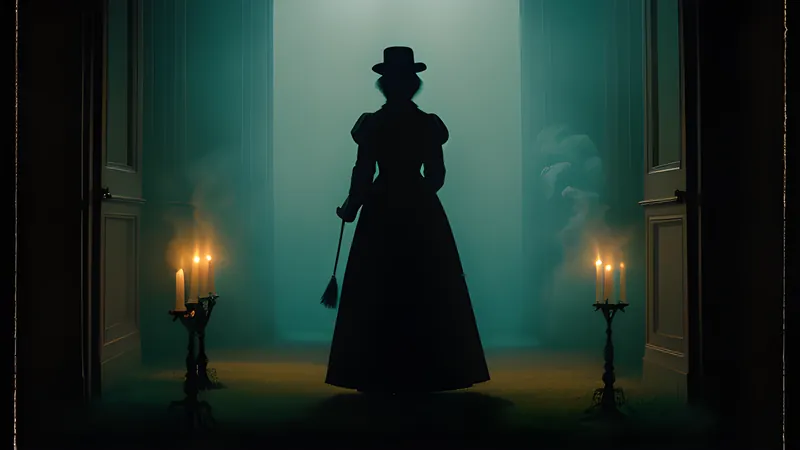
A pale, ghoulish man in a dark suit — played, in ghost-white make-up, by Harvey himself — begins to appear to her. He watches from the roadside, from windows, from the edge of the frame, his face a rictus that owes nothing to any make-up budget and everything to a good idea. Worse, Mary begins to phase out of the world entirely: there are stretches where no one can see or hear her, where she moves through a shop or a park as an unperson, the soundtrack dropping away into a terrible muffled silence. And she is drawn, against her will, towards an abandoned lakeside pavilion out on the salt flats, a derelict dance hall that seems to be waiting for her.
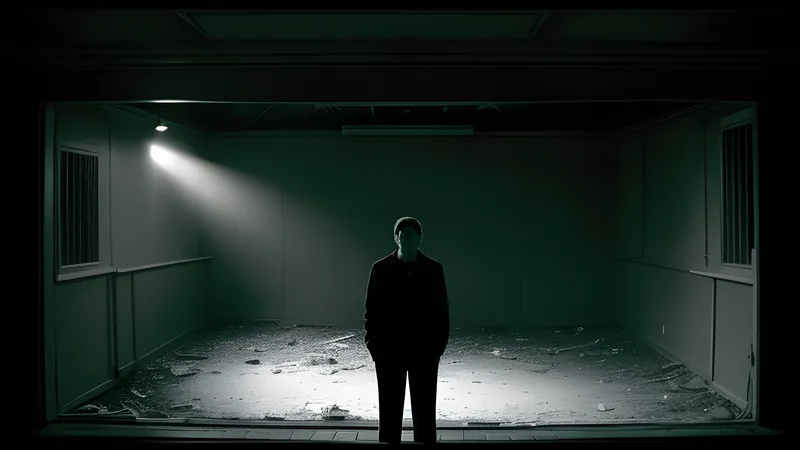
Harvey found that pavilion for real — the vast, decaying Saltair resort on the Great Salt Lake — and it is the film’s masterstroke. No set-builder on a real budget could have invented a location so perfectly poised between the festive and the funereal, a pleasure palace turned tomb.
The sound of dissociation
What makes Carnival of Souls work, and what the imitators keep failing to reproduce, is its command of dissonance. Gene Moore’s score is played almost entirely on a church organ, and Harvey uses it with real cunning — sacred instrument, profane effect, the sound of a hymn turned wrong. The organ swells under scenes it has no business scoring, giving the whole film the queasy, floating quality of a religious service you have wandered into by mistake.
Then there is the acting, and here the film’s amateur economy pays a strange dividend. The supporting performances are stiff, the line readings a half-beat off, the human interactions subtly unconvincing — and because we are locked into Mary’s alienated point of view, all of that awkwardness reads as her estrangement from a world she no longer quite belongs to. A flaw becomes a feature. The film feels like a dream partly because everyone in it behaves the way people do in dreams, slightly wrong, slightly deaf to you. This is the accidental-genius mechanic that better-funded films spend fortunes trying to recreate, and the reason elevated horror keeps reaching for glacial, affectless performances to manufacture the same unease on purpose.
The film everyone quietly stole from
The clearest debt is George Romero’s. When Night of the Living Dead arrived in 1968, its shambling, blank-faced ghouls advancing through a rural American landscape owed an unmistakable something to Harvey’s white-faced dead rising from the pavilion, and Romero has acknowledged Carnival of Souls as an influence on the atmosphere he was after. The whole modern conception of the walking dead as slow, silent, ordinary-looking figures who simply come for you has a root here. I traced how far Romero took that idea in George A. Romero and the dead as a social mirror; this is one of the places the idea was born.
The other great inheritor is the tradition of the ghost story that withholds its ghost. Carnival of Souls keeps its horror ambiguous and interior, closer to a mood than a monster, which places it in a direct line with The Haunting, Robert Wise’s near-contemporary masterpiece of suggestion, where the terror is a sound in the corridor and a bulging door and never a rubber spectre. Both films understood, at the dawn of the sixties, that what you do not show can occupy a viewer for a lifetime. And Mary Henry — a resourceful, isolated woman moving alone through a hostile landscape, the sole survivor pursued by death itself — is a clear ancestor of the figure that horror would spend the next two decades formalising, the lone woman left standing that I traced in the final girl rule and the films that broke it.
The economics of the eerie
There is a lesson buried in Carnival of Souls that the American independent horror of the seventies learned by heart. A crew with no money cannot buy fear, so they have to find it — in a real abandoned building, in natural light on a bleak landscape, in the raw discomfort of non-actors and rough sound. That scavenged quality reads on screen as documentary truth, and truth is the scarcest resource in horror. When Tobe Hooper took a tiny budget and a Texas farmhouse and made The Texas Chain Saw Massacre feel like recovered evidence of a real atrocity, he was working the same economics Harvey stumbled onto a decade earlier: the cheaper and rougher the film, the more the audience mistakes it for something that actually happened.
Harvey never made another feature. He went back to Kansas and to his industrial films, and Carnival of Souls sat almost forgotten for years before the rediscovery began. That trajectory is its own small argument about how horror value gets assigned — a masterpiece can be made by a man who did not consider himself a horror director at all, released to indifference, and only recognised once a generation of filmmakers who grew up watching it on late-night television started paying it back in their own work.
Why it works
Carnival of Souls works because its poverty and its subject are the same thing. It is a film about a woman who has become insubstantial, half-present, drifting through a life she can no longer touch — and it was made by people with almost no resources, on borrowed time, in real derelict spaces, so that the film itself feels thin and drifting and half-there. The budget did not fight the story; it became the story. That alignment is rare and cannot be bought.
Where to watch: because it fell into public domain, Carnival of Souls circulates in dozens of terrible copies, so the one to seek is the Criterion Collection restoration, which recovers the crisp, high-contrast photography the mood depends on. The verdict is that this is the most influential cheap film in American horror, a nightmare assembled by an industrial-film crew who may not have fully known what they had. If it takes hold of you, follow its two bloodlines: The Haunting for the ghost you never see, and Halloween for where the pale, patient, unstoppable pursuer eventually walked.
Spoilers below
The film’s ending is one of the most quietly famous twists of its era, and it recontextualises everything. Drawn at last to the Saltair pavilion after dark, Mary watches the ghoulish figures rise and take the floor for a spectral dance — the carnival of souls the title promises, the dead waltzing in the ruined ballroom. Among them she sees herself, dancing in the arms of the pale man who has stalked her all film. She flees across the salt flats with the dead in pursuit, they catch her, and she vanishes; searchers later find only her footprints, ending in the sand.
The final scene returns to the bridge in Kansas. The wrecked car is at last hauled from the river — and Mary’s body is inside it, drowned with the others. She never survived the crash at all. The woman we followed to Utah, the organist phasing out of the world, pursued by a smiling dead man, was a soul that did not yet know it had died, living out a delusion of continued life while death patiently closed the distance. The pavilion was where the dead were waiting to collect her; the periods of invisibility were the living world already having let her go.
It is the structure that The Sixth Sense would make a fortune from decades later — the protagonist who is dead throughout and cannot see it — arrived at first by a Kansas industrial-film director on pocket change in 1962. And Carnival of Souls plays it for grief, a film about the terror and the sorrow of not being ready to be gone. That tenderness under the twist is why it haunted everyone who saw it, and why a movie that cost less than a used car still teaches horror how to dream.
Related Content