Candyman (1992): The Urban Legend as American History
Bernard Rose turned a mirror, a name and a hook into a study of who myths are built to remember
Contents
Say his name five times into a mirror and he comes. It’s the cleanest premise in modern horror, and Candyman knows exactly what it’s doing with it, because the film is about the summoning as much as the killing. Bernard Rose’s 1992 picture takes an urban legend and asks the question the campfire version never does: who does this story serve, who does it remember, and what real horror is it dressed up to carry? The answer it arrives at — that the legend is a vessel for two centuries of American racial violence — is why the film outgrew its slasher packaging and became one of the genre’s few authentic tragedies.
I hold it in high regard partly because it takes belief seriously. Most horror treats the supernatural as a lever to pull for scares. Candyman treats it as sociology. The monster is real because people need him to be, and the film builds its whole architecture on that dangerous, generative idea.
From Liverpool to Cabrini-Green
The source is Clive Barker’s short story “The Forbidden,” from the Books of Blood, set on a grim English council estate and concerned with how the poor keep a community’s myths alive. Rose’s decisive act of adaptation was to move it across the Atlantic to Chicago, and specifically to the Cabrini-Green public housing project, one of the most notorious symbols of American urban neglect. That relocation changes everything. The English original was about class; the American film is about class inseparable from race, and it grounds a piece of gothic invention in a real, photographable place with a real history of abandonment.
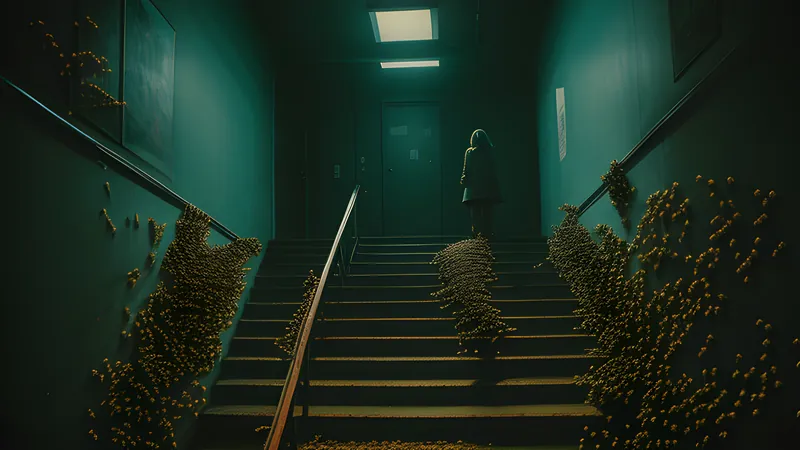
The film’s Candyman, played by Tony Todd in a performance of extraordinary mournful gravity, is given a back-story that turns the hook-handed bogeyman into a martyr. He was the son of a slave, a gifted painter in the nineteenth century, lynched by a mob for the crime of loving a white woman — his hand sawn off, his body smeared with honey and set upon by bees, then burned, his ashes scattered over the ground where Cabrini-Green would later rise. The bees, the hook, the honeyed sweetness that gives him his name: every element of the “monster” is a scar left by a specific American atrocity. To be frightened of Candyman is to be frightened of what was done to make him.
This is where the film’s title thesis lives. The urban legend is not a random spookery. It is history that the official record would rather forget, preserved in the only form the powerless can keep it — as a story whispered to children, a name you dare each other to speak. Belief keeps the crime alive because forgetting is the second injustice.
Virginia Madsen and the scholar who becomes the myth
The film’s route into all this is Helen Lyle, a graduate student played by Virginia Madsen, researching urban legends for a thesis. She is a rationalist and a bit of a colonist — she goes into Cabrini-Green to collect its folklore the way an anthropologist collects specimens, confident that the legend is a coping mechanism she can analyse from a safe academic distance. The film’s cruel, elegant structure is to fold her into the very story she came to dissect. The more she insists Candyman is a fiction, the more the fiction requires her to make it true again.
Madsen is superb, and Rose shoots her in a near-hypnotic register. In several key sequences she was reportedly put under actual hypnosis to achieve the glassy, sleepwalking quality of a woman being drawn out of her own control. The Candyman’s power over her is figured as seduction as much as terror — Tony Todd’s voice, deep and caressing, addresses her as a lover addressing his intended, which braids the racial history into something even more uncomfortable: the film knows the story of a Black man and a white woman is the original wound, and it stages Helen’s fate as a return to that primal scene.
The craft: Glass, mirrors, and the aerial city
Philip Glass’s score is the film’s not-so-secret weapon. Glass wrote a baroque, funereal arrangement of organ, piano and wordless choir — sacred music for a profane subject — and it lifts the whole film onto the plane of tragedy. Reportedly Glass expected a smaller, artier film and was somewhat startled by the commercial horror it turned out to be, but the mismatch is the magic. The music refuses to score the film as a slasher; it scores it as a requiem, and that dissonance between what you hear and what you see is central to why the film feels mythic rather than cheap.
Rose’s visual grammar reinforces it. Mirrors run through the film as a governing motif — the summoning ritual, the recurring shots of reflection and doubling — because the legend is about seeing yourself implicated. And the camera keeps rising to aerial views of Chicago, its expressways cutting the grid like veins, situating the intimate horror inside a vast, indifferent civic body. The city is a character, and the housing project is where the city hides what it doesn’t want to look at.
That serious treatment of folklore as a living, load-bearing structure connects Candyman to the best belief-driven horror. It shares DNA with The Witch, where the terror is generated by a community’s faith rather than merely decorated with it — both films understand that a myth is most dangerous when a society genuinely needs it to be true.
Where it belongs in the collection
Candyman is a fascinating cousin to Hellraiser: both are drawn from Clive Barker’s writing, and both are fundamentally about desire and summoning rather than random predation — you have to invite the horror in. Where Barker’s own film staged appetite as theology, Rose’s adaptation of Barker’s story stages it as history, which is the more grounded and, arguably, the more haunting move. And its central figure — a killer who is fundamentally an idea sustained by belief, in the tradition Wes Craven pioneered with Freddy in A Nightmare on Elm Street — extends the genre’s most fertile insight: the monster that lives in the collective mind is undefeatable because you cannot stop people needing it.
The 2021 continuation directed by Nia DaCosta and produced by Jordan Peele made the racial subtext into text, which is a legitimate reading of what Rose planted, though it’s worth revisiting the original to see how much sharper the horror is when the history is carried in the story’s bloodstream rather than announced. The first film is a case study in how a remake or reboot inevitably renegotiates the meaning of its source, a subject worth chasing through the softening that happens when horror gets remade.
Why it still works
The premise is a dare, and the film honours the dare with a genuine cost. Most urban-legend horror is disposable because the legend is arbitrary. Candyman made its legend the keeper of a real crime, so that speaking his name became an act of remembrance disguised as a schoolyard game. Thirty years on, the mirror still works, because the thing behind it never actually went away.
Spoilers below
Stop here if you haven’t seen it.
Helen’s investigation destabilises the legend by proving, briefly, that a copycat could be responsible — a local gang leader using the Candyman name to terrorise Cabrini-Green. That rationalist victory is precisely what enrages the real Candyman, because his existence depends on belief, and Helen’s debunking threatens to dissolve him. His demand of her is chilling in its logic: he needs her to become a believer again, and the way to do that is to frame her so completely that the community will fear her name. He is fighting for his own survival as a story.
The film’s back half is a nightmare of Helen’s unravelling. She is framed for murders and a kidnapping, sectioned, disbelieved by everyone — a rationalist punished for rationalism, made to feel the powerlessness the legend was invented to describe. The Candyman offers her a way out that is really a way in: die into the myth, become immortal alongside him, be the story rather than its debunker.
The climax stages her redemption as sacrifice. In the bonfire the residents of Cabrini-Green build, Helen dies saving a kidnapped baby from the flames, and in doing so she earns her own place in the folklore — the community that feared her now venerates her. The final movement belongs to her widower, whose casual infidelity is punished when he, grieving, says her name into the mirror five times and summons the new Candyman: Helen herself, hook in hand, come back for the man who wronged her. The film’s last, quiet horror is that the cycle simply reseeds. A new legend is born from a new injustice, and belief will keep it alive exactly as long as the wound stays open — which is to say, indefinitely.
Related Content