Burning: Lee Chang-dong's Slow-Burn Class Mystery
A Murakami short story, a farm within earshot of North Korea, and a crime that may not have happened at all
Contents
A mystery makes a contract with you. It shows you a disturbance, it withholds a solution, and it promises that the withholding is temporary. Almost every crime film honours this, including the ones we praise for ambiguity — even Memories of Murder, which ends on an unsolved case, is unambiguous about the fact that there was a case.
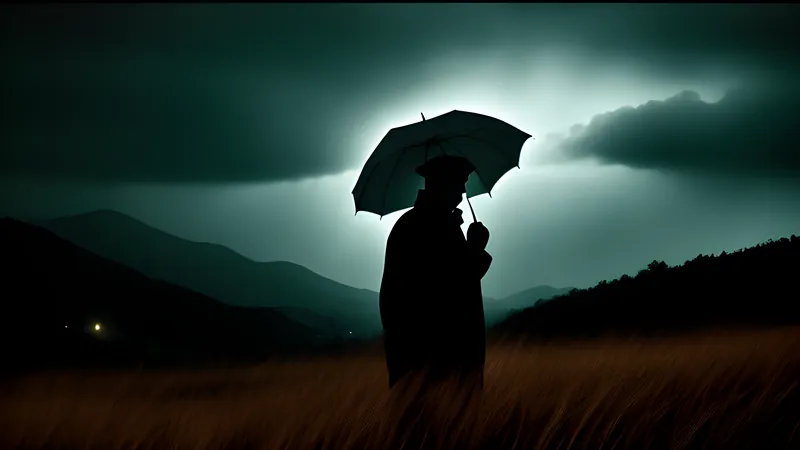
Burning breaks the contract at the root. Lee Chang-dong’s 2018 film, his first in eight years after Poetry, is constructed so that you cannot establish whether a crime has occurred. Not “who did it” — whether it happened. And the film’s real achievement is that this is not a gimmick or a shrug. The ambiguity is load-bearing, because the film is about a young man with no power, no prospects and no standing, and the question of whether his suspicion is detection or resentment is a question he cannot answer either.
The setup
Jong-su (Yoo Ah-in) is in his twenties, has a creative-writing degree he cannot spend, and does casual delivery work in Seoul. He runs into Hae-mi (Jeon Jong-seo), a young woman from his home village who says they knew each other as children. She is going to Africa. Will he feed her cat?
He does. There may or may not be a cat.
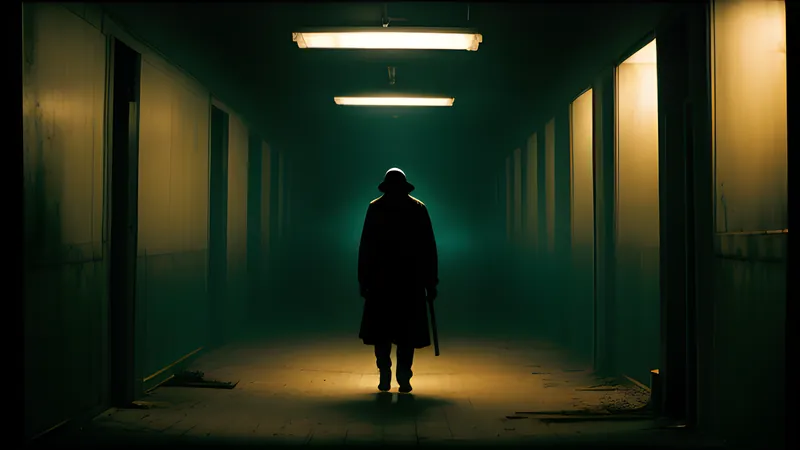
She comes back with Ben (Steven Yeun) — wealthy, relaxed, unexplained. Ben drives a Porsche, cooks pasta in a Gangnam flat, and has no job that anyone can describe. Jong-su, who has moved back to his father’s cattle farm in Paju near the DMZ while his father stands trial, watches the two of them and cannot place Ben in any category he understands.
Then Ben tells him about a hobby, and Hae-mi disappears.
Murakami, Faulkner, and what Lee added
The source is Haruki Murakami’s 1983 short story “Barn Burning,” which is roughly twenty pages and contains the film’s central conversation almost intact. Murakami’s title is itself a nod to William Faulkner’s 1939 story of the same name, and Lee makes the debt explicit — Faulkner is named in the film, and Jong-su’s copy is on screen.
What Lee added is everything the story does not have: a class. Murakami’s narrator is comfortable, a writer with a house, and the story’s mystery is a cool intellectual puzzle between two men of roughly equivalent standing. Lee gives his narrator a bankrupt father, a cattle shed, a village where the loudspeakers from the North are audible across the fields, and a mother who left. He gives Ben a Gangnam address and friends who find Hae-mi charming in the way you find a documentary charming.
That single change converts a Murakami puzzle into a Faulkner one. Faulkner’s “Barn Burning” is about a poor tenant farmer who burns the property of rich men because it is the only power he has. Lee has quietly restored Faulkner underneath Murakami, and then made his protagonist the boy who is watching, unsure, and burning inside about it.
The craft: the mime, the dance, and the sound of the North
Three sequences make the case for this film as a piece of construction rather than a mood.
The first is the tangerine. Early on, Hae-mi performs a pantomime for Jong-su in a bar — peeling an imaginary tangerine and eating it. She explains the technique, and her explanation is the film’s thesis statement: the trick is not to convince yourself that the tangerine is there, but to forget that it is not. Lee puts the epistemology of the entire film in a party trick in the first twenty minutes and never mentions it again. Everything that follows — the cat, the well, the greenhouses, Hae-mi herself — is subject to that rule.
The second is the sunset dance. On the farm, at dusk, with the three of them stoned, Hae-mi takes off her shirt and dances slowly in the fading light against an enormous flat sky. Lee scores it to Miles Davis’s “Générique” — the cue Davis improvised for Louis Malle’s Ascenseur pour l’échafaud in 1958, which is to say the birth of modern film-noir scoring, dropped into a Korean cattle field. It is the most beautiful thing in the film and it is a noir signal flare: the trumpet is telling you a crime is coming before any of the characters know.
The third is the sound design. Paju is close enough to the border that North Korean propaganda broadcasts drift across the fields, and Lee simply leaves them in the ambience — a distant, unintelligible voice hectoring an empty farm while a young man does nothing. He never comments on it. The film’s whole political argument is in the background noise of two or three shots.
Hong Kyung-pyo shot it, and he also shot Mother: the same feel for provincial Korean daylight, for wide flat frames where a person is small and the weather is enormous. Here he works in a long, slow, patient register — Lee holds shots until they become uncomfortable, and the discomfort is the point.
The real ancestor
The reference everyone reaches for is Antonioni’s L’Avventura, and it is fair: a woman vanishes, the search dissolves, the searchers turn out to be the subject. But Antonioni’s characters are bourgeois and bored, and their failure to find her is a failure of will. Jong-su’s failure is structural. He cannot get answers because nobody in the world he is trying to interrogate is obliged to give a person like him one.
The stronger cross-reference for the collector is Cure, Kiyoshi Kurosawa’s 1997 film about a detective pursuing a man who is either causing murders or simply present at them. Kurosawa built the same trap: a protagonist whose investigation is indistinguishable from his own unravelling, an antagonist who is charming, unbothered, and never quite says the incriminating sentence. Both films end at a point where the audience has to decide what they watched, and both refuse to help.
For the wider frame, Korean genre cinema: ten to start with sets Burning against the more propulsive end of the same national moment — it is instructive to watch it beside something like Decision to Leave, where a detective’s obsession is also the plot, and where the film is willing to tell you what happened.
The case against
Burning is two and a half hours long and it is genuinely slow, and I want to be honest about what that costs. The film’s method requires that you sit inside Jong-su’s stagnation long enough to feel it as your own — and a substantial audience will simply find him a passive, sulky, borderline unpleasant young man they have been asked to accompany. He is written that way on purpose. That does not make him company.
Hae-mi is the harder problem. She is vivid, strange, and specifically alive in a way neither man can process, and then the film’s structure requires her to become an absence. Lee is plainly conscious of this — the film is partly about two men converting a woman into a question about themselves — but a critique of a thing and an instance of it can look identical from the cheap seats, and here they sometimes do.
There is also a strand of the film that flatters the viewer. Ambiguity is a compliment to an audience, and Burning pays it repeatedly. A less generous reading would say Lee has built a machine that rewards you for whichever interpretation you bring and calls it depth.
That reading is wrong, I think. It also survives contact with the film, which is more than most objections manage.
Where it leaves you
Burning premiered in competition at Cannes in 2018, took the FIPRESCI prize, and posted the highest score any film had recorded in Screen International’s Cannes jury grid — and then won nothing from the actual jury, which is a fate so apt it feels scripted. It was Korea’s Oscar submission and became the first Korean film to reach the international feature shortlist.
It is on the usual services with a good disc release. Read the Murakami first; it takes twenty minutes and it makes the adaptation’s choices legible.
Spoilers below
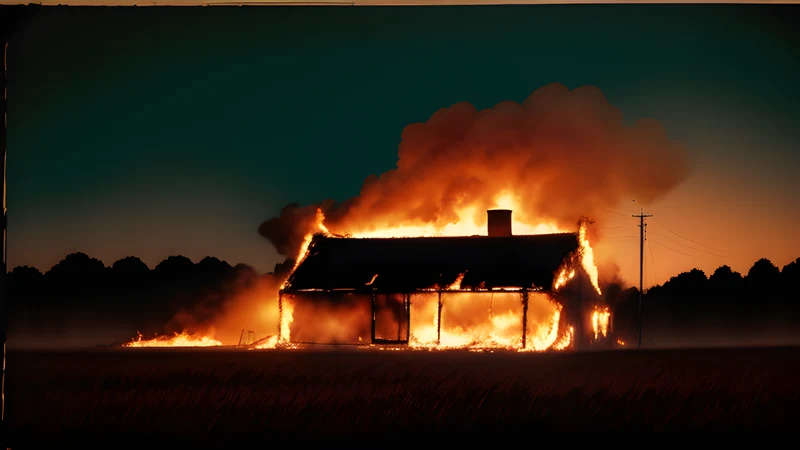
Ben’s hobby, delivered on the farm at dusk in the film’s calmest scene, is that every two months he burns down an abandoned greenhouse. He explains that they are useless, that nobody misses them, that it is a kind of service, and that he has already chosen his next one — very close to Jong-su’s house.
Hae-mi vanishes the next day.
Jong-su runs the perimeter of every greenhouse near the farm for weeks, obsessively, and none of them burns. He hunts Ben through Gangnam, finds Hae-mi’s watch in Ben’s bathroom drawer, finds a cat in Ben’s flat that answers to Hae-mi’s cat’s name, and watches Ben apply makeup to a new young woman from a new poor neighbourhood while his friends laugh politely at her.
Every one of those is evidence, and every one of them is also nothing. A watch can be a gift. A cat can be a cat. “Greenhouse” can be a metaphor Ben is using in front of a boy too literal to hear it, or it can be exactly what he said. The film gives Jong-su a genuine sequence of deductions and simultaneously gives us a young man who has been humiliated, dispossessed, sexually excluded and made to feel provincial by a rich man who is nicer to him than he can bear.
Then Jong-su writes. The film’s final act is prefaced by him at his father’s desk, working at last on the novel he has never been able to start.
He calls Ben, arranges a meeting on an empty road, stabs him, puts him in the Porsche, sets it alight, strips off his own bloodied clothes and throws them into the fire, and drives away naked in a truck through a cold landscape. The last shot is the burning car, and Lee cuts to black.
The construction of that ending is the whole film. It is staged like a fantasy — the naked man, the pyre, the perfect resolution — and it arrives immediately after we have seen him begin to write fiction. It may be his novel. It may be the thing he did. Lee has arranged the evidence so that the murder of a rich man by a poor one and the revenge fantasy of a poor man about a rich one are shot in exactly the same way, and there is no shot anywhere in the film that adjudicates between them.
Which returns you to the tangerine. Do not try to believe the fruit is there. Forget that it is not. Jong-su spends the film doing precisely that with Hae-mi, with the cat, with the well his mother may or may not have pulled her out of, and finally with Ben’s guilt — and the film ends at the exact moment his forgetting becomes indistinguishable from knowledge. That is not a puzzle without a solution. It is a film about a man for whom the difference has stopped existing, and about a country where the people with Porsches will never once be required to answer.
Related Content