Brick: The High-School Hardboiled Experiment
Rian Johnson put Dashiell Hammett's dialogue in a Southern Californian car park and refused, for ninety minutes, to admit it was a joke

Contents
Here is the pitch, and it is a terrible pitch: a hardboiled detective story, in the full Dashiell Hammett register — the argot, the fatalism, the beaten loner working a case nobody asked him to work — set in a Southern Californian high school, with teenagers, played entirely straight. No winking. No adult in the frame explaining the conceit. No scene where someone says “this is just like a detective movie.”
Rian Johnson spent roughly six years failing to get Brick financed, which given the pitch is impressively few. He eventually made it for something in the region of four hundred and fifty thousand dollars, largely raised from family, and shot it at San Clemente High School — his own school, in his own town, using the actual locations he had walked through as a teenager. It premiered at Sundance in 2005 and took a Special Jury Prize for Originality of Vision, which is the festival circuit’s way of saying: we have no idea what this is, and it works.
The premise, and the wall it puts up
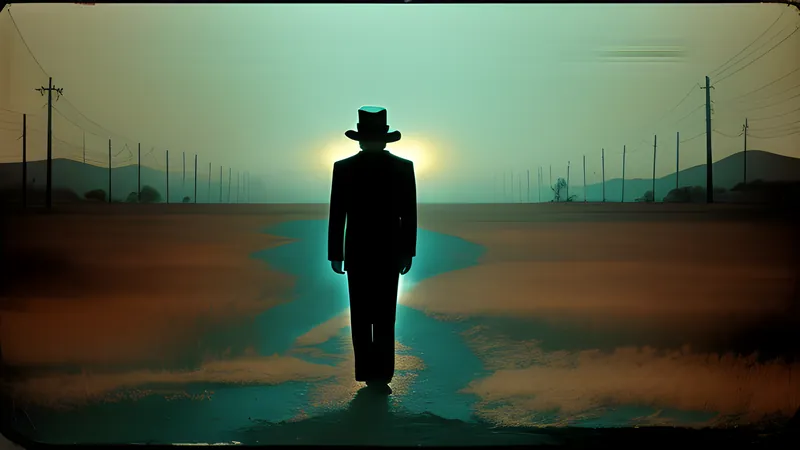
Brendan Frye (Joseph Gordon-Levitt) is a loner. He eats lunch alone behind the school. He has an ex-girlfriend, Emily (Emilie de Ravin), who left his orbit for a more interesting one. She calls him, frightened, from a payphone, using words he does not understand — brick, tug, poor Frisco, pin — and then she is gone.
Brendan starts pulling threads. He has an information man called the Brain (Matt O’Leary) who sits on the school steps and knows everything. He has a nemesis in the Assistant Vice Principal (Richard Roundtree), who functions in the film exactly as a police captain functions in a Hammett novel: a hostile authority who nonetheless needs him. And somewhere at the end of the threads is the Pin, a drug supplier nobody has ever seen.
The film gives you no easing-in period whatsoever. The first two minutes are dense with slang the film will never define, and this is the deliberate obstacle Johnson puts between you and the story. You are meant to be lost. Hammett did the same thing — Red Harvest opens with a character explaining that they call it Poisonville and moves on — and the theory is that if you keep listening, the vocabulary will assemble itself from context. It does, at around the fifteen-minute mark, and the film is unwatchable before then and unstoppable after.
The argot is the film
Johnson wrote a slang. Not a period reproduction — a working invention, derived from Hammett’s Continental Op stories and The Glass Key and then pushed into a register no teenager has ever used. Nobody says “cool.” Nobody uses a brand name. Nobody has a mobile phone, and the film’s one payphone becomes a kind of altar.
This is the choice that makes Brick either brilliant or insufferable, and the split is real. What makes it brilliant, for me, is that the artificiality is doing thematic work rather than decorative work. The reason Hammett’s dialogue sounds like that is that his characters are performing hardness at each other continuously, because the moment you drop the performance you are prey. That is also, precisely, what a teenager does. The two registers are describing the same condition: a closed social world with a rigid hierarchy, where status is everything, information is currency, and the wrong word to the wrong person is fatal.
So the conceit is not “wouldn’t it be funny if kids talked like Bogart.” The conceit is that Hammett was already writing about high school, and nobody had noticed. That is a genuine critical idea, and Johnson builds a film to prove it.
The craft: no adults, and a score made of kitchenware
Look at what Johnson removes. There are almost no adults in Brick. The Assistant Vice Principal has one scene. The Pin’s mother appears — serving cornflakes and apple juice to her son’s criminal associates in a suburban kitchen while they discuss business, which is the single funniest and most disquieting moment in the film. Otherwise the world is entirely teenage, and it is self-governing.
That absence is what makes the noir tone land instead of collapsing. Noir requires a world with no appeal to a higher authority; the private eye exists because the institutions do not work. Johnson gets that condition for free, because the institution in a teenager’s life genuinely does not intervene. The parents are not villains. They are not there. Nobody in this film considers going to an adult, and the film never has to explain why, because you remember.
The score, by Johnson’s cousin Nathan Johnson, was built partly from found objects and kitchen implements — a practical solution to having no money that produced a texture no orchestra could have. It is percussive, cheap, slightly wrong, and it keeps the film from ever settling into pastiche. A traditional noir score would have signalled homage. This one signals place: a suburb, a garage, a house with nobody home.
Steve Yedlin’s cinematography does the rest. The film is shot in flat, unglamorous Californian daylight — car parks, drainage tunnels, playing fields, the back of a shopping centre. Johnson’s rule was apparently to shoot the locations as they are, and the result is that the noir mood is produced entirely by framing and behaviour rather than by darkness. It is a film noir shot at midday, and that is a much harder thing to pull off than shadows.
Gordon-Levitt is the load-bearing element. He was twenty-four, playing sixteen, coming off years of television, and he plays Brendan as someone who has decided that being hurt is preferable to being ignored. The performance’s great trick is physical: Brendan takes an enormous amount of punishment and never gets better at fighting. He absorbs, and he keeps arriving. That is the correct read of the Continental Op — not a fighter, a man who will not leave.
The real ancestor
Everyone says The Maltese Falcon, and everyone is slightly wrong. The plot machinery here — a loner with a personal stake pushing two criminal factions into each other and watching the wreckage — is Red Harvest, Hammett’s first novel, the one Hollywood has been unofficially adapting for ninety years without paying for it.
The nearest cinematic cousin is Miller’s Crossing, which is the Coens doing the same Hammett synthesis — Red Harvest welded to The Glass Key — with the same commitment to an invented dialect and the same refusal to translate it for you. Watch the two together and the family resemblance is almost embarrassing: both films are about a man who lets everyone believe he is working for them, both are drunk on a language, both hinge on a friendship that the protagonist ruins on purpose.
And for the third point of the triangle, Blood Simple is the model for what a debut can do with nothing: shoot in a place you know, cast people nobody has heard of, and let the formal idea carry the budget. Johnson, like the Coens, made his first film out of a genre he had read more of than he had lived.
The case against
The film’s ninety-minute middle is a plot, and the plot is not the reason to watch. If you follow the mystery closely, it resolves in a way that is coherent and slightly airless — Johnson’s construction is so tight that the solution arrives as a demonstration of competence rather than a shock. This is a Hammett problem too, in fairness.
More seriously, the conceit has a ceiling. Because nobody in the film may ever acknowledge the artifice, there is no room for the register to breathe or vary. Every character speaks the same way, which means every character is, in a sense, the same character with different information. Emily and Laura (Nora Zehetner) are given femme fatale functions before they are given interiors, and the film’s fatalism about them is inherited rather than examined.
And there is a fair charge that Brick is a formal exercise: a very clever young man proving he can do a thing, rather than a film that needed to exist. I would answer that the proof itself is the content — that Johnson’s argument about Hammett and adolescence is only demonstrable by building the whole machine and running it. But the charge is not unreasonable.
Where it leaves you
Brick has aged into a strange position: the debut of a director who went on to enormous mainstream visibility, and still the most purely itself thing he has made. It is on the usual services and the disc release carries a commentary that is genuinely useful about how much of the film was solved by having no money.
If it works on you, the next stop is Memento — another debut-scale film built entirely from a formal constraint, and another one that trusts the audience to be lost for a while.
Spoilers below
The solution is Laura. The film’s femme fatale, playing the rich-girl fixer who feeds Brendan information from the top of the school’s social order, is the person who has been steering him from the second reel. Emily was pregnant; the pregnancy is the reason she was killed, and Laura — protecting the arrangement between herself, Tugger and the Pin — is the one who arranged it. She murdered Emily and pointed Brendan at the wreckage, using his own obsession as the instrument.
Which means the film’s whole plot is Brendan being played by the person he was most inclined to trust, exactly as the Op is played in Red Harvest, and exactly as Tom is played in Miller’s Crossing. The Hammett architecture holds all the way down.
The Pin is the film’s best joke and its saddest character. Lukas Haas plays him as a twenty-six-year-old drug dealer with a cane and a heavy coat who conducts business from his mother’s basement, quotes Tolkien, and — in that kitchen scene — accepts apple juice from her without breaking stride. He is a boy playing a kingpin, in a film where everyone is a child playing an adult crime, and Johnson lets the pathos of that arrive late. When Brendan and the Pin talk on the beach about their situation, two performances briefly drop, and it is the only moment of real intimacy in the film.
Brendan’s final act is not violence. He assembles the truth, gives it to the Vice Principal in the exact quantities required to destroy the people he wants destroyed, and then delivers the last piece of information to Laura himself — telling her, in the film’s final scene, that Tugger is going to take the fall and that she is not. He leaves her intact and knowing. It is a Hammett ending: the detective wins by arranging facts, and the win costs him the only person he still wanted anything from.
The last shot has Brendan back where he started, behind the school, alone. Nothing has been restored. He solved it, and Emily is still dead, and the film’s argument about performed hardness completes itself — he has become, at sixteen, exactly the sealed thing he was pretending to be in the first scene.
Related Content