Body Double: De Palma's Hitchcock-and-Sleaze Provocation
A voyeur, a telescope and a murder, staged as the most self-aware thriller of 1984
Contents
Brian De Palma made Body Double in 1984 as a deliberate provocation, and the provocation still works. Coming off the enormous, blood-soaked Scarface, he turned to the smaller, dirtier obsession that had shadowed his whole career — the act of watching — and built a thriller so nakedly indebted to Alfred Hitchcock that critics at the time treated it as plagiarism dressed up as homage. That reading misses the joke. De Palma knew exactly what he was quoting, and the film is a sustained argument about voyeurism conducted through the vocabulary of the director who invented cinematic voyeurism in the first place.
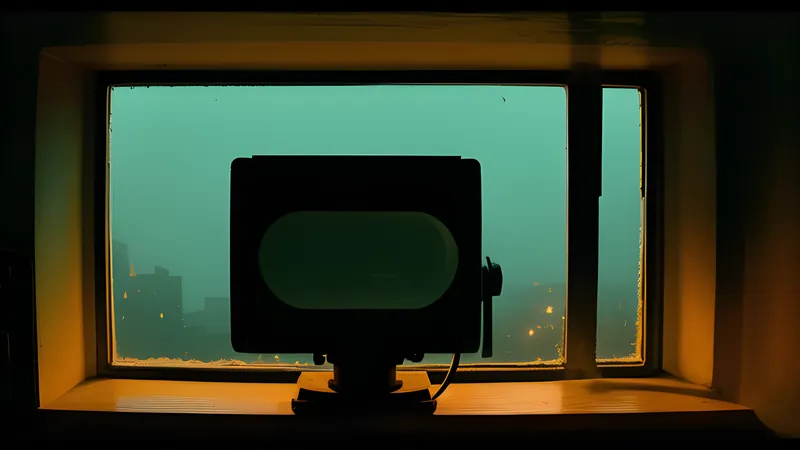
The plot is a machine assembled from Hitchcock parts. Jake Scully, played by Craig Wasson, is an out-of-work Los Angeles actor with a debilitating fear of enclosed spaces — a claustrophobia lifted straight from the acrophobia of Vertigo. Offered a house-sitting job in a spectacular hillside home, he discovers a telescope trained on a neighbouring window and a beautiful woman who performs the same private dance every night. He watches. He becomes obsessed. And then, in the manner of Rear Window, his watching makes him the witness to a crime he is powerless to prevent. De Palma takes two Hitchcock films, welds them together, and drives the result straight into the sleazier corners of 1980s Los Angeles.
The film, kept above the line
Scully is a man defined by his weaknesses. His acting career is going nowhere — the film opens with him losing a role in a cheap vampire picture because his claustrophobia freezes him inside a coffin — and his personal life collapses in the same breath. The house-sitting gig is arranged by a smooth new acquaintance, Sam Bouchard, played by Gregg Henry, and the borrowed home comes with its nightly spectacle attached. Scully’s fascination with the woman across the way, Gloria, curdles from idle spying into something closer to fixation, and when he follows her through the streets and shops of Los Angeles the film slides fully into Vertigo mode, a man trailing a woman he has invented in his own head.
The witnessed crime pushes Scully out of the safe role of spectator and into the plot as a participant, and his investigation leads him into the adult-film industry and toward Holly Body, a porn actress played by Melanie Griffith in the performance that made her a star. Above the spoiler line, that is the shape: a passive watcher forced to act, a mystery that runs through the seediest addresses in the city. Everything to this point is safe to read before watching; the film is built on a structural trick, and I will keep it below the line.
Why it works: the camera as accomplice
De Palma is the great cinematic technician of his generation, and Body Double is a showcase for the tools he refined across a decade — the split diopter that holds two planes in sharp focus at once, the slow 360-degree camera moves, the long dialogue-free suspense sequences scored rather than spoken. The film’s centrepiece follow-and-observe passage, tracking Scully as he tails Gloria through Los Angeles, is a masterclass in building tension out of pure looking, the camera gliding and circling until the audience is as helplessly fixated as the man on screen. Pino Donaggio’s lush, swooning score does the same work Bernard Herrmann did for Hitchcock, flooding the images with a romantic feeling the situation does not remotely earn.
The genius of the design is that it implicates you. De Palma constructs the film so that the audience’s pleasure is inseparable from Scully’s, so that you are given the telescope’s point of view and invited to enjoy the same spectacle he cannot stop watching. When the film then springs its trap, it is springing it on the viewer as much as on the character, punishing the very appetite it spent an hour cultivating. This is the Hitchcock lesson De Palma understood better than any of his imitators: the thriller’s real subject is the audience’s own hunger to see, and the most honest way to explore it is to make the camera a co-conspirator and then charge you for the ticket.
The film also flaunts its own artifice. There is a bravura sequence in which Scully, now working as an actor in the adult industry, appears in a music video for the Frankie Goes to Hollywood song “Relax”, a garish, self-mocking eruption that pulls the film’s seams into full view and reminds you that everything you are watching is a staged performance about staged performances. De Palma is not hiding the machinery. He is putting it on a plinth.
The sleaze is the argument
The critical hostility Body Double met on release fixated on its lurid violence and its immersion in the pornography business, and read both as evidence of a director wallowing. The film is smarter than that. Its title is a piece of thesis: a body double is a substitute, a stand-in filmed so the audience believes they are seeing a star do something the star did not do, and the entire plot turns on the gap between the woman Scully thinks he is watching and the reality behind the performance. De Palma is making a film about the manufactured nature of what we watch, set in the two industries — Hollywood and pornography — most dedicated to selling a looked-at body as the real thing.
On the ad-safe question, the film’s provocations are more talked about than shown, and its interest is genuinely analytical. De Palma frames voyeurism as a trap rather than a treat, and the picture’s queasiness is deliberate, the intended after-taste of a film about the ethics of the gaze. It is a serious idea wearing the clothes of trash, which is the De Palma project in one sentence and the reason his reputation has only risen since 1984.
Where it sits in the collection
Body Double is the essential text in De Palma’s voyeur cycle, the run of thrillers — Sisters, Dressed to Kill, Blow Out and this — in which he took Hitchcock’s obsession with watching and pushed it into more explicit, more self-aware territory than the master could ever have filmed. If Hitchcock is the ancestor, De Palma is the heir who says the quiet part out loud.
The film is also a Los Angeles picture, and it belongs on the shelf beside the city’s great studies of watching and being watched. Its lineage runs directly to Dan Gilroy’s Nightcrawler, another film about a man whose fixation on capturing images turns him predatory, and to the neon-drenched nocturnal Los Angeles of Nicolas Winding Refn’s Drive, which shares De Palma’s taste for the city as a beautiful, dangerous stage set. For the deep noir foundation under all of it, the poisoned Los Angeles of Chinatown is the bedrock, the film that taught American cinema to treat the city itself as the culprit. And as a study of commercial eros filmed with real craft, Body Double sits beside its own decade’s high-gloss successor, Paul Verhoeven’s Basic Instinct, and its wilder cousin, Ken Russell’s Crimes of Passion.
The verdict: Body Double is one of the most misunderstood films of its era, a piece of pure cinema masquerading as exploitation, and the years have vindicated it completely. It is De Palma at his most technically dazzling and most conceptually pointed, a thriller that makes you complicit and then makes you think about your complicity. Watch it for the camerawork, stay for the argument, and understand that every apparent excess is doing a job.
Spoilers below
The film’s central trick is the reveal that Scully has been watching a performance staged for his benefit. The woman he believes he is spying on is being impersonated — a body double, the title made literal — as part of a scheme to use him as a credible eyewitness to a murder disguised as something he saw by chance. The killer has manufactured the entire nightly spectacle, telescope and all, to plant Scully as the man who will testify to a story that misdirects the investigation. His voyeurism is not an accident he stumbles into; it has been designed, exploited and aimed by someone who understood exactly how a watching man behaves.
The Holly Body strand is how Scully unpicks it. Recognising that the private dance he watched was a routine, a piece of choreography, leads him to the adult-film performer who was hired to perform it, and through her to the substitution at the heart of the plot. De Palma stages the climax around Scully’s claustrophobia — the weakness established in the opening scene returns as the obstacle he must overcome to survive, a tidy piece of screenwriting architecture that pays off the Vertigo borrowing in full. The film closes by returning to the movie set where it began, folding back on its own artifice one last time, insisting that the whole apparatus of watching has been a performance staged for a camera all along.
Related Content