Bob le Flambeur: Melville's Gentleman-Gambler Heist
The 1956 film that invented the cool crook and half-invented the New Wave
Contents
Jean-Pierre Melville made Bob le Flambeur in 1956 for almost no money, and it changed French cinema twice — once immediately, as a template the young critics at Cahiers du cinéma would raid when they picked up cameras of their own, and once slowly, as the founding text of the cool, doomed, beautifully dressed criminal who has been walking through crime films ever since. Watch it now and the astonishing thing is how modern it feels. A man in a trench coat and a snap-brim hat moves through Montmartre at dawn, the city grey and empty and gorgeous, and a narrator tells you this is a story about a gambler. Everything about the way movies would look for the next seventy years is already here.
Bob Montagné, played by Roger Duchesne, is an ageing former bank robber who has gone semi-straight. He gambles — cards, dice, the horses, anything — and he is respected by cops and crooks alike, an elder statesman of the Pigalle underworld. When he hits a losing streak and hears that the casino at Deauville will be holding a fortune in its safe on the night of the Grand Prix, he assembles a crew for one last, enormous score. If you have seen any heist film made since, you know this shape in your bones. Bob le Flambeur is where a great deal of it starts.
The heist that Melville doesn’t care about
Here is the joke at the centre of the film, and it is a deliberate one. Bob le Flambeur is a heist movie in which the heist is almost an afterthought. Melville lavishes his attention on the planning, the recruiting, the rehearsals — Bob’s crew literally practising the robbery on a chalk diagram, timing the guards, memorising the floor plan — and this fascination with process is the film’s real subject. The mechanics of the job matter more than the job.
That instinct became the spine of an entire genre. When I wrote about how the heist film is really about process, Melville was standing behind every example. His countryman Jules Dassin would push the idea to its purest form a year earlier in Rififi, the wordless half-hour robbery that remains the genre’s high-water mark, and Kubrick would build his racetrack robbery The Killing around the same clockwork obsession. What separates Melville is affection. Dassin’s crooks are professionals; Kubrick’s are gears in a doomed machine. Bob is a character — melancholy, generous, self-aware — and the film loves him more than it loves the plan.
Dawn light and the birth of location realism
Bob le Flambeur was shot on the streets of Montmartre and Pigalle, largely at first light, and that decision rippled outward. Melville worked cheap and independent, built his own small studio, used real locations because he couldn’t afford fake ones, and the result is a Paris that feels breathed rather than built. The New Wave took the lesson directly. When you watch Godard’s characters wander real Parisian streets a few years later, you are watching Melville’s grammar — the handheld freedom, the jump cuts, the sense of a camera loose in the actual world. Godard cast Melville in Breathless in 1960 as a kind of thank-you and acknowledgement of a debt.
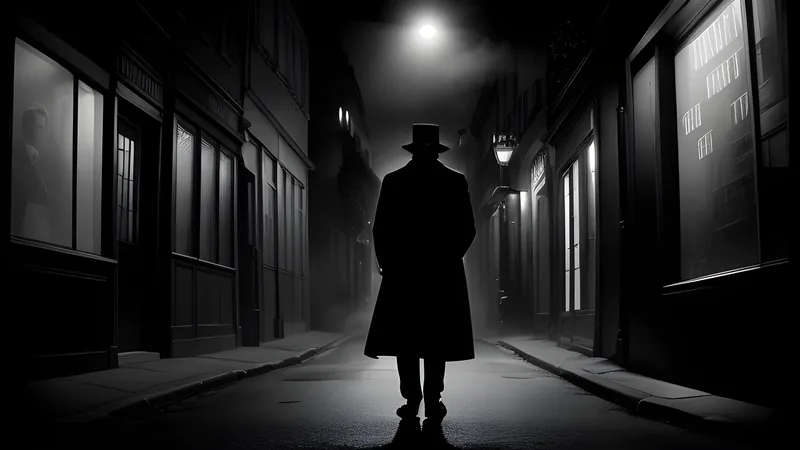
The craft to notice is how Melville uses the emptiness of the early-morning city. A crowded street is anonymous; a deserted one is a stage, and every figure on it becomes a silhouette with weight. The visual vocabulary he refines here — the lone man framed against wet cobbles, the ritual of the hat and coat, the world reduced to a few pools of light — reaches its icy perfection a decade later in Le Samouraï, where Alain Delon’s hitman becomes the ultimate expression of the type Duchesne sketches here. Melville shot much of the film with a small crew at hours when Paris belonged to no one, and that scarcity of resources became a style; the empty frame is the budget turned into poetry. Bob is Le Samouraï’s warm-blooded grandfather, still capable of laughing, still fond of people, before Melville froze the figure solid.
The morality of a man who plays fair
What keeps Bob le Flambeur from being a mere style exercise is its curious, almost old-fashioned code of honour. Bob is a criminal who behaves decently. He rescues a young woman, Anne, from the streets. He despises a pimp and won’t have anything to do with that trade. He is loyal to his friends, including the police inspector he once saved from a bullet years ago, who now returns the favour by keeping a fatherly eye on him. Melville is drawing a moral universe where the underworld has its own ethics, and where a man’s style — the way he loses, the way he pays his debts, the way he treats the people beneath him — is the measure of him.
Duchesne, worth a footnote, was a former matinee idol whose own career had been derailed by scandal and wartime disgrace, and Melville’s decision to build the film around a faded, dignified man playing out a losing hand carries a charge that a fresher face could not have supplied. The casting is part of the meaning. Bob’s grace under a run of bad luck is Duchesne’s too.
This romantic fatalism is Melville’s great theme, and it deepens as his career goes on. The doomed loyalty and precise, mournful professionalism he explores here run straight through his later crime films, most rigorously in Le Cercle Rouge, and take on their heaviest moral weight in his Resistance drama Army of Shadows, where the same code of loyalty and self-command is tested against something far worse than a casino. Bob is the lightest of the three, and watching it first shows you the seed of everything grim that follows.
Why it still plays
Seventy years on, Bob le Flambeur has lost none of its charm, and charm is precisely the right word for a film that so many of its descendants have forgotten how to have. Modern heist cinema often mistakes cool for coldness. Melville’s crook is cool and warm, a gambler who knows the odds are terrible and plays anyway because playing is who he is. The film is short, funny, gorgeous to look at, and built on a paradox — a crime story whose deepest pleasure is spending time with a man you’d want to have a drink with.
Where to go next is easy. Rififi for the heist perfected, Le Samouraï for the type frozen into myth, and Le Cercle Rouge for Melville doing the whole thing again at feature length and full fatalist power.
Spoilers below
The ending is the reason the film is a classic, so hold off if you haven’t seen it.
The great gag of Bob le Flambeur is that the robbery never happens — because Bob starts winning. On the night of the planned heist, Bob goes into the Deauville casino to keep up appearances while his crew gets into position, sits down at the tables to pass the time, and hits an impossible, delirious hot streak. He wins, and wins, and wins, so absorbed in the run of luck that he forgets the entire criminal enterprise unfolding around him. The gambler’s addiction, the very weakness that drove him to plan the robbery, is the thing that makes the robbery irrelevant.
Meanwhile the police, tipped off by a leak from within the loose-lipped fringes of the crew, close in. There is a brief, almost incidental shootout outside; Bob’s protégé Paolo is killed. And Bob walks out of the casino with more money in a couple of suitcases than the heist would ever have netted, straight into the arms of the waiting inspector — his old friend — who has to arrest him anyway.
The final grace note is pure Melville. Bob faces charges, certainly, but with the winnings, a clever lawyer and the sympathy of a court, the inspector muses, he might get off with a light sentence, or even come out ahead. Bob, ever the gambler, is already calculating whether he can sue for wrongful arrest. The film ends on a shrug and a smile where doom should be — the luck that ruined the plan might just save the man. It is the warmest ending Melville would ever grant a criminal, and knowing how cold his later films become makes that warmth land all the harder.
Related Content