Blood Simple: The Coens' Debut and the Perfect Small Crime
A first feature made for pocket change that already knew every trick the brothers would spend forty years refining
Contents
The title comes from Dashiell Hammett. In Red Harvest, “blood simple” is the addled, panicky state a person falls into after committing a murder — the moment the mind stops working and instinct takes the wheel. Joel and Ethan Coen took the phrase for their 1984 debut because the whole film is an experiment in that condition. Four people commit or react to a killing, and every one of them acts on a wrong picture of what happened. The audience holds the only complete version, and the horror of the film is watching characters make lethal decisions on bad information while we sit above them, helpless, knowing.
The Coens raised the money themselves, shooting a two-minute trailer and hawking it to private investors in Minnesota and Texas until they had enough for a feature. Joel took the directing credit, Ethan the producing credit, and both wrote it; the editing is credited to “Roderick Jaynes,” a pseudonym the brothers still trot out. It was made for well under two million dollars, and it looks like a film made by people who had studied everything and were desperate to prove they could do it. Nearly every signature the Coens would spend the next four decades developing is already here, fully formed, in the first hour of footage they ever released.
The plot, kept clean
A Texas bar owner named Julian Marty (Dan Hedaya) suspects his wife Abby (Frances McDormand, in her screen debut) is sleeping with one of his bartenders, Ray (John Getz). He is right. Marty hires a private detective, Loren Visser — played by M. Emmet Walsh in a sweat-stained yellow leisure suit, and it is one of the great character-actor performances in American film — to photograph the affair and then, later, to kill the pair.
That is as much as I will lay out above the line, because Blood Simple is a machine of misapprehension and the pleasure is watching the gears slip. What I can say is that the film’s structure depends on a single act of violence early on that every subsequent character misreads, and that the misreadings cascade with the cruel logic of a French farce rewired for a slaughterhouse. Nobody in this film ever learns what we know. They die, or survive, inside their own partial stories.
Why it works: the audience as the only witness
The formal achievement of Blood Simple is its command of dramatic irony, the oldest tool in the drawer, deployed with a precision that makes it feel new. Hitchcock’s famous distinction between surprise and suspense — surprise is the bomb going off, suspense is the audience knowing the bomb is under the table while the characters chat — is the entire operating principle of the film. The Coens engineer situation after situation in which we can see the fatal misunderstanding coming and the characters cannot, and they hold each one past the point of comfort.
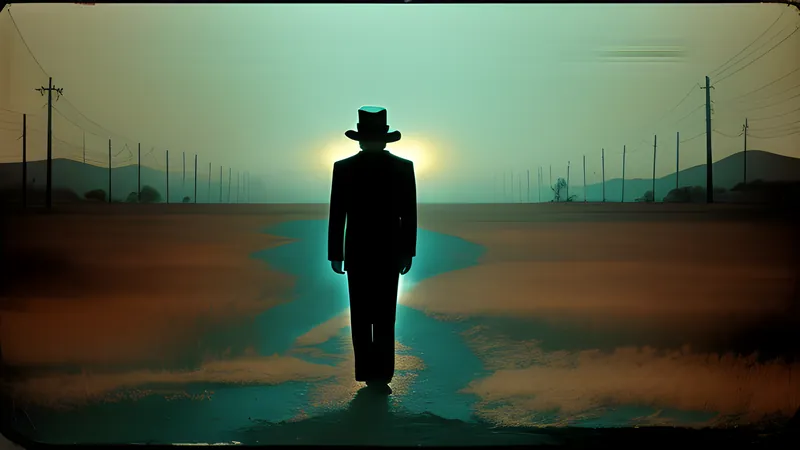
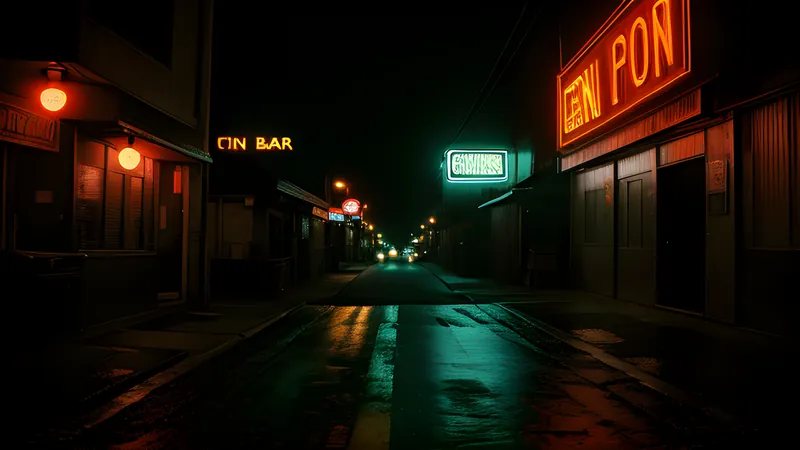
Barry Sonnenfeld, later a director himself, shot it, and his camera is already a Coen camera: low, mobile, gliding along bar tops and down highways at headlight height, finding the geometry in a cheap room. There is a moment, much studied, where the camera tracks along a bar and rather than climbing over a passed-out drunk simply rises to clear him and settles back down — a joke, a flourish, and a statement that these people knew exactly where to put a lens. The Texas of the film is all wet neon, ceiling fans, and dark two-lane roads, a landscape that keeps its secrets because nobody can see past their own headlights.
Carter Burwell scored it, his first film, beginning a collaboration that has run across the brothers’ entire career. The music is spare, a few piano figures and a synthesised drone, and it refuses to tell you how to feel, which leaves the dread to accumulate on its own. And McDormand, twenty-six and unknown, is already doing the thing that would make her one of the essential American screen actors: playing an ordinary, watchful woman whose intelligence the men around her consistently underrate, to their cost.
The Coen fingerprint, already inked
What is startling on a revisit is how little the Coens had to learn. The tonal knife-edge between horror and absurdity, the fascination with competent people undone by one uncontrollable variable, the sense of a malign cosmic joke operating just above the characters’ heads — it is all present in the debut. Visser’s opening voiceover, drawling that in Russia everyone pulls for everyone else but down here you are on your own, is the thesis statement for a filmography that would keep returning to the lonely individual crushed by forces they cannot perceive.
The most direct line runs to No Country for Old Men, made twenty-three years later. Both are Texas crime stories built around a bag or a body that sets ordinary people against a patient, uncanny killer; both strip the genre of its reassurances and let violence arrive without music or warning; both are fascinated by the gap between how in control the characters believe they are and how little any of them actually understand. No Country is the grander, sadder film, but it is Blood Simple grown up, and watching the two together is the clearest possible lesson in how a sensibility deepens without changing its nature.
For the wider lineage, Blood Simple is a self-conscious heir to James M. Cain — The Postman Always Rings Twice and Double Indemnity — the pulp tradition of lovers, a spouse, and a plan that curdles. The Coens knew that tradition cold, and part of the film’s wit is how it honours the noir template while quietly refusing to let anyone in it be as smart as a noir protagonist is supposed to be. These are not master criminals. They are frightened people improvising, and improvisation in the Coen universe is nearly always fatal.
Where it sits
Blood Simple is not the brothers’ richest film, and it does not try to be; it is a genre exercise executed at a level that most directors never reach in a whole career. Some of the performances outside Walsh and McDormand are stiffer than the Coens’ later ensembles, and the film’s chilliness keeps it at a slight remove — you admire it more than you love it. None of that dents the achievement. As a debut it is nearly without peer, a calling card that announced two filmmakers who already knew precisely what they wanted cinema to feel like.
To argue the ending, which contains one of the great sustained set-pieces in American thriller cinema, I have to spoil it. Everything above is safe. Below the line, the machine finishes turning.
Spoilers below
The hinge of the film is Visser’s double-cross. Hired to kill Marty and Abby, he instead photographs them asleep, doctors the picture to look as though he has done the job, collects his fee, and then shoots Marty with Abby’s own pistol, leaving it behind to frame her. It is a clean, cold piece of plotting. What makes it detonate is that Marty is not quite dead when Ray arrives at the bar and finds the body.
Ray, believing Abby has shot her husband, decides to cover for her, and here the film’s engine of misunderstanding reaches full power. He tries to clean up the scene and load the body into his car, and Marty — bloodied, silent, terrifying — turns out to be still alive. The sequence in which Ray drives the not-quite-dead man out to a ploughed field to bury him, and Marty keeps refusing to die, is a masterclass in prolonged, near-wordless dread. Ray finally buries him alive. He has murdered a man to protect a woman who never committed the crime he thinks he is covering, and neither of them will ever be able to explain any of it to the other.
From there the misreadings compound. Abby comes to believe Ray killed Marty; Ray cannot tell her the truth without sounding insane; Visser, realising he left incriminating evidence at the scene, sets out to erase the loose ends. The final confrontation puts Abby and Visser in adjacent dark rooms, and it is built entirely on the fact that Abby does not know who is hunting her — she thinks it is Marty, back from the dead. She stabs Visser’s hand to the windowsill with a knife and shoots him through a wall, and his last act is to laugh at the whole ludicrous chain of errors. His dying line, that if Marty could see this he would laugh too, is the film telling you plainly what it has been about: a cosmos in which everyone dies confused, and the only entity in on the joke is watching from the cinema seat.
Not one character in Blood Simple ever assembles the full picture the audience holds. Abby kills a man whose name she never learns and whose motive she never grasps, believing to the end she has faced her husband. That withheld knowledge is the film’s cruellest and most brilliant stroke, and it is the seed of everything the Coens would go on to build.
My verdict: this is one of the greatest directorial debuts of the modern era, a film that mistakes nothing about what it is trying to do and lands every stroke. Watch it, then watch No Country for Old Men as its older, graver sibling, and if you want the noir it descends from, put on Double Indemnity and see how much crueller the Coens are to their characters than Wilder ever dared to be. For a modern noir shaped by the same cold, controlling intelligence, Chinatown is the mountain in the near distance. The brothers were aiming at it from the very first frame.
Related Content