Blood and Black Lace: Bava Invents the Body Count
The 1964 fashion-house murder film that drew the blueprint every slasher would trace
Contents
Every slasher film owes a debt to a fashion house in Rome in 1964. Blood and Black Lace, released in Italy as Sei donne per l’assassino, “Six Women for the Murderer”, is the film where Mario Bava assembled the parts that half a century of horror would keep re-using: a faceless killer in gloves, a set of glamorous victims, deaths staged as the film’s central spectacle rather than its interruptions, and a plot that exists mainly to hang murders on. It borrowed and recombined elements already floating through crime fiction and gothic cinema, fused them into a single template, and the template held.
Bava had made the earlier The Girl Who Knew Too Much in 1963, the film usually credited as the first true giallo, but that one was a nervy murder-mystery in black and white, closer to Hitchcock than to horror. Blood and Black Lace is where the form found its real face, or rather its lack of one. Here Bava threw out the whodunit’s reassurances and made the killing itself the point, drenching the whole enterprise in the saturated colour he had been perfecting, and in doing so he built the machine that his admirers, Dario Argento above all, would refine into an art form.
The blank white mask
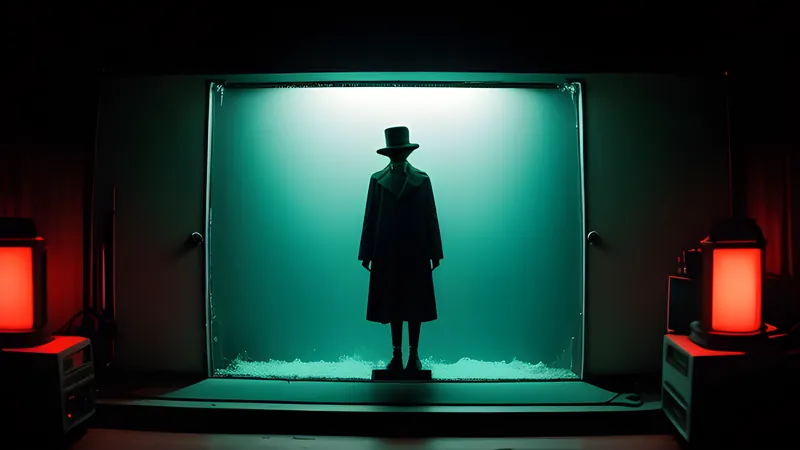
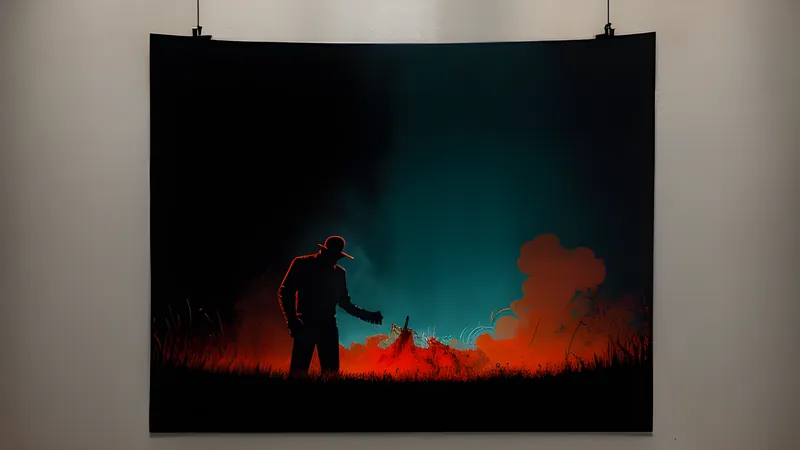
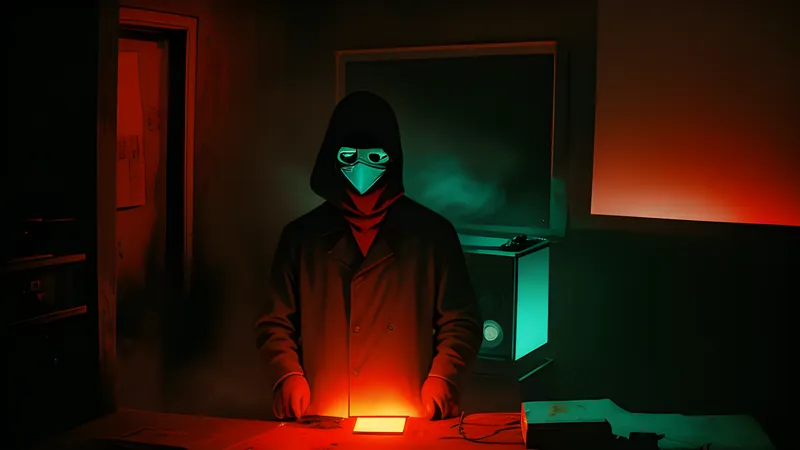
The killer of Blood and Black Lace is one of cinema’s great designs, and it was arrived at partly by economy. A figure in a dark trench coat and hat, hands in black gloves, with a face reduced to a featureless stocking-white blank, no eyes, no mouth, nothing to read. The blankness is the horror. A masked villain with a snarling face gives you something to fear; a face erased gives you nothing to hold, so your dread has no shape and expands to fill the frame. Every subsequent slasher killer, the boiler-suited shape stalking the suburbs, the mask stitched from human skin, is a variation on this act of erasure, and Bava got there first.
He understood, too, that the killer’s anonymity turns every attractive figure in the film into a suspect and every dark corridor into a threat, and he exploits it with a cutting rhythm that keeps you scanning the edges of the screen. The gloved hands became the giallo’s signature image partly for a practical reason, since the director could wear the gloves himself and shoot the murder from the killer’s point of view without ever revealing an identity, but Bava elevated the trick into a whole grammar of menace. The hand reaching into frame; the glint of the blade; the victim seen, for a beat, as prey. That vocabulary is now so standard we forget someone had to compose the first sentence of it.
Murder as the main event
The structural revolution of Blood and Black Lace is that it treats its set-piece killings as the reason the film exists. The plot, involving a diary full of scandalous secrets passing between the models of a haute-couture salon, is deliberately thin, a clothesline for a sequence of elaborate deaths. Bava lavishes his invention on the murders themselves, staging each as a discrete horror ballet with its own colour scheme, its own architecture, its own escalating cruelty. The film essentially says: forget the mystery, watch the artistry of the deaths. That reordering of priorities is the DNA of every body-count film to come.
Crucially, Bava makes the deaths beautiful, and this is where the film becomes genuinely uncomfortable in a way it means to be. The victims are glamorous women in glamorous surroundings, and the camera regards their terror and their killing with the same aestheticising eye it brings to the couture gowns and the mannequins. There is a real tension in that, an argument that has followed the giallo and the slasher ever since about the pleasure a camera takes in stylised violence against beautiful bodies. Blood and Black Lace does not resolve the tension; it inaugurates it, and any honest account of the genre has to reckon with the fact that its founding text is as seductive as it is disturbing.
Cameron Mitchell and Eva Bartok head the cast as the salon’s proprietors, but the performances are almost beside the point in a Bava film of this kind. The real star is the mise-en-scène: the mannequins standing witness in the shadows, the coloured light pooling on marble, the fashion-house setting that lets Bava fill the frame with surfaces and reflections and beautiful dead-eyed dummies that rhyme with the human victims. He shot the film himself, as he so often did, and every composition confirms that the man’s genius was fundamentally that of a painter who happened to work in motion.
It is worth pausing on how modern the film’s construction feels. Bava opens with a credits sequence in which the cast are posed among the salon’s mannequins like living display pieces, each actor frozen beside a dummy, and the image announces the film’s whole method before a word is spoken: these beautiful people are objects to be arranged, lit and, in time, discarded. Few horror films state their thesis so economically in their first minute. The confidence of that opening is the confidence of a filmmaker who knows exactly what he is doing and is quietly certain no one has done it before.
The film also arrived at a commercial hinge. It was an international co-production chasing the audience that gothic horror had built, and its relative failure at the box office on first release is one of cinema’s better ironies, given how thoroughly its ideas conquered the medium. Bava was a working craftsman making product for producers, and he poured a painter’s soul into a job most of his backers regarded as disposable. The gap between the film’s modest reception and its colossal influence is the standard tragedy of the innovator, and Bava lived the whole of it.
The fingerprints on everything after
The collector’s map here is easy to draw because so much descends directly from this film. Immediately downstream is the entire giallo boom of the late sixties and seventies, the flood of Italian thrillers with lurid titles and black-gloved killers that Bava’s success made commercially viable, and at its summit Argento’s Deep Red, which took Bava’s faceless-killer grammar and married it to an even more baroque command of colour and camera movement. If you want the full argument for how these Italian films crossed the Atlantic and reshaped American horror, we have traced it at length in The giallo’s fingerprints on the modern slasher, and Blood and Black Lace is the first fingerprint on the glass.
Downstream again, and less obviously, sits the American slasher that exploded at the end of the seventies. Halloween and the Friday the 13th cycle stripped Bava’s giallo of its couture glamour and its diary-plot complications and kept the pure mechanism: an unknowable masked killer, a set of victims dispatched in inventive sequence, the audience aligned with the stalking camera. What the Italians dressed in silk the Americans dressed in denim, but the skeleton is identical, and it was assembled in Rome in 1964.
For a companion piece from the same hand, see Bava’s later swerve into pop art with Danger: Diabolik; the two films could not be further apart in tone, yet they share a single conviction that colour and composition are the real content of a film. The murderer’s palette in one and the thief’s in the other come from the same eye.
Where to watch: the film has been beautifully restored, and it must be seen in a strong colour transfer, because a faded print turns Bava’s calibrated reds and greens to mud and takes the film’s entire reason for existing with them.
Spoilers below
The solution to the murders is where Bava shows his contempt for the whodunit he is supposedly making, and it is instructive. The killings are not the work of a single deranged maniac with a psychosexual motive, the explanation the genre would later default to. They are, largely, a matter of greed and cover-up: the salon’s co-owners, Max and the Countess Cristiana, are entangled in the killings as they scramble to retrieve the incriminating diary and silence anyone who knows too much, and the murders multiply as a conspiracy to conceal the first of them rather than the spree of one obsessive.
That mundane, mercenary motive is the film’s sly point. By making the killers coldly rational, two lovers protecting themselves and their scandalous secrets, Bava strips the murders of any grand psychology and leaves only the physical fact of them, the choreography and the colour. The horror lies in the fact that ordinary avaricious people will kill and kill again once they have started, and that the film has been inviting us to savour the beauty of their handiwork throughout.
The closing turn, in which the lovers’ scheme collapses on itself and they are undone by their own mounting trail of bodies, is less a triumph of justice than a mutual destruction, and Bava stages it with the same cool detachment as everything else. There is no catharsis, only the machine running down. That refusal of moral comfort is the last piece of the template. The slasher would inherit Bava’s faceless killer and his body count, and it would inherit his coldness too, the sense that the deaths are the show and the resolution is an afterthought, and Blood and Black Lace remains the purest, most elegant statement of that unsettling idea.
Related Content