Blade Runner 2049: The Sequel That Earned Its Silence
Villeneuve, Deakins and the rare follow-up that deepens the original
Contents
A sequel to Blade Runner was, for thirty-five years, the sort of idea that made cinephiles wince before it made them curious. The original had already fractured into seven arguable versions; its whole authority came from restraint, mood and a question it refused to answer. The obvious way to make more money from it was to explain it, expand it, and stuff it with action. That Denis Villeneuve’s 2017 Blade Runner 2049 did almost the opposite is the first small miracle. That it did so while running nearly three hours, opening slow and staying slow, is the second.
It also lost money. On a budget north of 150 million dollars it took a fraction of what a franchise sequel is supposed to, and the post-mortems blamed the length, the pace and the marketing’s refusal to lie about either. Then Roger Deakins won his long-overdue Academy Award for shooting it, and the film settled into the afterlife the first one had: a commercial disappointment that time keeps promoting. Six years on, it looks like one of the best studio science-fiction films of its decade.
The setup, kept spoiler-clean
Thirty years after the original, Ryan Gosling plays K, a blade runner working for the LAPD, hunting down the last of the old replicant models. Villeneuve and screenwriters Hampton Fancher (who wrote the first film) and Michael Green open with K arriving at a remote protein farm to retire Dave Bautista’s Sapper Morton, and that single early scene tells you the register of the whole picture: quiet, physical, weighted with things unsaid.
K’s investigation uncovers a secret buried in the old world, one that could break the fragile order between humans and the manufactured people who serve them. His employer, Lieutenant Joshi (Robin Wright), wants it kept quiet. The industrialist Niander Wallace (Jared Leto), who bought the ruins of the Tyrell Corporation, wants it for himself, and dispatches his enforcer Luv (Sylvia Hoeks) to get there first. Harrison Ford returns as Deckard, but late, and I will keep how and why below the line. At home, K’s only companionship is Joi (Ana de Armas), a holographic AI companion sold as a product, whose reality is one of the film’s aching open questions.
Everything above is safe before watching. The pleasure of 2049 is watching it withhold, so I will withhold too.
Why the silence works
The craft argument for this film starts and ends with patience, and patience is expensive. Villeneuve and Deakins build sequences that would be two shots in a normal blockbuster and let them run to ten, holding on K’s face while a room’s light shifts from amber to grey. The film trusts you to sit inside a mood until it becomes a feeling. That is the exact quality the original Blade Runner had before a nervous studio bolted a voiceover over it, and Villeneuve, who clearly loves the Final Cut, rebuilds the effect from scratch and refuses to apologise for it.
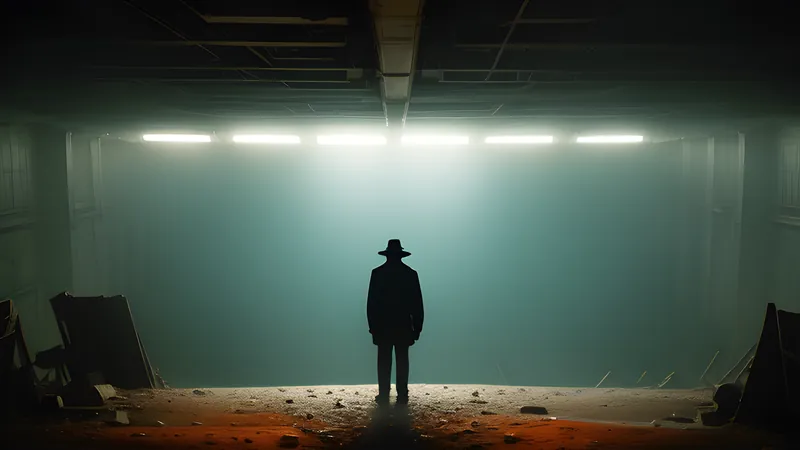
Deakins’s photography is the reason the length never curdles into tedium. Each major location gets its own palette and its own weather: the sodium orange of a dead, irradiated Las Vegas; the sickly aquarium light of Wallace’s headquarters, where reflected water ripples across every wall; the sterile white of the police station; the endless drizzle of the city, inherited from 1982 and pushed further. Hans Zimmer and Benjamin Wallfisch’s score, stepping in after Jóhann Jóhannsson departed the project, leans into vast subsonic drones that press on your chest. You feel this film in the room before you understand it.
The screenplay’s real intelligence is that it makes the sequel’s central question about the protagonist himself rather than about Deckard. The first film asked whether Deckard was human. The second asks something the first never could: what a manufactured person owes himself when he starts to suspect his life has a meaning larger than his function. That is a genuine deepening of the original’s theme rather than a lap around it, and it is why 2049 justifies existing.
The Joi problem
The most divisive element is Joi, and the divisions are worth taking seriously because the film wants them. Joi is a mass-market AI girlfriend, a product with a slogan, capable of being everything K needs because being everything K needs is what she was sold to do. De Armas plays her with such warmth that the audience falls for her exactly as K has, which sets a trap. Is any of it real? Can a program that is designed to please you love you, and does the question even mean anything?
Some viewers read Joi as a tender love story the film believes in. Others read her as the film’s sharpest irony, a commentary on how easily a lonely man will mistake a bespoke reflection for a companion. The strongest thing 2049 does is refuse to resolve which reading is correct, and to plant one image late in the film that tilts the whole thing toward cruelty. That image lives below the line. Hold the question; the film wants you uncertain, and uncertainty is the point of the whole franchise.
The real ancestor of this
The obvious lineage is the 1982 film, but the deeper craft ancestor of 2049 is Andrei Tarkovsky, and Villeneuve has never hidden it. The long held takes, the willingness to let landscape carry emotion, the sense that science fiction can be contemplative and religious in temper — that is Solaris and Stalker far more than it is anything from the American blockbuster tradition. Wallace’s drowned white sanctum is a Tarkovsky space; K’s pilgrimage across dead country to find a hidden man is a Zone-crossing in a raincoat.
The other parallel is Villeneuve’s own Arrival, made the year before, another slow, sad, gorgeously shot film about a person carrying knowledge that reorders their sense of time and self. Watching the two back to back shows you a director who spent a decade proving that mainstream science fiction could be patient and grown-up, and got the budgets to keep proving it. If 2049 grips you, those are your next two films.
Whether the whole thing earns its silence is the argument, and I can only make my side of it by spoiling the ending. Below the line, then.
Spoilers below
The engine of the plot is a miracle: evidence that a replicant, Rachael from the first film, gave birth. A manufactured person reproduced, which by the film’s logic collapses the line between human and replicant entirely, and every faction wants the child either as saviour or as proof to be erased.
K’s investigation leads him to believe he is that child. The memory he carries — a small carved wooden horse hidden in an orphanage furnace — checks out as real when he thought all his memories were implanted, and for a stretch of the film K walks around having become a person with an origin, a chosen one. Gosling plays this beautifully, because he lets the hope leak into a face trained to show nothing. Then the film takes it away. K is not the child. The memory is real, but it belongs to someone else; the actual child is Dr. Ana Stelline, the memory-maker who designs the false pasts sold to replicants, living sealed in a bubble because she is told she has a compromised immune system. K’s whole sense of specialness was a coincidence he was allowed to believe.
This is where the Joi image lands its blow. After Joi is destroyed, K walks past a giant advertising hologram of the same product, a nude pink Joi who leans down and calls him by the pet name “Joe” that his own Joi had chosen for him — and the ad calls everyone Joe, because that is the marketing copy. The intimacy he thought was theirs was a script running in ten million homes. The film does not tell you Joi didn’t love him. It simply shows you that he can never again be sure, which is worse.
The ending is where 2049 earns its title as a real sequel. K, denied the destiny he briefly held, chooses to do the meaningful thing anyway: he finds the aged Deckard, rescues him from Wallace and Luv, and delivers him to his daughter, then lies down in the snow, wounded, to die while father and child meet for the first time. His life mattered because he decided it would, not because a prophecy assigned it. That is the deepening the first film couldn’t reach. Blade Runner asked whether a manufactured man could be human; 2049 answers that he becomes human at the exact moment he does something generous with no reward in it.
Deckard’s return is handled with unusual tact. The film sidesteps the old is-he-a-replicant argument almost entirely, letting Ford play an old man rather than a riddle, which is the right call — pinning it down would have vandalised the first film’s ambiguity. Wallace’s line that Deckard and Rachael may have been engineered to meet and breed dangles the possibility without confirming it, and then the film, wisely, moves on.
My verdict: this is the rarest object in commercial cinema, a legacy sequel that adds to its original instead of taxing it. It is too long by fifteen minutes, Leto’s Wallace is the one indulgent misstep, and the film’s chilliness will keep some viewers at arm’s length forever. None of that touches the achievement. 2049 took the least sequel-able film ever made and produced a companion piece worthy of standing beside the Final Cut. Watch the original’s Final Cut first, then this, then Villeneuve’s Arrival — three films by directors who understood that in science fiction, the quiet is where the meaning hides.
Related Content