Beyond the Black Rainbow: The Synth-Drenched Slow Nightmare
Panos Cosmatos's 2010 debut is a cold, hypnotic retro-future about a psychic prisoner and the New Age messiah who keeps her
Contents
Before Mandy gave Panos Cosmatos a cult and a Nicolas Cage-shaped calling card, there was Beyond the Black Rainbow, a 2010 debut so patient, so cold and so committed to its own airless mood that it repels roughly half the people who start it. That is by design. This is a film built to be a test — of your tolerance for silence, for stillness, for a nightmare that unfolds at the pace of a lava lamp — and the reward for passing it is one of the most singular sensory experiences in modern genre cinema. I think it is the more interesting of Cosmatos’s two features, even if it is plainly the harder one to love.
The premise, kept sealed
The setting is the Arboria Institute, a New Age research facility whose promise, delivered in a beatific 1966 promotional film, was reconciliation of the spiritual and the technological — enlightenment through science. By 1983, where the film proper takes place, that dream has rotted into something clinical and cruel. A young woman named Elena (Eva Allan) is held in the Institute’s antiseptic white chambers, apparently possessed of psychic abilities, kept sedated and observed. Her keeper is Barry Nyle (Michael Rogers), a therapist whose calm surface conceals a man in the last stages of some private disintegration.
That is nearly the whole plot, and I will not spoil the little of it that moves above the line. Beyond the Black Rainbow is not a narrative engine; it is a mood you are trapped inside. Cosmatos withholds explanation the way the Institute withholds daylight, and the not-knowing is the point.
Why the slowness is the craft
Here is where the film separates its admirers from its abandoners. Cosmatos directs Beyond the Black Rainbow as a hypnotic induction. Scenes are held past the point of comfort; the camera glides or simply stares; whole passages pass with no dialogue and no event beyond a hum and a glow. If you resist it, the film is interminable. If you surrender, it works on you like a drug — which is, of course, exactly what the film is about.
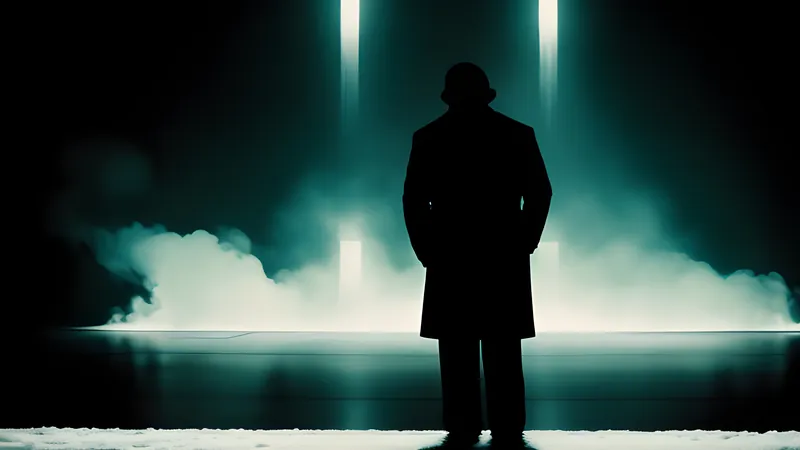
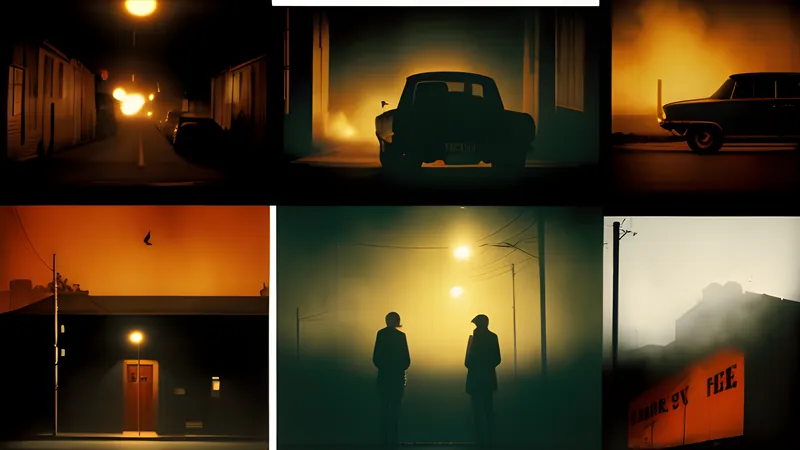
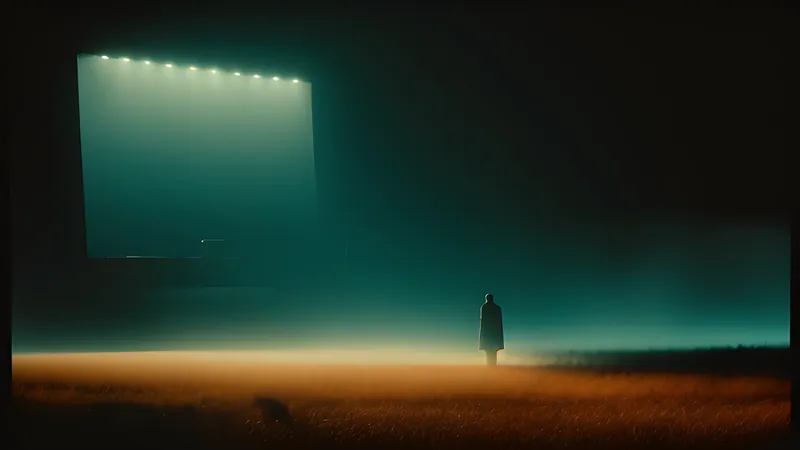
The craft mechanics are worth spelling out because they are so deliberate. The cinematography (by Norm Li) was shot on anamorphic lenses and then deliberately degraded, timed to feel like a faded print of a film from 1983 that you might have caught, disturbed and half-asleep, on late-night cable as a child. The colour scheme is ruthless: clinical whites and blacks broken by sudden immersions in monochrome red, the palette Cosmatos would carry into Mandy. The production design turns the Institute into a temple of dead futurism, all glowing prisms and brushed panels, a place that believes in its own transcendence long after the transcendence has curdled.
And the sound. The score by Sinoia Caves — the solo project of Jeremy Schmidt from the band Black Mountain — is the film’s second nervous system, a wall of vintage analogue synthesiser that pulses and drones and occasionally blooms into something almost beautiful before withdrawing. It is one of the great synth scores of the century and it does the heavy lifting the sparse script declines to do. The music tells you how frightened to be.
The performance that anchors all this is Michael Rogers’s Nyle, a study in immaculate control fraying at the edges. Rogers plays him with a therapist’s practised warmth stretched over a void, and the film’s slow accumulation of dread is largely the accumulation of small signs that the void is winning. It is a genuinely unsettling piece of acting precisely because it is so quiet for so long.
The collector’s map
Cosmatos wears his influences openly, and Beyond the Black Rainbow is in one sense a loving séance for a specific strand of seventies science fiction. The bones are THX 1138, George Lucas’s chilly 1971 debut about a sterile controlled society, and Kubrick’s 2001 — the same faith that a slow, immaculate image can carry metaphysical weight, the same trust in the audience to sit inside a mystery without a hand to hold. There is Ken Russell’s Altered States in the film’s fascination with sensory-deprivation tanks and chemically induced transcendence, and a strong whiff of Phase IV and the cooler, more cerebral end of seventies genre film.
But the essential cross-reference for any viewer is forward, to Cosmatos’s own follow-up. Watching Beyond the Black Rainbow and Mandy back to back is one of the clearer director-study experiences available: the same 1983, the same synth drench, the same pharmaceutical-cult horror and the same conviction that colour and drone can carry a film where plot will not. The debut is the cold, sealed, cerebral version; the second is the hot, grieving, kinetic one. They are two doses of the same drug.
For the body-horror strand the film reveals in its back half, the ancestor is Cronenberg and the descendant impulse runs straight to the mutation cinema the desk keeps circling. The chilly transformation-under-observation here shares blood with Videodrome’s prophecy about the screen and the flesh, and the outright somatic assault it flirts with finds its purest, most punishing expression in Tsukamoto’s Tetsuo — where the metal wins completely. Cosmatos only shows you the edge of that abyss; those two films jump in.
The verdict
Beyond the Black Rainbow is a difficult recommendation, and I would rather be honest about that than oversell it. Its final act loosens in ways some viewers find a betrayal of the hypnotic control that came before, tipping from cold dread into a more conventional register of menace. Its refusal of narrative is a genuine barrier, and anyone who needs a film to add up will find it maddening. The pacing asks more of a modern viewer than almost any other cult film of its vintage, and no amount of admiration for the craft will change that for the impatient. This is a mood piece that asks for your submission and offers, in return, atmosphere rather than answers.
But the atmosphere is extraordinary, and it lingers. Weeks after watching I still have the hum of that synth score and the glow of those red chambers lodged somewhere behind my eyes. As a debut it is astonishingly assured — a first-time director with a fully formed sensibility, refusing every temptation to reassure his audience. It made everything Cosmatos did next possible, and on its own terms it is a small, cold, perfect object.
Watch it late, alone, on the largest screen and best speakers you can manage, and do not multitask; the film only exists if you give it your whole nervous system. Then watch Mandy the next night for the warm-blooded sequel to the same dream.
Spoilers below
The film’s most disturbing revelation is the flashback to 1966 and the origin of Barry Nyle. We learn that Nyle was himself a subject of the Institute’s founder, Dr Mercurio Arboria, and that the “reconciliation of spirit and technology” the promo film promised was pursued through hallucinogens and immersion in a tar-black sensory tank. Nyle emerges from that tank changed at the cellular level — stripped of his eyes’ natural colour, drained of his humanity, remade as something that only performs being a man. The sequence is Cosmatos’s one full plunge into body horror, all glistening black sludge and dissolving identity, and it recontextualises everything: Nyle is not a cruel man guarding a special girl, he is a failed experiment guarding the Institute’s one genuine success.
That is the film’s cruel joke about the New Age dream. Arboria wanted to manufacture enlightenment and instead manufactured a monster, and his monster now runs the place while the founder lies senile and dying, hooked to machines, having outlived his utopia. Elena’s psychic gift is the real transcendence the Institute was chasing, and it arrived by accident in a captive girl the men can only imprison and study, never understand.
The final movement releases the tension in a way that has divided audiences for over a decade. Nyle’s disintegration completes; he sheds the last of his human affect, dons a wig and contact lenses, arms himself and hunts Elena through the Institute and out into the world beyond it — the first time the film allows sunlight and ordinary reality onto the screen, to jarring effect. Elena’s escape and Nyle’s abrupt, almost anticlimactic end feel deliberately deflating after the hermetic control of everything before, and I understand the viewers who call it a stumble. I read it differently: after ninety minutes sealed inside a rotting dream of the future, the flat, banal daylight of 1983 reality is its own kind of horror, and Cosmatos ends on the ordinary world reasserting itself over the ruins of a cult that promised to escape it, and that banal daylight is a bleaker close than any transcendence would have been. The rainbow was black all along.
Related Content