Basket Case: The Times Square Body-Horror Fable
Frank Henenlotter's $35,000 debut turned a wicker basket and a lump of latex into one of grindhouse cinema's great tragedies
Contents
A young man checks into a filthy Times Square hotel carrying a large wicker basket. He is polite, jumpy, and he pays cash. Inside the basket is his brother. This is the premise of Basket Case, Frank Henenlotter’s 1982 debut, made for around thirty-five thousand dollars on 16mm film in the last days of grindhouse New York, and it remains one of the purest examples of a truth the genre keeps proving and forgetting: that a low budget spent on the right idea outlives any amount of money spent on the wrong one.
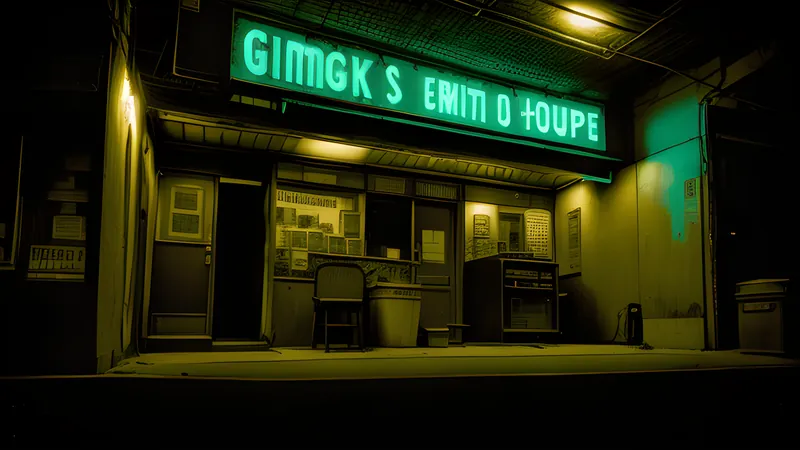
Henenlotter shot it in the actual flophouses and porn arcades of a 42nd Street that has since been scrubbed into a theme park, and the film is now doubly a horror artefact, preserving both a monster and a city, each of which has vanished. What surprises anyone coming to it expecting mere splatter is how much sorrow it carries. Under the rubber and the cheap red gore, Basket Case is a genuine tragedy about the one bond a person cannot escape.
Brothers, one in a basket
Duane Bradley, played with wide-eyed sincerity by Kevin Van Hentenryck, arrives in Manhattan on a mission. The basket holds Belial, his formerly conjoined twin — a deformed, fanged, telepathically linked lump of a creature who was surgically hacked off Duane’s side when they were children, against both their wills, by a trio of doctors who treated the operation as garbage disposal. Belial survived. Now the brothers travel together, sharing thoughts, and they have come to New York to find and kill the doctors who separated them.
The plot is a revenge structure, but the film’s real subject is the relationship. Duane loves Belial and is bound to him, guilt and loyalty and blood all knotted together, and he pushes that basket around a hostile city like a man carrying his own worst secret. When Duane meets a kind receptionist named Sharon and begins, for the first time, to want a life of his own, Belial senses the betrayal through their psychic link, and the film’s tragedy engine starts to turn. The monster is jealous, and it has reason to be.
Belial himself is a triumph of resourcefulness. Rendered through a crude hand puppet and jerky stop-motion, he should be laughable, and in still images he is. In motion, in context, he is genuinely unsettling and, stranger still, sympathetic. Henenlotter and his effects team understood that the seams do not matter if the emotion underneath is real. Belial is a wronged, damaged, furious thing, and the primitive technique animating him only makes him sadder.
Why it works: sympathy for the monster
The engine of Basket Case is that both brothers are victims. The doctors’ crime — mutilating two children and discarding one as medical waste — is the original sin the film never lets you forget, so that Belial’s rampage reads as justice even at its most grotesque. Henenlotter refuses the easy horror move of a simply evil monster. Belial kills, horribly, but he was made this way by casual cruelty, and the film keeps his and Duane’s shared trauma in the frame at all times.
The tone is the tightrope, and Henenlotter walks it with more control than the budget suggests. Basket Case is frequently very funny — the flophouse denizens, the sleazy doctor, the sheer chutzpah of the premise — and then, without warning, it turns to real pathos, particularly in a flashback to the brothers’ childhood that plays the tragedy dead straight. The comedy and the sorrow are not fighting each other; they are the two faces of the same grindhouse fable, and the film’s confidence in switching between them is what separates Henenlotter from the hundreds of anonymous exploitation hacks working the same street.
There is also, running under everything, an ache about growing up and growing apart. Duane wants to be a person, a young man with a girlfriend and a future. Belial cannot allow it, because to lose Duane is to lose everything. Anyone who has ever been held back by a person they could not bring themselves to abandon will feel the film’s real horror long after the gore has faded.
The company it keeps
Henenlotter would refine this exact register in his follow-up, Brain Damage, swapping the deformed twin for a talking parasite that trades euphoria for murder — the same director working the same seam of body-horror-as-codependency, and the ideal double bill with Basket Case. The two films are siblings in the way Duane and Belial are: linked, mirrored, impossible to fully separate.
For the broader portrait of a New York that fed on its outcasts, Basket Case rhymes with Slava Tsukerman’s Liquid Sky, shot in the same city at the same moment from the opposite social angle — the fashion loft and the flophouse, two halves of one doomed metropolis — and with the melting-body squalor of Street Trash, which treats the city’s forgotten as literally dissolving into the pavement. And for the wider tradition of splatter that hides a beating heart, Stuart Gordon’s Re-Animator is the essential companion, another 1980s film that proved gore and genuine feeling can share a frame.
Where to watch
Basket Case was for years available only in murky, washed-out copies that did the grimy 16mm cinematography no favours. The Museum of Modern Art undertook a full restoration, and the resulting 4K transfer is the one to seek — it recovers the texture of the film stock and the grime of the locations, both of which are essential to the experience. Do not watch a faded copy if you can help it; the muck is part of the meaning.
Go in braced for the aesthetics of poverty cinema. The acting is uneven, the effects are handmade, the sound is rough. None of it matters once Belial starts moving and the film’s strange, sad heart reveals itself. This is a monster movie made by someone who loved monsters enough to grieve for them. Henenlotter came up as a devotee of the exploitation circuit, and that fandom shows in every frame — the film is a love letter to the 42nd Street double bills that raised him, made with the reverence of a fan and the eye of a genuine filmmaker who happened to have almost no money. The affection is what lifts it above the hundreds of forgotten shockers it shared a marquee with.
The verdict
Basket Case is a landmark of no-budget horror precisely because it spent its meagre resources on the one thing money cannot manufacture: a genuinely felt idea. Two brothers, one basket, a city that wants to destroy them both, and a bond that is equal parts love and prison — Henenlotter turned pocket change into a tragedy that has outlasted films made for a hundred times the money. It is grubby, it is often crude, and it earns a place among the essential cult objects of its decade because it means every horrible, tender thing it does. The basket is one of horror’s great images, and what it carries is one of the genre’s great sad hearts.
Spoilers below
Everything above is safe. The brothers’ history and the ending are below.
The flashback at the film’s centre is where the tragedy is sealed. We learn that Duane and Belial were born conjoined, and that their father, ashamed and repulsed, hired a trio of quack doctors to cut them apart in secret, leaving Belial for dead in a bin bag. Duane, the “normal” one, rescued his brother, and their aunt taught Duane to love and care for the monstrous sibling everyone else wanted erased. The revenge plot, then, is not random cruelty; it is two abused children collecting a debt from the adults who mutilated them.
Belial murders the doctors one by one, and the film gives each killing the weight of a reckoning. The relationship curdles once Duane falls for Sharon. When Belial discovers, through their psychic link, that Duane has slept with her, the jealousy becomes uncontrollable. In one of the film’s most infamous scenes, Belial attacks Sharon himself, and the sexual dimension of his rage — the monster wanting what his brother has, denied a body that could ever be wanted — turns the tragedy fully operatic. The bond that saved Belial’s life becomes the thing that dooms everyone near it.
The ending is pure grindhouse pathos. The brothers, unable to live together and unable to live apart, end their story in a literal death grip: Belial, enraged and grief-mad, and Duane, still tethered to him by love and guilt, plunge together from the window of the Hotel Broslin, falling to the street entwined as they were at birth. Separation was always the wound; reunion in death is the film’s terrible resolution. They were cut apart by cruelty and could never be whole alone, and Basket Case insists, with a sincerity no amount of latex can undercut, that the only place the brothers were ever truly one was on the way down.
Related Content