Akira: The Anime That Sold the West on the Form
A revisit of Katsuhiro Otomo's 1988 landmark, and how one film rewired what the West thought animation could do
Contents
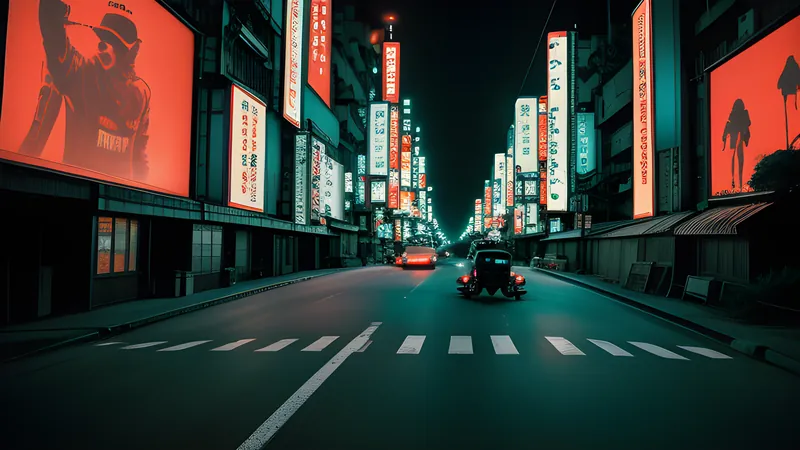
There is a shot early in Akira that did more for animation in the West than a decade of arguments could. A red motorcycle brakes at speed, and instead of a cut the camera holds on the tyre laying a long streak of light down a wet Neo-Tokyo motorway, the whole machine sliding sideways with a weight and follow-through no Western cartoon of 1988 would have dared to draw. Anyone who saw that on a battered VHS tape understood in a heartbeat that animation could carry adult weight, real speed and genuine dread. Akira is the film that changed the argument, and it changed it by spending money most anime never saw.
What the money bought
Katsuhiro Otomo adapted Akira from his own sprawling manga, then still unfinished, and the production was extravagant by the standards of Japanese animation. The budget ran to something like 1.1 billion yen, then a record for an anime feature, and the money is visible in every frame. The film used more than 160,000 individual cels and a custom palette of hundreds of colours, several of them mixed specifically for the picture’s neon-and-shadow nights. Backgrounds that lesser productions would have held still are alive with light, reflection and moving crowds, so Neo-Tokyo reads as a real, overpopulated, decaying megacity rather than a painted flat.
The most radical technical choice was pre-scoring the dialogue. Rather than animate first and dub afterwards, the standard economy of the industry, Otomo’s team recorded the voices before animating and then matched the characters’ mouths to the actual speech. The effect is a fluency of lip movement and performance that Western viewers, raised on the looser sync of Saturday-morning cartoons, had simply never associated with the medium. Combined with full animation — far more drawings per second than the limited-animation style anime had used to control costs — it produced motion so smooth and deliberate that the film felt closer to live action than to the cartoons the West assumed it knew. Otomo, an illustrator by training, storyboarded with an architect’s obsession, and it shows in the way the camera moves through space. When a rider weaves through traffic, the vehicles have consistent geometry and the light falls correctly across every surface; when a building collapses, the debris obeys a physics the eye believes. That commitment to spatial truth is why the action reads as thrilling rather than chaotic, and it set a bar that most animated action still fails to clear.
The sound of a new world
The score is the other half of the miracle. Otomo handed the music to Geinoh Yamashirogumi, the collective led by Shoji Yamashiro, and what they delivered has almost nothing to do with conventional film scoring. Built from Indonesian gamelan, Japanese Noh chant, Balinese vocal traditions and layered choral drone, the music treats Neo-Tokyo as a place of ritual and impending apocalypse. The famous cry of “Kaneda!” across the ruins lands the way it does because the soundtrack has already primed you for catastrophe on a mythic scale. It is one of the great marriages of image and sound in the genre, and it taught a generation that an animated film could aim for the sublime rather than the merely exciting. The mix is used with real cunning, too: long passages play almost silent, letting the drone of the city and a single sustained chord do the work, so that when the percussion finally crashes in the effect is physical. Otomo trusts negative space the way a live-action director does, and the restraint makes the eventual overload land like a blow.
The story underneath all this craft is a dense one: a biker gang in the reconstructed Tokyo of 2019, a friend named Tetsuo who stumbles into a secret military programme and the psychic powers it created, a hidden child called Akira whose earlier awakening levelled the old city, and a government machinery too frightened and corrupt to contain what it has made. Otomo compresses hundreds of pages of manga into just over two hours, and the seams show — characters and factions rush past faster than a newcomer can track. That density is a feature of the experience. The film moves like the city it depicts, overloaded and accelerating, and the sensory overwhelm is part of the point.
Why it travelled
Akira reached the West at exactly the right moment. It played cinemas and then colonised home video, and the Streamline Pictures English dub turned it into a fixture of the late-night and rental circuit at the turn of the 1990s. For a huge number of viewers it was the first anime they ever saw, and it arrived carrying none of the assumptions — that animation meant children’s entertainment, that “cartoons” could not be violent, sexual, political or tragic — that had kept the form in a box. It made the case for anime as cinema by simply being undeniable on a big screen. The timing mattered in another way. The West was, in 1988 and after, deep in its own fascination with corporate dystopia and technological dread, and here was a film from Japan that had metabolised those anxieties into something stranger and more beautiful than Hollywood was producing. Neo-Tokyo, rebuilt for a 2020 Olympics amid protest, corruption and rot, read as prophecy to viewers who had never thought a cartoon could hold a political idea. That shock of recognition — this thing is serious — is exactly what pried the door open for everything that followed it into Western video shops.
Its dialogue with the wider genre runs in both directions. Otomo drew on the same well of dystopian, neon-drenched futurism that Blade Runner had opened up, and Neo-Tokyo’s rain-slicked density is a cousin to Ridley Scott’s Los Angeles. In turn Akira fed forward into everything from Hollywood blockbusters to music videos, its imagery of psychic children, body-horror mutation and doomed young men on impossible machines echoing for decades. Seven years later, Mamoru Oshii’s Ghost in the Shell would complete the job Akira began, cementing anime’s reputation with Western filmmakers and cyberpunk audiences alike. The two films are the twin pillars on which the form’s international standing was built.
The verdict, argued
Akira is not a tidy film, and anyone who wants a clean three-act narrative will feel the story straining against its own compression. Judge it as pure narrative and it stumbles. Judge it as an experience — as sensation, design, sound and sheer kinetic ambition — and it remains overwhelming more than thirty-five years on. Its importance is genuine and hard to overstate: it enlarged what a Western viewer believed animation could be, and it did so on the strength of craft that still outclasses most of what has followed. Newcomers should know going in that the plot will outrun them, and that this is normal; the film rewards surrender over comprehension, and a second viewing repays the first many times over. Watch it big and loud, then follow the trail below.
Spoilers below
The film’s real subject is power without maturity, and its climax makes that literal in the most visceral way the medium allows.
Tetsuo, the smallest and most bullied of Kaneda’s gang, is the one the military accident awakens, and his psychic abilities grow far faster than his sense of self. The tragedy is that he never gains the wisdom to govern the strength he is given; his power inflates while the frightened, resentful boy underneath stays exactly the same size. In the final act his body can no longer contain what is happening to him, and he mutates into a vast, writhing mass of flesh and machinery, absorbing everything near him — the horror is that this is simply his adolescence, his neediness and his rage, made physical and unstoppable.
Akira, the child whose awakening destroyed the original Tokyo, is revealed to have been dismembered and preserved in cryogenic storage by a state too afraid of him to let him die or live. When the surviving psychic children summon whatever Akira has become, the released energy consumes Tetsuo and, in the film’s cosmic final gesture, appears to birth a new universe out of the catastrophe. The apocalypse and the genesis are the same event, which is Otomo’s bleak, sublime thesis: the power to end a world and the power to make one are indistinguishable, and neither belongs safely in human hands.
If the film leaves you wanting the cooler, more meditative branch of the same tradition, go straight to Ghost in the Shell, and for the live-action grandfather of Neo-Tokyo’s rain and neon, revisit Blade Runner.
Related Content