Advantageous: The Quiet Dystopia of Self-Replacement
Jennifer Phang's future asks a mother to become a younger woman so her daughter can go to school
Contents
Somewhere in the middle distance of Advantageous, in a drone shot over a city of glass towers and clean pastel light, a building explodes. Nobody in the film mentions it. The camera does not linger. A moment later Gwen Koh is sitting in an office being told, courteously, that the company has decided to go with a younger face.
That is the entire method of Jennifer Phang’s film, and it is the reason it lodges. The apocalypse is happening in the background of every frame and it is none of anyone’s business, because the foreground has a school fee due.
The situation
Gwen (Jacqueline Kim, who co-wrote with Phang) is the public face of the Center for Advanced Health and Living — a firm selling a procedure to wealthy clients, fronted by a woman whose warmth and composure make the pitch. She is in her forties. She is a single mother. Her daughter Jules (Samantha Kim) is bright and needs a place at a school whose fees are structured to be impossible, in an economy where a woman’s employability has a shelf life measured in skin.
The unemployment rate is catastrophic and never quoted. Women are being pushed out of the workforce and nobody explains the policy. Girls’ education has become the only route to a life and has been priced accordingly. Phang builds this world entirely through what her characters take for granted: an aunt refuses a loan in a scene of pure domestic politeness that is quietly the cruellest thing in the film; a headhunter explains, kindly, that Gwen’s age is a fact rather than an obstacle.
Then the Center offers Gwen a solution. Her employer’s own product, at a staff rate. She can transfer into a new body — younger, and, the film is careful to establish, more racially ambiguous, more “universal”, more saleable. She would keep her mind, her memories, her daughter, her job. She would simply be somebody else.
The film’s brutality is that this is a good deal. Phang never lets you locate a villain, and refuses to give Gwen a bad option to reject. Every person delivering the offer is reasonable, courteous and correct about the arithmetic.
Why the glass works
The craft argument sits in the production design, and it is one of the most resourceful pieces of low-budget world-building of the last decade.
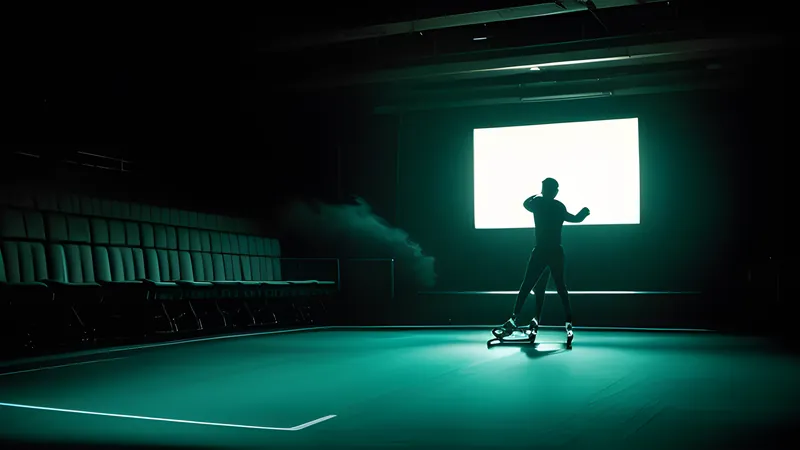
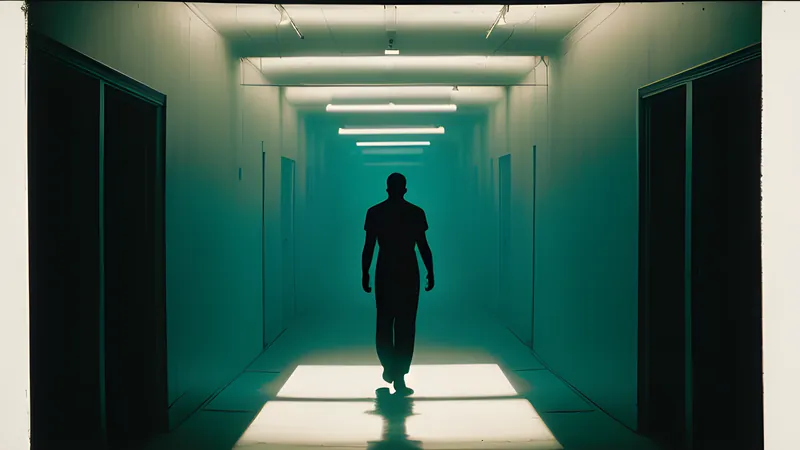
Phang and cinematographer Richard Wong had no money for a future. So they built one out of glass, light and negative space. The film is shot in real modern interiors — lobbies, corridors, clinics — chosen for enormous windows and reflective surfaces, and lit toward a pale, even, pastel key with almost no shadow. It looks expensive. It cost almost nothing, because the trick is location scouting and a grade rather than construction.
What that flat, shadowless light does is the clever part. A dystopia normally arrives in darkness — rain, neon, ruin, the visual grammar that tells an audience the world is wrong. Phang’s world is bright, clean, calm and full of pleasant surfaces, and the wrongness has to be located somewhere the eye cannot reach. So you spend the film scanning: What is that in the sky? Why is nobody looking at it? The audience is put in the exact posture of the characters, surrounded by evidence and busy with something else.
The glass does the other job. Gwen is shot constantly through windows, past reflections, doubled in polished surfaces, so that the frame contains two of her long before the plot does. It is a device that could be unbearably obvious and stays on the right side of it because Phang never cuts to emphasise it — the reflections are simply where the woman happens to be standing, which is the point about a person whose face is company property.
And the distant explosions are the film’s masterstroke of economy. A few composited plumes on a skyline, unremarked, and the audience constructs an entire collapsing civilisation for free. It is the same instinct that made Another Earth work — spend everything on one image, then decline to explain it.
The ancestor
The reflex is Never Let Me Go, and the tone is adjacent. The real ancestor is Seconds, John Frankenheimer’s 1966 film in which a bored middle-aged banker pays a discreet company to fake his death and rebuild him as a younger man, and discovers what the price actually was. Frankenheimer’s film is the founding text for the transaction Advantageous runs on, and the differences between them are the entire fifty years.
Frankenheimer’s protagonist buys his new body out of boredom — a man with a good job and a dull marriage, purchasing an adventure. His horror is existential and, frankly, a luxury. Gwen buys hers to pay for her daughter’s schooling. The 1966 film is about a man who wanted more; the 2015 film is about a woman with no other route to keeping her child housed. Phang has taken the exact machinery of Seconds — the discreet corporation, the procedure, the vacated self — and moved the motive from appetite to necessity, which converts a parable about male midlife into something considerably harder to shrug off.
Its living relatives are the quiet dystopias: Gattaca, which understood before anyone that the future’s cruelty would be administered in beige rooms by polite people with correct data, and After Yang, which shares Phang’s conviction that the way to film a technology is to film a family that already takes it for granted. Put those three together and you have the whole case for domestic science fiction as the mode that ages best.
Kim’s performance
Jacqueline Kim carries this, and the performance deserves more attention than it received. Gwen has to be a professional charmer — the woman whose job is to be reassuring — while running out of the thing that makes her employable, and Kim plays the labour of it: the smile held a half-second past its natural life, the composure that costs visible effort. Her scenes with Samantha Kim have the specific texture of a parent managing a child’s optimism while doing sums, and they are the film’s floor.
James Urbaniak, as her contact at the Center, does an excellent line in institutional gentleness. Nobody in this film raises their voice. That is the horror.
The case against
The film is slow in a way that occasionally reads as static rather than patient, and its dialogue sometimes reaches for aphorism when it should stay in the room. The world-building’s refusal to explain is largely a strength and is once or twice simply a gap — the mechanics of the unemployment crisis and the policy pushing women out are gestured at with a vagueness that lets the film avoid an argument it has raised.
It also expanded from Phang’s own 2012 short of the same name, and the seams show: the premise is short-film-shaped, and the feature finds real material in the mother-daughter relationship while padding elsewhere with atmosphere. And the ending, which is the correct ending, will strike some viewers as a cheat given how little the film does to dramatise the moment of decision.
The verdict, spoiler-free
Advantageous is a small, cold, beautifully made film about the thing science fiction is actually for: taking a pressure that already exists and turning the dial one notch past the deniable. Every element of Gwen’s situation is currently true — the depreciation of a woman’s employability, the pricing of a child’s future, the cheerful corporate offer that is technically voluntary. Phang’s contribution is a machine that makes the transaction literal, and the restraint to let it be a Tuesday rather than a tragedy.
It won a Special Jury Award at Sundance in 2015 and has lived on Netflix ever since, which is both convenient and slightly funny given the subject. Watch it with Gattaca, then find Seconds and see the same deal offered to a man who had a choice.
Spoilers below
The procedure is the film’s trap, and Phang springs it with almost no ceremony.
Gwen takes the offer. She undergoes the transfer, and wakes as a younger woman (Freya Adams), goes home, and resumes her life and her job and her daughter. The film presents this as continuity — she remembers everything, she loves Jules, she is Gwen. And then it lets the truth surface in the film’s flattest, quietest scene.
There is no transfer. There was never a transfer. The Center’s product is a copy: a new body grown and imprinted with the client’s memories, personality and attachments, while the original body is disposed of. Gwen died on the table. The woman raising Jules is a manufactured person who believes, with complete sincerity, that she is Gwen, because she has every memory Gwen had and no way to know the difference. The company knew. Gwen knew, or knew enough — she read what she was signing and signed it anyway, because the alternative was her daughter with no school.
Phang’s refusal to make this a horror sequence is what makes it devastating. There is no reveal scene with a monitor and a scream. The information simply becomes available, delivered in the same courteous institutional register as everything else, and the film keeps going, because the new Gwen still has to get Jules to school.
The mother-daughter material curdles retroactively and beautifully. Every tender scene in the film’s second half is between a girl and a woman who is a very good copy of her mother, and the film declines entirely to say whether that distinction means anything. Jules does not know. Jules will never know. And the film’s last movement suggests she may half-know — that a child can register a difference too small to name and decide, out of love or need, to keep quiet about it.
That is the real subject, arriving in the final minutes. Advantageous is about a woman who ends herself so her daughter can have a future, and then hands that daughter the exact same economy that required it — a world where Jules will one day be forty, employable only as a face, with a company ready to make her a courteous offer. The cycle is the horror, and the film ends with the machine still running, in beautiful pale light, with the buildings still going up in the distance and nobody looking.
Related Content