Across 110th Street: The Blaxploitation Film That Plays as Tragedy
Barry Shear's 1972 crime picture takes the cycle's iconography and refuses every single one of its consolations
Contents
Most people meet this film through thirty seconds of it. Bobby Womack’s title song opens Jackie Brown, Pam Grier walks along an airport travelator, and a generation filed the track under “cool seventies soul” without ever asking what it was written for. Then you find the film, and the joke turns sour in your mouth. Womack is singing about a man who has run out of options in a place that never offered him any, and Across 110th Street is one of the most genuinely despairing American crime films of its decade.
I came to it the way I have just described — Tarantino first, the film years later on a DVD with a transfer that made the Harlem exteriors look like they had been shot in ash. It makes for a punishing ninety-odd minutes. It is also a very good film, and it does something no other picture in this cycle attempted: it takes the blaxploitation apparatus, the heist, the mob, the crooked cop, the soul theme, and denies the audience any hero at all.
Three men and a numbers bank
110th Street is the boundary. North of it is Harlem; south of it is the rest of Manhattan. The title is a geography lesson and a sentence of exile.
Three men rob a Harlem numbers bank operated by the Mafia in partnership with local Black organised crime, and take around three hundred thousand dollars. The robbery goes catastrophically wrong. Several mobsters die, and so do two policemen, which turns a theft into a manhunt with two separate engines: the Mafia wants its money and its example, and the New York Police Department wants cop-killers.
Paul Benjamin plays Jim Harris, the man at the centre — an ex-convict who cannot get work, whose entire life has been narrowed to this one appalling idea. Ed Bernard and Antonio Fargas play the other two. Anthony Quinn is Captain Frank Mattelli, an old, corrupt, exhausted Italian-American cop who has been taking Harlem’s money for years. Yaphet Kotto is Lieutenant William Pope, younger, Black, college-educated, clean, and formally in charge of the investigation over Mattelli’s head. Anthony Franciosa plays Nick D’Salvio, the mob’s son-in-law, sent uptown to find the money and enjoying it far too much.
Barry Shear directed. The source is a novel by Wally Ferris; Luther Davis wrote the screenplay. Quinn also produced, which is presumably how a film this uncommercial got made at United Artists.
The structure is the argument
Look at what that cast list does. The film has four possible protagonists and gives you no one to root for.
Jim Harris is a desperate man who has killed people. Mattelli is a bagman. D’Salvio is a sadist. Pope is decent, competent and completely powerless — the film’s cruellest joke is that the one honest man in it has authority on paper and nothing else. Shear cuts between all four continuously, and the effect is a machine closing from several directions at once on men who never had a chance of getting out.
The Mattelli-Pope relationship is where the film does its real thinking, and it deserves more credit than it gets. This is 1972, and the shape is familiar: the old bigot and the young Black officer, forced to work together. Every version of that story you have seen ends in grudging mutual respect. Shear and Davis run the setup and then decline to deliver the reconciliation. Mattelli’s racism is load-bearing, tied to his corruption, his fear and his obsolescence. Kotto plays Pope with a controlled fury that has nowhere to go — he is right about everything and it changes nothing, because the department is Mattelli’s department and always was.
Kotto is superb. He gets a handful of scenes to establish a man who has done everything correctly in a system that will not reward it, and he plays the whole thing on held tension. Quinn, for his part, is playing the least flattering role available to a star of his standing and refuses to ask for sympathy.
The mechanics: why it hurts
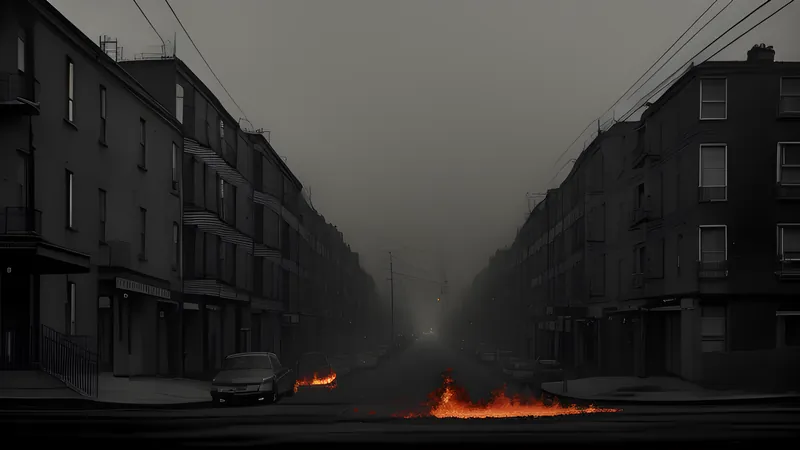
Shear was largely a television director, and the film is shot with a rough, hand-held, available-light immediacy that reads as documentary. That is the first mechanism. There is no glamour anywhere in the frame. Harlem here is buildings, weather and people, photographed without the loving iconography that Super Fly had applied to the same blocks the same year.
The second mechanism is the violence, and it is worth being clear about how far this film goes. It is brutal, protracted and utterly without style. Where the cycle generally staged violence as triumph — the reversal, the sprung trap, the moment the hero is revealed — Shear stages it as duration. Things take too long. People beg. The camera stays. D’Salvio’s methods in particular are filmed with a flat cruelty that makes the audience complicit for watching, and the film means them to.
The third mechanism is Womack. The song is the whole film in three verses: a first-person account of growing up in a place that fed him nothing, delivered without self-pity, ending in the flat statement that this is the only way out he could find. J J Johnson scored the rest. Placing that lyric over a picture in which the singer’s argument is proved correct and fatal is the most sophisticated soundtrack decision the cycle made, and it does the opposite of what Isaac Hayes’s Shaft theme does. Hayes tells you a man is coming who can handle it. Womack tells you nobody is coming.
The forgotten ancestor sits two decades upstream, outside the cycle entirely: the Warner Bros social-realist gangster picture of the early thirties — Little Caesar, and specifically Mervyn LeRoy’s I Am a Fugitive from a Chain Gang — where crime is an economic diagnosis and the ending is a man disappearing into the dark. Shear is remaking that film with the racial arithmetic made explicit.
1972, and what the film knew
The context sharpens it. New York in 1972 was in the early stages of the fiscal collapse that would define the decade, and the Knapp Commission had spent 1971 publicly establishing that corruption in the New York Police Department was systemic rather than exceptional — Frank Serpico had testified, and Serpico itself was a year away. Mattelli is a documented species, and audiences in 1972 knew it.
The numbers racket at the centre is equally specific. Policy — the illegal daily lottery — had been Harlem’s own economy for decades, run by Black operators, and its takeover by the Mafia is one of the better-documented pieces of American organised-crime history. The film’s premise, that a Harlem numbers bank is now a mob asset with a Black manager fronting it, is a compressed account of forty years of dispossession. Three men robbing it are stealing from the people who stole first, and the film assumes you can do that arithmetic without help.
This is where Across 110th Street separates from its shelf-mates. The wider cycle located the enemy in an individual: a pusher, a queenpin, a bent lieutenant. Kill him and the neighbourhood breathes. Shear’s film locates the enemy in an arrangement — banks, precincts, families, geography — and an arrangement cannot be shot. I traced how the studios learned to sell the iconography while carefully removing that analysis in blaxploitation, genre cinema and the studio that followed the money. This is the film that kept the analysis and paid for it at the box office.
The case against
The film is punishing, and some of the punishment is unearned. The violence occasionally crosses from indictment into wallowing, and the D’Salvio material especially plays to an exploitation audience while claiming a moral position. You cannot entirely have it both ways, and Across 110th Street tries.
The structure also short-changes its own best idea. Kotto’s Pope is the most interesting person in the film and gets perhaps the fourth-largest share of the running time. A braver picture would have been his.
And the despair is total in a way that can read as a cop-out. A film that offers no possibility of change is easier to make than one that has to argue for a route. Sam Greenlee’s The Spook Who Sat by the Door came out the following year with an answer, and got pulled from cinemas for having one, which puts the relative safety of pure bleakness in perspective.
Spoilers below
Nobody gets out. That is the film.
The mob reaches the robbers first in most cases and does what the mob does, at length. Mattelli, hunting on his own account and with his career already finished, ends up in the endgame with D’Salvio. The two of them die in the same movement, the corrupt cop and the mob enforcer, which is the film’s one gesture towards symmetry.
Jim Harris makes it to a rooftop with the money and is shot. His last act is to throw the cash off the roof into a schoolyard below, and the film’s final image is banknotes falling on children who have no idea what they are catching. Pope arrives too late to have prevented any of it and stands there while the money comes down.
There is no version of that ending that lets you leave comfortable. The money returns to Harlem in the most useless form imaginable. The honest policeman witnesses. The men are dead. Womack’s song was correct.
The verdict: the cycle’s tragedy, made by people who understood that giving an audience a hero is itself a political choice and declined to make it. It is harder to watch than anything else on this shelf and it is the film I would defend hardest. Yaphet Kotto’s performance alone justifies the ninety minutes.
Where next: Black Caesar for the same rage with a rise-and-fall structure; Cotton Comes to Harlem for the identical streets played as farce and somehow landing on the same diagnosis; and the blaxploitation canon for the wider argument. Available on disc and streaming; the Womack single is on every seventies soul compilation ever pressed, generally mislabelled as a good time.
Related Content