A Girl Walks Home Alone at Night: The Iranian Vampire Western
Ana Lily Amirpour's black-and-white debut turns the vampire into a lonely predator on a skateboard
Contents
The best joke in A Girl Walks Home Alone at Night is buried in the title. It is the sentence a young woman is warned never to let become true, the setup for a hundred cautionary tales and true-crime reconstructions, the phrase that means she is about to become a victim. Ana Lily Amirpour takes it and reverses the polarity. In her film the girl walking home alone at night is the most dangerous thing in the city, and the men who prey on women are the ones who should be afraid of the dark. It is a vampire film, a western, a mood piece, and a small act of revenge, and it announced one of the most distinctive new voices in genre cinema when it arrived in 2014.
Amirpour, an American filmmaker of Iranian descent, shot it in black and white, in Persian, in a California oil town standing in for a fictional Iranian ghost city called Bad City. The result is one of those debuts that arrives fully formed in its style, sure of every frame, indebted to a dozen sources and beholden to none of them.
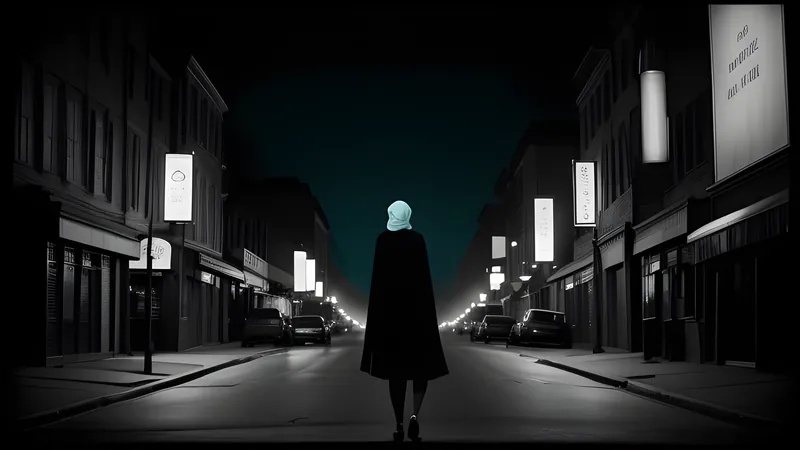
Bad City after dark
There is barely a plot, and that is a feature. Bad City is a nowhere place of pumping oil derricks, empty streets, a dry drainage ditch, and a haul road where bodies are dumped. Arash is a young man in a beautiful car he has spent years working for, saddled with a heroin-addicted father and the debts that habit generates. A local pimp and dealer, Saeed, tattooed and swaggering, runs the small economy of exploitation that keeps the town turning. And gliding through the streets in a black chador is the Girl — Sheila Vand, extraordinary — a vampire who watches the town’s predators and, when it suits her, feeds on them.
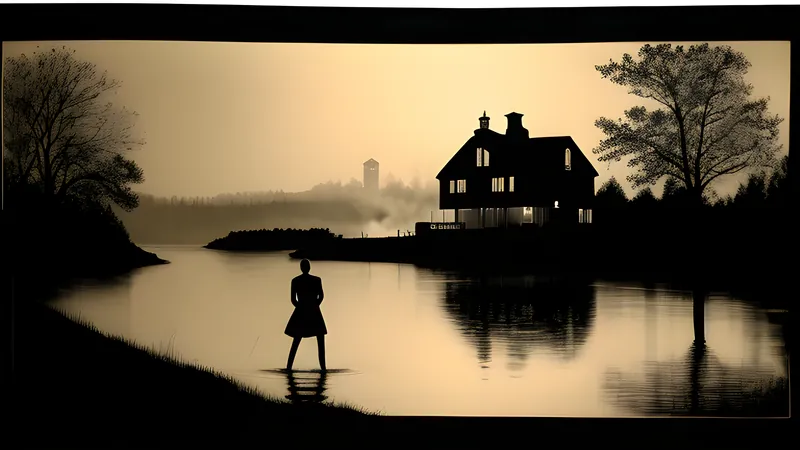
Amirpour and her cinematographer Lyle Vincent shoot Bad City as a place out of time. The oil derricks nod in the background of nearly every exterior like slow mechanical animals, and the town has no visible authority, no police, no institutions — only the small economies of drugs, sex work and debt that the strong run at the expense of the weak. It is a western town in everything but name, a lawless frontier where violence is the only currency and the only justice arrives from outside the human order. Into that vacuum Amirpour drops her vampire as a kind of nocturnal marshal, and the western grammar does the rest.
The film is built from encounters rather than incidents. The Girl follows Saeed home and shows him what fear is. She trails a small boy and warns him, in one of the film’s genuinely unsettling scenes, that she will be watching him for the rest of his life. And she meets Arash, dressed absurdly as Dracula after a costume party, high and lost, and something like tenderness passes between the predator and the decent young man. Amirpour lets these threads drift and cross at their own pace. The film moves like a night with no particular destination.
The chador as a cape
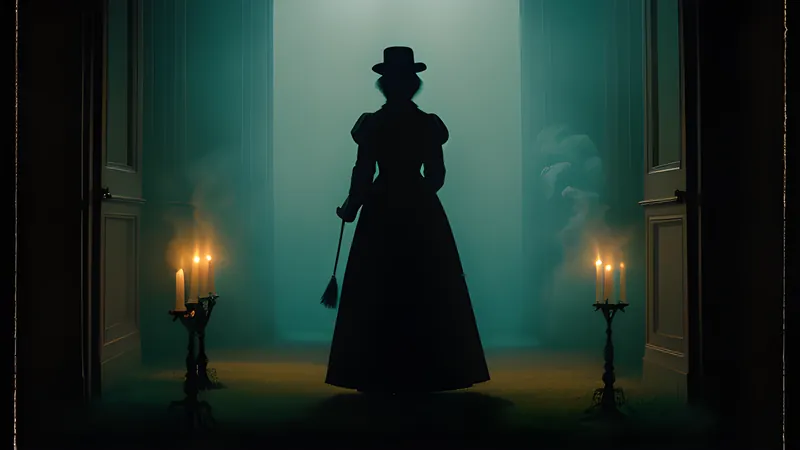
The central image is the masterstroke. When the Girl stands still, the chador is a garment of modesty and self-effacement; when she moves, and especially when she rides a stolen skateboard through the empty streets, it billows behind her exactly like a cape, and she becomes Nosferatu, a caped silhouette, a figure of pure gothic threat. Amirpour found a single costume that carries the film’s whole argument — the same cloth reads as vulnerability and as menace depending on nothing but motion and context, which is a precise visual statement about how the town, and the culture, sees a woman alone.
Vand’s performance holds it all together. She plays the Girl with a watchful, feline stillness, huge-eyed and unreadable, and she can turn menace on like a tap. The vampire here is a creature of enormous loneliness, drawn to Arash because he is the first person in Bad City who treats her as a person rather than a body or a threat, and Vand lets you feel the ache under the fangs.
Where it comes from
Amirpour is a magpie of a director, and half the pleasure of the film is spotting the sources she has metabolised. The look is Jim Jarmusch by way of Sergio Leone — the deep-focus black-and-white, the long silences, the western sense of a lawless town. The music is a bright wash of Iranian indie rock and post-punk that does a great deal of the emotional work. And the vampire itself descends from a very specific recent ancestor.
The real forebear of this film is Let the Right One In, Tomas Alfredson’s Swedish film about a lonely child vampire and the bullied boy she befriends. Both films understand that the vampire is the loneliest monster, and both find their warmth in an unlikely bond between the predator and a gentle outsider. Amirpour swaps the Scandinavian snow for Iranian oil fields and the child for a young woman, and keeps the essential insight: the horror and the romance are the same feeling. She also draws on the older tradition traced in The Vampire as Sexual Metaphor Across a Century, where the vampire has always been a way for cinema to talk about desire and danger at once, and she pushes it toward gender directly, making her vampire a punisher of predatory men.
And behind all of it stands the ur-image the film keeps quoting — the caped, gliding silhouette that begins with Nosferatu, Murnau’s shadow that has haunted every vampire picture since. When the Girl’s chador flares behind her on the skateboard, Amirpour is reaching back ninety years to the first great vampire image and handing it to a woman. For a fuller map of the tradition she is working inside, The Vampire Cinema Canon sets out the century she is quoting from.
Why it works — and where it strains
The film’s method is atmosphere over incident, and that is both its glory and its limitation. When it works, the mood is intoxicating: the compositions are gorgeous, the pacing hypnotic, the sound design and music create a dreamlike Bad City you want to stay lost in. Amirpour has a real gift for the loaded image held a beat too long, and for letting menace and romance occupy the same frame. The scene between the Girl and the frightened child is a small horror masterpiece, built entirely on stillness and implication.
The black-and-white is doing real work rather than posing. Vincent’s high-contrast photography lets the Girl vanish into shadow and step out of it, so that she seems to condense from the darkness of a doorway; the monochrome also flattens the modern California locations into an unplaceable elsewhere, which is how a fictional Iranian city can be conjured from an American oil town without a single false note. The sound design is just as deliberate — long passages carry no dialogue at all, only wind, distant machinery, and the wheels of a skateboard on cracked tarmac, so that when the music does arrive it lands like a shot of colour in a grey world.
Where it strains is exactly where mood pieces always strain. The plot is thin enough that the film’s middle stretch can drift, and viewers who need forward drive will find their patience tested by scenes that exist purely to establish tone. Amirpour is more interested in feeling than in story, and the film asks you to meet it on that ground. If you can, the rewards are considerable. If you cannot, it will feel like a fashion shoot with fangs.
Verdict
A Girl Walks Home Alone at Night is one of the most assured debuts in modern horror, a film that takes the oldest monster in the genre and makes it feel new by relocating it — to Iran, to black-and-white, to the point of view of the woman who is supposed to be the victim. It is a mood piece first and a story second, and you should know that going in. For anyone who loves the vampire film as a vessel for longing and dread, and who wants to see a young director quote her influences with total confidence while saying something of her own, it is essential viewing. Sheila Vand’s Girl deserves her place in the canon of screen vampires.
Where to watch: it streams on arthouse and horror-focused services and is available on disc; watch it in the dark and in the original Persian with subtitles, since the language and the music are half of what makes Bad City feel like nowhere on earth. Follow it with Let the Right One In for the full argument about vampires and loneliness.
There is no spoiler section here, because the film has almost nothing to spoil — its pleasures are entirely in the surface, the sound, and the flare of black cloth in an empty street. That is the whole point of it.
Related Content