A Bittersweet Life: The Most Elegant Korean Revenge Film
Kim Jee-woon dresses a gangster's fall in silk, glass and neon, and lets one hesitation destroy a life
Contents
There is a certain kind of crime film that understands the gangster genre is really about surfaces — the tailoring, the hotel bar, the way a man carries a glass — and A Bittersweet Life is the most beautiful of them. Kim Jee-woon’s 2005 film gives Lee Byung-hun a role so composed, so lacquered, that when it finally cracks the effect is like watching a mirror shatter in slow motion. Where a lot of the Korean revenge cinema that made the country famous in the 2000s runs hot and howling, this one runs cold and gleaming, and the coldness is the point.
The parable and the enforcer
Kim opens and closes on a Buddhist parable about a branch swaying in the wind, and whether it is the branch that moves, the wind, or the watcher’s own restless heart. It is a fussy, almost precious framing device, and it earns itself completely by the end, because the whole film turns out to be about a man whose stillness is disturbed once and cannot be set right.
Lee plays Sun-woo, the senior enforcer and hotel manager for a Seoul crime boss named Kang. Sun-woo is the ideal company man: impeccable, loyal, physically lethal, and so contained that he seems to glide through the film’s glass-and-marble interiors. Before he leaves on a business trip, Kang gives him a small, poisoned assignment. He is to keep an eye on the boss’s much younger girlfriend, Hee-soo, played by Shin Min-a — and if she is seeing another man, Sun-woo is to kill them both.
For most of a film’s running time this would be the setup. Kim gets it out of the way in the first act, because the story he wants to tell begins with Sun-woo’s hesitation. Watching Hee-soo — a cellist, gentle, and quietly sad — Sun-woo finds a spare tenderness he did not know he had. Kim never overstates it; there is no grand romance, only a professional watcher discovering that the object of his surveillance has become a person to him, and that the discovery is fatal. When the moment comes to carry out the order, he does not. That single act of mercy, or weakness, or feeling, is the loose thread, and the rest of the film is the sound of an entire life unravelling from it.
Why it works: violence dressed for dinner
Kim Jee-woon is one of cinema’s great stylists, and A Bittersweet Life is his most controlled work. The craft lesson worth stealing is how the film uses elegance as suspense. The interiors are all reflective surfaces — plate glass, polished floors, the amber light of an expensive bar — and Sun-woo moves through them like the most groomed man alive. So when the violence arrives, and it arrives with real savagery, the contrast does the work. A beating in a spotless bathroom, a gunfight that trashes a beautiful room, register as violations of an aesthetic order, which makes them hurt more than any amount of grime would.
Lee Byung-hun’s performance is the other half of it. He plays Sun-woo with a matinee-idol cool that the film slowly disassembles. Early on he barely blinks. By the end he is filthy, bleeding, and stripped of every layer of composure the film so lovingly established, and Lee lets you watch each layer come off. The physical transformation from immaculate to feral is the emotional arc, staged entirely through posture and grooming and the growing damage on his face.
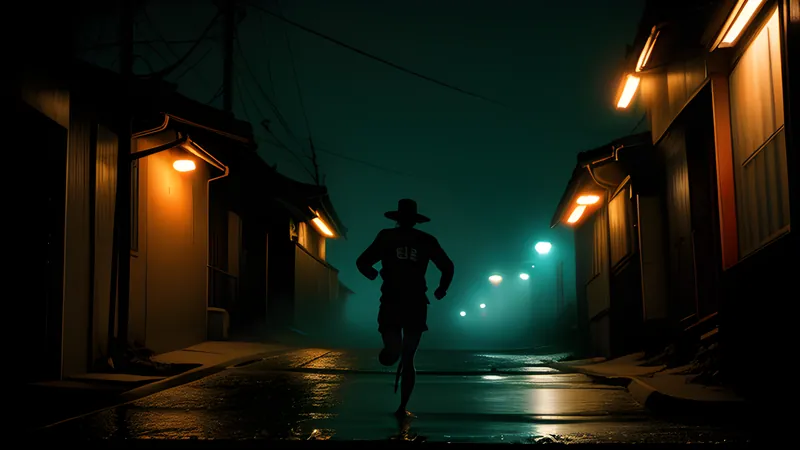
The action set-pieces are choreographed with unusual clarity — Kim always lets you see the geometry of a fight, who is where and what they want — and they build to a final sequence of almost operatic excess that somehow stays graceful even at its most extreme. The film is violent, sometimes shockingly so, and yet the abiding memory is of beauty: neon reflected in wet streets, a man alone at a bar, the swaying branch.
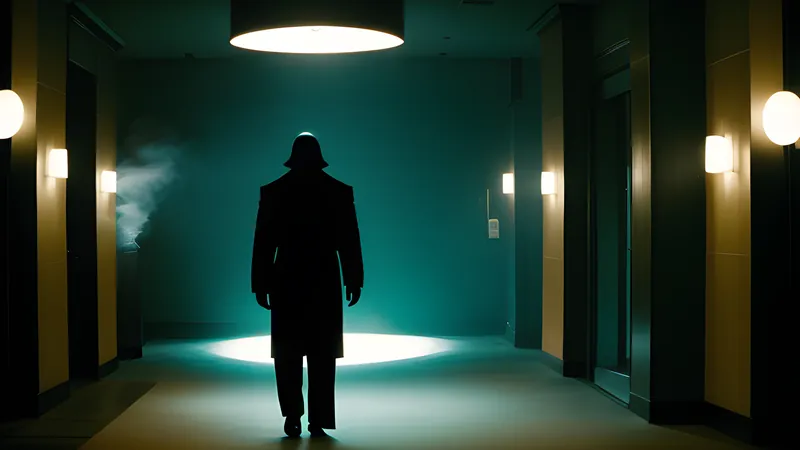
Kim’s other quiet trick is his use of space and silence. Long stretches of A Bittersweet Life unfold with barely a word, Sun-woo moving alone through empty corridors and after-hours rooms, and the score by Jang Yeong-gyu leans on a mournful, jazz-inflected loneliness that keeps telling you this composed man is already grieving something he cannot name. The dialogue, when it comes, is sparse and weighted; characters ask each other simple questions that carry the whole moral load of the film. It is a picture confident enough to trust an image over an explanation, which is why its beauty never feels like decoration.
The films it comes from, and its close cousins
The collector’s cross-reference here points to Europe. The real ancestor of Sun-woo lives in French cinema: Alain Delon’s immaculate, doomed hitman in Melville’s Le Samouraï — the same cult of the beautifully turned-out professional whose code becomes his prison, undone the instant a flicker of feeling gets past his defences. Kim takes that French existential cool and pours Korean heat into it. Delon’s Jef Costello and Lee’s Sun-woo are men who have organised their souls into a system, and both films are patient studies of what happens when one variable, one woman, slips into the equation.
Within Korean cinema, A Bittersweet Life sits in the golden-age company that made the world sit up. It is a natural double bill with Park Chan-wook’s Oldboy, the other great Korean study of a man consumed by a single wound, though Kim’s film is the more restrained of the two. And it is the elegant, controlled sibling to the two later Korean crime films it stands beside on this desk — the sprinting, sweaty desperation of The Chaser and the escalating madness of I Saw the Devil, the latter reuniting Kim Jee-woon with Lee Byung-hun five years on for a far uglier meditation on revenge. Seen together, the four make a map of how differently Korean cinema learned to weaponise vengeance.
For newcomers wanting a way in to the whole movement, I put together a starter map in Korean genre cinema: ten to start with, and this film belongs near the top of it.
The verdict
A Bittersweet Life is the most elegant film in the Korean revenge canon and, arguably, its saddest. It dresses a simple story — a loyal man ruined by a moment of mercy — in silk and glass and neon, and trusts that the beauty will make the cruelty land harder. Watch it for Lee Byung-hun’s slow-motion collapse from immaculate to broken, for Kim Jee-woon’s peerless command of light and surface, and for that swaying branch, which turns out to mean everything. If you have only seen the louder Korean thrillers, this is the one that shows how much damage a whisper can do, and how a single unguarded feeling can cost a careful man his whole world.
Spoilers below
The film’s tragedy is that Sun-woo’s single act of mercy buys him nothing. Kang, learning that his enforcer disobeyed and let Hee-soo and her lover live, does not reward the restraint; he treats it as a betrayal deeper than any theft, because it was a failure of absolute loyalty. Sun-woo is beaten, buried alive at one point, and marked for death by the very organisation he served flawlessly for years. The horror of the second half is watching a man discover that his entire identity — the loyal soldier — meant nothing the moment he acted like a human being.
Sun-woo’s response is a war he cannot win and pursues anyway. He arms himself, hunts down the men who turned on him, and cuts a path back toward Kang through an escalating series of confrontations, culminating in the film’s bravura final gun battle. He gets his revenge, more or less, and it saves nothing and no one, least of all him. The film denies him even the clean satisfaction of understanding why it all happened; when he presses Kang for a reason, the answers he gets are small and human and utterly inadequate to the scale of the ruin.
The closing image returns to the parable. Sun-woo, dying, remembers a moment of ordinary happiness — a smile, a private joke, the sway of the branch — and the film suggests that the whole catastrophe grew from his having felt, just once, the thing his profession forbade. It is the coldest and most romantic ending in the Korean crime cycle, and it rewards a rewatch of Le Samouraï the same night, to see the European blueprint Kim was quietly perfecting.
Related Content