A Bay of Blood: Bava Writes the Slasher Rulebook
Thirteen murders, no hero, and a property dispute — the 1971 film that Friday the 13th would later burgle for parts
Contents
Within about five minutes of its opening, A Bay of Blood murders an elderly countess in a wheelchair, reveals her husband as the killer, allows him roughly forty seconds of satisfaction as he forges her suicide note — and then has him stabbed to death by someone we never see. The film has, at this point, established and demolished its entire mystery apparatus before the titles are properly cold. Mario Bava is telling you, with a directness bordering on rudeness, that nobody in this film is safe, nobody in it is good, and the only question left worth asking is how many of them will still be standing at the end.
Released in 1971 under an unusually chaotic pile of titles — Reazione a catena in Italy, Ecologia del delitto in its more honest moments, and abroad as Twitch of the Death Nerve, Carnage, Bloodbath and eventually A Bay of Blood — this is the film that invented the body-count movie outright — the whole apparatus, nine years before Camp Crystal Lake opened for business. Watching it now is a strange experience, because you are watching a rulebook being written by a man who thought the whole enterprise was a joke.
An estate agent’s massacre
The plot is a property dispute, and Bava means that literally. The bay is a beautiful, undeveloped inlet, and it is worth a great deal of money to anyone who could build on it. The countess who owns it is dead in the first scene. Her heirs, claimants, illegitimate relatives, hangers-on and the men who want to develop the land all converge, and they begin killing one another in an escalating chain — the Italian title, Reazione a catena, translates as “chain reaction”, and each murder is caused by the last.
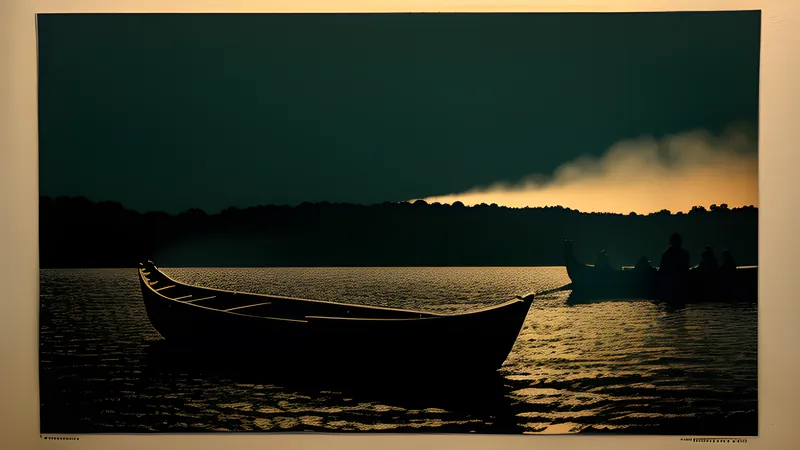
There is no detective. There is no investigation. There are no innocents. Every person in the film is either trying to inherit the bay, trying to buy the bay, or trying to kill someone who stands between them and the bay. Bava’s alternative title, “ecology of crime”, is the key to his real subject: greed as an ecosystem, self-sustaining, in which each predator creates the next. The bay itself is filmed with genuine lyricism — still water, reeds, insects, the light going — and the joke is that this gorgeous piece of nature is worth more dead than alive, exactly like the people fighting over it.
A group of young holidaymakers arrive, break into an empty villa, drink, swim and pair off. They have nothing to do with the inheritance. They are killed anyway, efficiently, as though the film had simply run into them. Their entire function is to be bodies in a place where bodies are being made. If that sounds familiar, it is because you have seen the film it became.
The kill as a unit of narrative
Here is the craft argument, and it is the reason the film matters beyond trivia. Bava had no cast to speak of, a very small budget, and a script that gave him no protagonist. What he did with those constraints was reorganise the film so that the murder set piece — rather than the character or the plot — became the basic building block of storytelling. Each killing in A Bay of Blood is a self-contained short film. It has a setup, an escalation, a rhythm, a release and, very often, a punchline. The film is a portmanteau of thirteen of them.
That is the invention. Everything the slasher does structurally descends from this decision. Bava also solved the mechanics on the cheap, and his solutions became conventions. He operated the camera himself, using a child’s wagon on the ground for dolly moves and improvised rigs where the money for a crane did not exist, and he combined those glides with sudden zooms to produce a prowling, subjective drift that reads as a presence in the frame long before anyone attributed it to a killer’s point of view. The camera stalks. Nobody had to explain that grammar afterwards; audiences simply understood it.
Stelvio Cipriani’s score does something cleverer than it gets credit for. It is loungey — soft, bossa-inflected, almost pleasant — and Bava plays it under the carnage with a straight face. The dissonance produces the film’s actual tone, which is comic. The murders are elaborate; the reactions are minimal; the music does not care. A Bay of Blood is a farce about avarice in which the pratfalls happen to be fatal, and Bava, a genial and deeply unsentimental man, has been accused of nihilism by people who missed that he was laughing.
What Friday the 13th took
The lineage here is unusually documentable, because Friday the 13th Part 2 lifted two of Bava’s set pieces almost shot for shot. The first is a machete brought down on a sleeping face. The second, more brazen, is a spear driven through a couple in bed, pinning them together mid-embrace. Both appear in Bava’s film in 1971. Both appear in Steve Miner’s in 1981. The debt is total, and the American film never acknowledged it.
That is fun trivia. The deeper inheritance is the moral architecture, which is where things get interesting. In the American slasher, sex is followed by death, and two generations of critics have read that as puritanism — the teenagers are punished for their appetites. Bava’s version has no such logic available, because the framework is money. His holidaymakers die because they wandered onto contested real estate. His main cast die because there is an estate to divide. The killing is transactional, and I’ve argued the accounting at length in the slasher’s body count as moral accounting. A Bay of Blood is the version before the puritanism was retrofitted, and it is considerably more cynical for it.
The film’s actual ancestor is Bava himself. Blood and Black Lace, from 1964, had already established the anonymous masked killer, the parade of murdered beauties and the elevation of the death scene into a designed art object. What A Bay of Blood does is strip that film of its glamour, its mystery and its mannequins, and relocate it to a muddy inlet with a property developer in it. Seven years apart, the same director set out the aesthetic of the body count and then the economics of it. Everything from Halloween onward is working from those two blueprints, a lineage traced in full in the twelve films that invented the slasher.
The case against
A Bay of Blood is very hard to love, and the reasons are structural. It has no one to care about, which is a design choice that costs it something real. The film is a mechanism, and mechanisms are cold. Characters are introduced and eliminated so quickly that the human material never accumulates into anything, and there is no final girl to give the audience a foothold — that convention was still years away, and its absence here is conspicuous. You watch A Bay of Blood from a considerable distance, admiring the joinery.
The plot, for anyone attempting to follow it as a plot, is close to impenetrable. The chain of who killed whom over what claim requires a diagram, and the English dubbing does the film no favours whatsoever, flattening every performance into the same mid-Atlantic drone. The multiplicity of release titles has left a mess of edits and transfers in the world, some of them severe, and the film was caught up in the British video panic of the early 1980s, which means a whole generation met it — when they met it at all — in mutilated form.
And the gore, which was extraordinary in 1971, is now the least remarkable thing about it. The film’s reputation as an atrocity has outlived the atrocities. What remains is stranger and better: an elegant, cheap, sardonic little machine about property, made by a sixty-year-old craftsman who understood exactly what he was building and appears to have found it funny.
Spoilers below
The chain resolves, more or less. Frank Ventura, the developer, and Laura are working the inheritance from one side; Renata and her husband Albert are working it from the other, and Renata’s method involves killing whoever is ahead of her in the queue. Simon, the countess’s illegitimate son, killed the man who killed the countess in the opening scene, which is why the film’s first murder was avenged before the audience even knew there was a family. By the last reel Renata and Albert have murdered their way through nearly every rival claimant, and the bay — finally, legally, expensively — is theirs.
They stand in the villa, blood-spattered, having won. And then their two small children, who have been wandering the property all film playing at the edges of frame, pick up a shotgun and shoot both parents dead.
The children walk out, quite cheerful, and remark to each other that they have played the game rather well. Bava holds on them. That is the end of the film.
It is one of the great endings in horror, and the reason is that it completes the argument rather than subverting it. The film has spent eighty minutes demonstrating that this family kills for property as a matter of course — that murder is the household’s ordinary means of getting things. The children have watched. They have learned. And they have simply done the thing the adults do, without the adults’ elaborate rationalisations, and without any idea that it is wrong. The ecology reproduces. The chain reaction does not stop because the last generation ran out of rivals; it continues because the next generation was raised in it.
Read the ending as a shock twist and it is a gag. Read it as the thesis and it is savage. Bava’s countess dies in scene one for a piece of land; his heirs slaughter one another for the same land across the running time; and the film’s final joke is that the land is now owned by two infants who murdered for it as easily as breathing. The bay wins. It always was the only thing in the film worth anything.
Where to watch: the Arrow and Kino restorations both present the uncut Italian version and are the only sensible way in — the old Twitch of the Death Nerve tapes are unwatchable and the Last House on the Left Part II retitle is a fraud unrelated to anything. Follow it with Blood and Black Lace to see Bava build the same machine in couture, or with Friday the 13th Part 2 to catch the burglary in progress.
Related Content