12 Monkeys: Gilliam's Time-Loop of Despair
How a French photo-film became Terry Gilliam's most controlled nightmare
Contents
Terry Gilliam is not a director you associate with control. His films tend to burst their seams, run long, over-design every corner of the frame and dare the studio to rein them in. 12 Monkeys, from 1995, is the strange exception, the one time his baroque instincts served a structure so tight it functions like a trap snapping shut. That discipline came from an unusual source: the screenplay by David and Janet Peoples took its bones from Chris Marker’s 1962 La Jetée, a twenty-eight-minute French film told almost entirely in still photographs, about a man haunted by an image of a death he witnessed as a child. Marker’s short is one of the purest time-travel stories ever made, and Gilliam’s achievement is to inflate it to feature length without puncturing it.
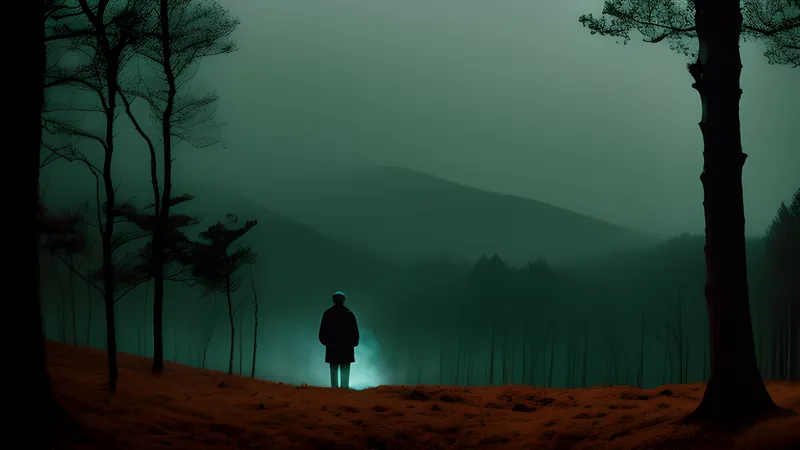
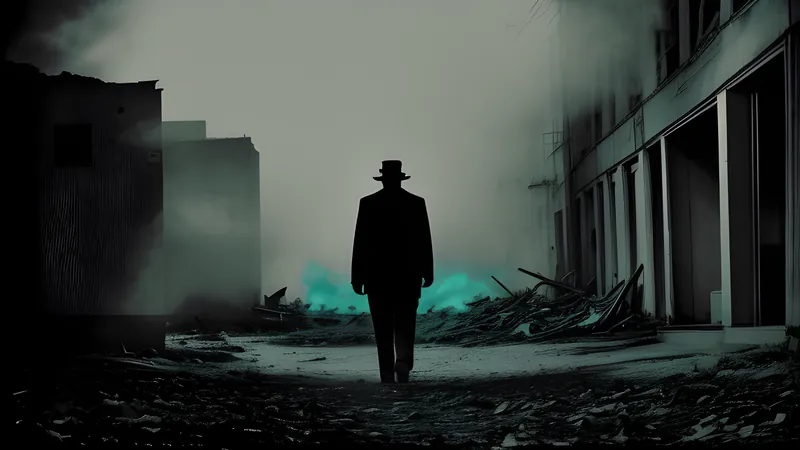
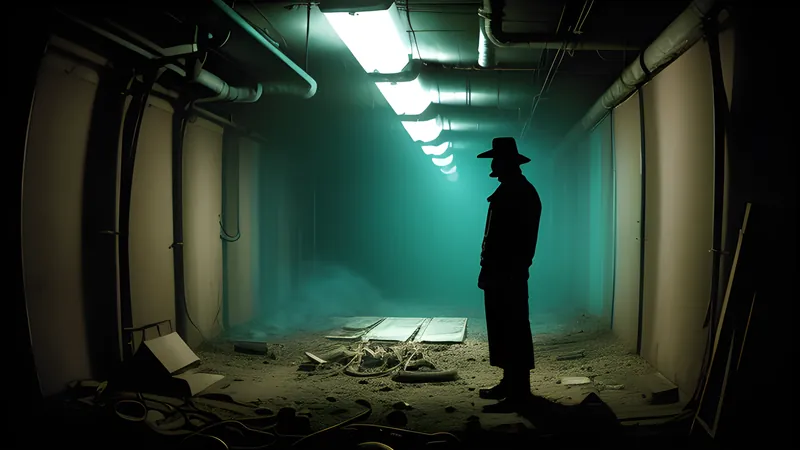
The result is his bleakest film and, arguably, his best-made. Bruce Willis plays James Cole, a prisoner in a ruined future where a manufactured virus has driven the survivors of humanity underground and left the surface to the animals. Cole is “volunteered” to travel back to the 1990s to gather information on the plague’s origin, and the scientists who send him keep getting the year wrong, dumping him into the past confused, filthy and screaming about the end of the world. Everyone he meets, reasonably, concludes he is insane. The film’s cruellest idea is that they might be right, and that being right about the apocalypse would look identical to madness from the inside.
The performance nobody expected
Willis in 1995 was Hollywood’s smirking action lead, the Die Hard wisecracker. Gilliam cast him and then, according to Willis himself, handed him a list of the actor’s own habitual tics, the raised eyebrow, the knowing smile, and forbade all of them. What comes back is the finest performance of Willis’s career, a man scoured of confidence, flinching at open air because he has spent his life in a cage. When Cole gulps at the sky or presses his face to a car radio playing music he has never heard, Willis plays wonder as something close to pain. It is the anti-Die Hard, and it works because the star’s usual armour has been stripped off on purpose.
Around him, Brad Pitt detonates. As Jeffrey Goines, the twitching, motor-mouthed son of a virologist and a resident of the same psychiatric ward where Cole is committed, Pitt earned his first Oscar nomination for a performance that never sits still, eyes skating, hands conducting an argument only he can hear. Madeleine Stowe holds the centre as Dr Kathryn Railly, the psychiatrist who slowly moves from diagnosing Cole to believing him, and her arc is the film’s emotional spine. Gilliam surrounds these three with his usual crush of grotesque detail, the wire-and-tube future, the surveillance sphere lowered into interrogation rooms, but for once the clutter never swamps the actors.
Why the loop feels airless
The mechanism 12 Monkeys runs on is the closed loop, the model of time in which the future cannot be changed because it has already happened, and every attempt to change it turns out to be the cause of the thing you were trying to prevent. It is the strictest and most fatalistic setting on the time-travel dial, the one that offers no exits and no do-overs. I laid out the taxonomy of these designs in a survey of time-loop cinema, and 12 Monkeys belongs to the pure-predestination end, the airless end, where free will is a joke the universe tells at the hero’s expense.
Gilliam films that airlessness into the very texture. The recurring dream that opens and haunts the picture, a shooting in an airport concourse, a woman running, is shot the same way each time and revealed, drip by drip, to be a memory Cole cannot yet place. The audience assembles the meaning ahead of him, which generates a specific kind of dread: we can see the trap closing and he cannot. That is Marker’s engine, borrowed intact from La Jetée, where the whole film builds to the recognition of a single childhood image. Gilliam’s contribution is scale and sensation, the sweat and grime and noise that Marker’s austere stills deliberately withheld.
The despair is the design, and it is worth naming why that makes the film more than an exercise. A time-loop story that lets the hero win teaches nothing; a time-loop story that seals him inside the very event he was trying to stop is a machine for producing tragedy of the oldest kind, the Oedipal kind, where the prophecy is fulfilled through the act of trying to escape it. Gilliam and the Peoples understood they were remaking a Greek shape in a cyberpunk skin.
The Gilliam signature, disciplined
Set 12 Monkeys beside Brazil, Gilliam’s 1985 bureaucratic nightmare, and the family resemblance is total: the retrofitted machinery, the institutions that grind individuals to paste, the dreamer whose visions are the only sane response to an insane world. The difference is that Brazil dissolves into delirium by design, its hero escaping into fantasy as the walls close in, while 12 Monkeys keeps its delirium leashed to a plot that has to add up. Both films end in a psychiatric register; one floats away, the other clicks locked. Watching them together is the best short course in what Gilliam can do when a rigid structure forces his imagination to build load-bearing walls instead of decoration.
There is a cross-current worth chasing too. The film’s obsession with how memory reorders time, how a future event can be lived as a past trauma, rhymes with the linguistic time-bending of Arrival, where a character experiences her own future as memory. Both films argue that if you truly knew the shape of your life you might not, or could not, change a step of it. 12 Monkeys reaches that idea through a virus and a madhouse; Arrival reaches it through grammar. The destination is the same fatal serenity.
Where it sits now
Time has been kind to 12 Monkeys, and a 2015 television series spun off from it and ran four seasons, loosening the closed loop into something more forgiving and, inevitably, less devastating. The film remains the definitive version because it never blinks. It is a science-fiction thriller that works fully as a chase, a mystery about the identity of the “Army of the Twelve Monkeys” and the source of the plague, and it works again, harder, as a study of a man who cannot tell whether he is a saviour or a lunatic, in a world that gives him no way to find out.
That is the verdict. Gilliam made one film where his excess and his despair pulled in the same direction, and this is it, anchored by a Willis performance that reveals what the actor could do once his tricks were taken away. Come for the plague thriller and the Pitt fireworks; stay for the closing loop that turns the whole picture, on a second viewing, into something you already knew.
Watch La Jetée first if you can find it, twenty-eight minutes of photographs that contain the entire film in embryo, then let Gilliam show you what happens when you pour blood and noise into Marker’s perfect little box. After that, Brazil for the mania and Arrival for the serenity are the two roads out.
Spoilers below
Everything above is safe. The trap is described below.
The dream that recurs through 12 Monkeys, a man shot dead in an airport while a blonde woman screams and a boy watches, is Cole’s own childhood memory. The film withholds the faces until the end, and the withholding is the whole suspense engine. When the final airport sequence arrives, Cole, now trying to stop the release of the virus, is himself the man who gets shot, and the boy watching from the concourse is Cole as a child. He has spent the entire film chasing a memory of his own death, sent back by the future scientists to witness the very thing that scarred him. The loop was sealed before the story began.
The virus is not spread by Jeffrey Goines or his Army of the Twelve Monkeys at all; that trail is a red herring the film lays with great care, because Cole and the audience both assume the visible radicals must be the culprits. The actual carrier is Dr Peters, an assistant to Goines’s virologist father, a quiet man who boards a plane at the film’s end with vials of the engineered plague, embarking on the world tour that will kill billions. He sits beside one of the future scientists, disguised as an insurance saleswoman, who says she is “in insurance”, confirming she has travelled back to observe rather than to prevent. The future cannot be changed, only recorded.
The gut-punch is the boy’s face. As adult Cole dies on the terminal floor, the camera finds young Cole watching, and the loop we have been inside since the first frame draws tight: the trauma that defined the man was the man’s own death, seen as a child, decades before he lived it. Railly, who has by now come to believe him and love him, meets the child’s eyes across the concourse. Gilliam ends on that look, a woman recognising a boy who will grow into the man she just lost, and lets the closed loop do what closed loops do, which is offer no comfort at all. It is the coldest ending in his filmography and the one he earned most completely.
Related Content