Zak McKracken and the Alien Mindbenders: The Adventure That Trusted Nonsense
Lucasfilm's 1988 globe-trotting adventure let a tabloid reporter and a two-headed squirrel carry a genuinely serious puzzle structure
Contents
Zak McKracken works for a supermarket tabloid called the National Inquisitor, and the game that carries his name opens with a headline about aliens draining humanity’s intelligence through the phone network. That premise sounds like a joke the game is going to wink at you about for eight hours. It never does. Lucasfilm Games’ 1988 adventure commits to its nonsense completely, and the commitment is exactly why the puzzle design underneath it holds up.
The second game to speak SCUMM, and the harder test of it
Zak McKracken was the second title built on Lucasfilm’s SCUMM engine, arriving directly after Maniac Mansion had proven the verb-and-noun point-and-click interface could replace a text parser without losing precision. Maniac Mansion tested that idea inside a single house. Zak McKracken tests it across a genuinely global map — player characters travel between real-world cities using purchased plane tickets, each location its own contained puzzle space with its own cast, items and logic. That’s a considerably harder proposition for an interface built around clicking visible objects and verbs: a global adventure needs its puzzle chains to survive being solved out of order, across locations a player might visit in almost any sequence depending on which flights they book first.
David Fox and Matthew Alan Kane’s design, working within the constraints Lucasfilm’s engine team had already established, holds that together by keeping individual location puzzles largely self-contained while threading a small number of critical items through the wider chain — a specific object picked up in one city unlocking a specific action available only in another, enough interlocking dependency to make the world feel connected without demanding a single rigid solving order. It’s a genuinely different structural challenge from a single-building mystery, and Zak McKracken is one of the clearer early proofs that the SCUMM engine’s verb interface could scale to something with real geography rather than just a haunted house’s worth of rooms.
A world map as a puzzle piece, not just a menu
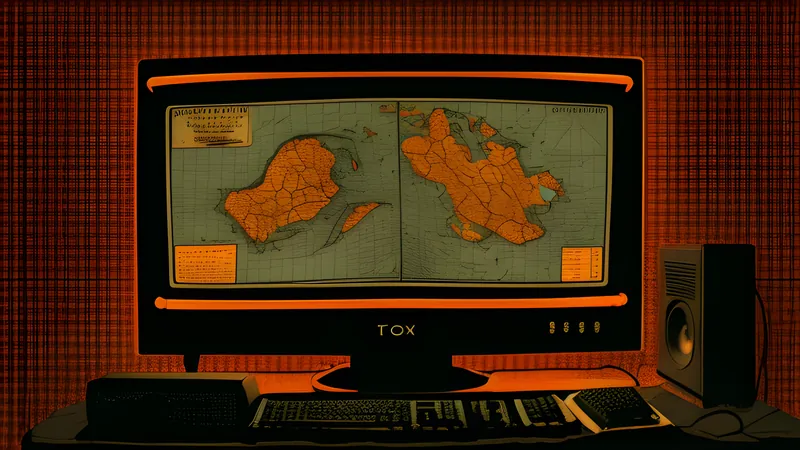
The globe-trotting structure isn’t dressing. Flight availability, item availability, and which non-player characters are present in a given city at a given point in the story all interact, so the map itself functions as part of the puzzle rather than as a fast-travel convenience layered on top of separate content. Deciding which city to fly to next, with limited funds for tickets, is a real decision with consequences, not a formality before the “actual” puzzle in each destination begins. That’s a more ambitious use of a world map than most adventure games of the era attempted, and it rewards a player who treats travel choices as strategically as any individual room puzzle.
Nonsense played completely straight
The game’s tabloid conceit — psychic powers, ancient pyramids broadcasting mind-control signals, a genuinely unhinged cast of supporting characters — could easily have been played for constant, exhausting self-aware jokes. Zak McKracken mostly doesn’t do that. Characters react to the escalating absurdity of the plot as though it’s a real crisis worth solving, dialogue plays situations straight rather than constantly winking at the player, and the puzzle logic never uses “well, it’s a silly game” as an excuse for a solution that doesn’t follow its own internal rules. That restraint is what separates comedy adventure games that age well from ones that read as dated mugging decades later — the silliness of the premise and the seriousness of the puzzle-solving aren’t in tension, because the game never treats them as opposites in the first place.
The copy-protection puzzle that became part of the legend
Like several Lucasfilm and contemporary adventure releases, Zak McKracken shipped with a piece of manual-based copy protection — a code-wheel or document lookup that required consulting the physical packaging to answer an in-game question, a common anti-piracy measure for the era. What’s notable about Zak McKracken’s version is how it’s remembered less as an annoyance and more as a piece of the game’s own absurdist furniture, because the specific framing of the check fits so naturally into the tabloid conceit that it barely reads as a security measure at all. It’s a small design grace note: even the part of the game that exists purely for anti-piracy business ended up feeling like it belonged to the same universe as the rest of the joke.
The systems ancestor: a verb list built for a world, not a room
Strip away the aliens and the tabloid premise and Zak McKracken’s real contribution is proving that a constrained, icon-based verb interface — open, close, use, give, look at, and a handful of others — could carry puzzle logic across a sprawling, multi-location adventure without collapsing into either a parser’s ambiguity problems or a purely linear structure. That’s the same underlying argument the SCUMM doctrine piece traces across Lucasfilm’s whole catalogue, and Zak McKracken is the entry that proved the interface could scale past a single building. Every later point-and-click adventure that lets a player range across multiple towns, planets or eras while solving interlocking puzzles is working from ground this game helped stake out.
Three playable characters and what that does to the puzzle grammar
Zak McKracken splits control across multiple playable characters — Zak himself and a set of companions recruited over the course of the story — each of whom can carry their own inventory and be positioned in a different city simultaneously. That’s a meaningfully more complex proposition than a single-protagonist adventure: puzzles can require one character to be doing something in one location while another performs a complementary action elsewhere, coordinated across the world map rather than resolved in a single room. It’s the same multi-character idea Maniac Mansion introduced with its house full of teenagers, scaled up to a planet full of airports, and it demands a puzzle designer keep track of a much larger web of dependencies without letting the player lose track of what each character still needs to accomplish. That the game mostly succeeds at this — a player can generally reconstruct what’s left to do for any given character by checking their inventory and location — is a quieter achievement than the tabloid jokes but arguably the harder design problem solved.
Why the two-headed squirrel matters
It’s worth being specific about why a detail like a two-headed squirrel — one of the game’s genuinely strange recurring props — works rather than reading as random noise. The object exists inside a world that has already established its own consistent, if absurd, internal logic: alien mind control, telepathically gifted protagonists, ancient pyramids wired for broadcast. Once a game has committed that fully to a specific flavour of nonsense, an odd prop like a two-headed squirrel isn’t a non-sequitur, it’s consistent with the tone the game established from its opening headline. Comedy that works by constantly changing register reads as scattershot; comedy that establishes one specific, strange register and then stays there reads as a world with rules, however absurd those rules are. Zak McKracken picked its register early and never broke it.
Satire with no real target to bruise
What Zak McKracken’s tabloid framing carefully avoids is real targets: it never punches at a real person, a real publication by name, or a real conspiracy movement in a way designed to mock actual believers. The satire is aimed at a genre of storytelling — the supermarket tabloid, the breathless alien-conspiracy headline — rather than at any specific real target, which keeps the comedy warm rather than cruel. That’s a genuinely different choice from a lot of comedy media built around fringe beliefs, which often can’t resist condescending toward the kind of person who might actually hold them. Zak McKracken’s world is populated by earnest oddballs rather than figures of ridicule, and the tone stays generous even at its silliest, which is part of why the game reads as warm rather than smug on a modern replay.
An interface lesson buried in a comedy game
The most durable thing Zak McKracken leaves behind isn’t a specific joke or puzzle — it’s proof that the icon-and-verb interface Lucasfilm was refining could hold together a plot with real geographic and narrative stakes without the mechanism itself becoming visible as a limitation. A player solving Zak McKracken’s puzzles isn’t fighting the interface the way players of contemporary text-parser adventures regularly fought ambiguous verb guessing; the friction, where it exists, is puzzle logic rather than input translation. That’s the quiet, structural achievement underneath the tabloid comedy, and it’s the reason design historians still point to this game specifically rather than treating it as simply “another SCUMM adventure” alongside Lucasfilm’s other 1988 output.
Where to play it
Zak McKracken and the Alien Mindbenders is preserved and playable today through legitimate adventure-game collections and via the ScummVM project, which runs the original SCUMM-engine data files faithfully on modern systems. It’s worth playing after Maniac Mansion rather than before, to feel the jump in structural ambition between a single haunted house and a puzzle box built out of the entire world map.
Spoilers below
The plot’s resolution requires the recruited cast to gather artefacts scattered across multiple continents and bring them together at one of the game’s ancient sites, using the aliens’ own broadcasting apparatus against the signal it was built to send. Getting there depends on having correctly managed the multi-character inventory split described above — an item overlooked early, carried by the wrong character or left behind in an earlier city, can leave the endgame’s final sequence unsolvable without retracing steps across the map. It’s the clearest place in the game where the earlier world-as-puzzle-piece structure pays off or punishes a player depending on how carefully they tracked what each character was still holding.
Related Content