Wing Commander: The Space Sim That Wanted to Be a Film
Origin Systems built a dogfighting engine and then wrapped it in cutscenes, wingmen, and a war it wanted you to feel guilty about
Contents
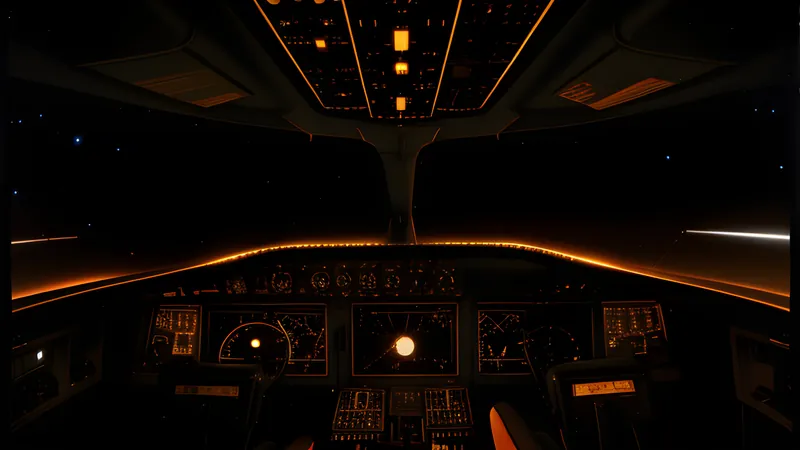
Wing Commander opens with your fighter dropping out of jump space into a battle already underway, wingmen chattering over comms before you’ve fired a shot, and it never really lets that framing go. Origin Systems and Chris Roberts released it for DOS in 1990, and while the flight model underneath — full 3D positioning, energy management, a genuine sense of momentum carrying a fighter through a turn — was a real technical achievement for the hardware of the time, what made the game a genre-defining hit was the decision to wrap that combat in cinematic staging: named wingmen who could die permanently, a branching mission tree that responded to how well you flew, and cutscenes that treated space combat as a war with human cost rather than a target-shooting gallery.
The flight model as the honest core
Before any of the cinematic apparatus, Wing Commander had to work as a combat simulation, and it largely did. Ships handled with actual inertia — a hard turn cost speed, energy had to be managed between shields, weapons, and afterburners, and different craft in the game’s roster genuinely flew differently rather than sharing a single handling model with reskinned art. Origin’s engineers built the simulation to run convincingly at the frame rates period PC hardware could sustain, a genuine technical achievement that later reviews of the era singled out specifically. A nimble interceptor traded armour for turn rate in a way you felt immediately at the stick, while a heavier bomber demanded a completely different approach to positioning before a firing pass. This wasn’t a given for space combat games of the period, many of which treated Newtonian-adjacent physics as an afterthought behind arcade-simple point-and-shoot mechanics.
I played Wing Commander on a borrowed 386 PC at fifteen, my own household still running an Amiga at the time, and the specific memory that stuck was how much the game punished flying like an arcade pilot rather than a fighter pilot — bleeding speed into a hard turn and then finding yourself a sitting target for a Kilrathi wingman who’d read the same physics correctly. That the console-adjacent Amiga port arrived a year later with a scaled-back version of the same flight model only reinforced how much the DOS original’s technical ceiling mattered to the whole experience; the PC’s 286 and 386 processors could push polygon counts and frame rates the Amiga’s custom chipset, brilliant as it was for sprite-based genres, simply hadn’t been built around.
Shield and armour management, distinct per ship class, meant a good pilot in a lightly armoured interceptor had to fly a genuinely different match against the same Kilrathi squadron than a good pilot in a heavier bomber would, rewarding an understanding of your specific craft’s strengths over a single universal combat technique applied regardless of what you were flying. The mission structure built directly on that flight model rather than around it. Wing Commander’s branching campaign — succeed and the war goes one way, fail and it goes another, with different subsequent missions reflecting the outcome — meant the flight model’s difficulty had real narrative consequences attached rather than existing purely as a scorekeeping mechanism. Losing a dogfight didn’t just cost you a mission restart; in the campaign’s harder branch, it could cost a wingman permanently, their name and face removed from the briefing room for the rest of the game. That permanence gave every engagement genuine stakes beyond a simple pass-fail gate.
Wingmen as the emotional engine
The named wingman roster — Maniac, Spirit, Bossman, and others across the expanding cast — did more design work than their limited dialogue trees might suggest. Each carried a distinct personality communicated in a handful of lines before and after missions, enough that losing one in combat registered as a loss rather than a statistic. This is a comparatively simple technique — a briefing-room portrait, a name, a few lines of banter — but it’s one a remarkable number of later space combat games skipped or executed with far less care, treating squadmates as interchangeable escort AI rather than as characters the player was meant to feel responsible for.
Maniac in particular became a genre archetype in his own right: reckless, insubordinate, prone to breaking formation at exactly the wrong moment, and precisely the kind of wingman whose survival felt earned rather than guaranteed by simply completing missions competently. Spirit, by contrast, played the disciplined counterweight, calm under fire and rarely the source of the campaign’s tension, a deliberate pairing that gave the roster emotional range beyond a single archetype repeated with different faces. Origin understood that a player would forgive middling production values in the cutscenes bridging missions — and by any modern standard, the digitised character work is primitive — as long as the writing gave them a reason to care whether Maniac made it home. The briefing room itself, a static screen with portrait art and scrolling text rather than any kind of rendered scene, is a useful reminder of how little visual fidelity this technique actually required to land emotionally, provided the writing behind it was doing real work. That’s the trick Wing Commander pulled off that a lot of its imitators never quite managed: cheap presentation married to genuinely felt stakes, rather than expensive presentation standing in for stakes that weren’t really there.
The war it wanted you to feel guilty about
Wing Commander’s Kilrathi antagonists were initially presented in fairly straightforward “alien menace” terms, but the game’s writing, particularly across its sequels, gradually complicated that framing — the war cost real lives on both sides, missions sometimes turned on morally uncomfortable choices, and the player’s own campaign performance directly determined how much of that cost you were responsible for. It’s a modest ambition by the standards of later space opera writing, but it was a genuine step beyond the “shoot the alien ships, feel good” framing that dominated the genre’s earlier entries, and it laid groundwork the series would build on considerably further in its full-motion-video-driven later instalments.
That ambition put Wing Commander in an interesting position relative to the era’s other major military simulation strand, the ground-and-air combat sims like F-19 Stealth Fighter, which pursued procedural accuracy over character-driven stakes almost entirely. MicroProse’s sims asked you to master a real aircraft’s systems and rewarded technical mastery on its own terms; Origin’s game asked you to master a fictional aircraft’s systems and then made you care who was flying next to you while you did it. Both were legitimate answers to the question of what a combat flight sim owed its player, and the genre’s subsequent decade largely split along that exact fault line.
The technology arms race that followed
Wing Commander’s commercial success set off a genuine hardware arms race within Origin Systems itself, each sequel pushing further into full-motion video and higher production values than the last, eventually recruiting recognisable film actors for later entries in the series once CD-ROM storage made that scale of video feasible. It’s a trajectory that says something about how completely the “space sim as film” framing had won internally at Origin — later games spent budgets on video production that dwarfed what most 1990 releases spent on their entire development, betting that players wanted the cinematic wrapper as much as the underlying combat, if not more. That bet mostly paid off commercially, though it also meant the flight model itself, Wing Commander’s original and most durable achievement, received progressively less attention relative to the spectacle built around it as the series matured.
Why the ancestry matters
Wing Commander didn’t invent 3D space combat, and it’s worth tracing what it actually drew from rather than crediting it with the whole genre. Text-and-wireframe space trading and combat had already been worked out in considerable depth by Elite and its sequel Frontier: Elite II, both of which prioritised an open, simulated universe over scripted narrative stakes. Wing Commander’s real innovation was narrowing that ambition deliberately — trading Elite’s open-ended freedom for a tighter, mission-based structure that could support named characters, a branching plot, and cinematic staging none of Elite’s systemic design had room for. The two lineages, systemic simulation and narrative-driven mission structure, would go on to define the space combat genre’s two major camps for the following decade, and Wing Commander is the clearest possible entry point into understanding the second one.
Spoilers below
The branching campaign structure means genuine story spoilers are more consequential here than in most action games of the era, since a player’s choices materially change which of the following actually happens to them. Losing key early missions routes the player down the campaign’s harder branch, in which the Tiger’s Claw carrier ultimately comes under direct, sustained assault and several named wingmen, potentially including Maniac himself if his missions are handled poorly, can be killed permanently, their names simply absent from subsequent briefings without further comment from the game. The stronger branch, reached by performing well across the early missions, leads to a decisive strike against a Kilrathi flagship, a mission that demands the flight model’s full toolkit — energy management, formation flying, precise afterburner timing — executed correctly in sequence rather than in isolation. Neither branch is signposted clearly as “the good ending,” a design choice that keeps the moral weight of the branching honest rather than steering players toward an obviously correct path. Origin’s decision to withhold that signposting is easy to underrate now, against a modern backdrop of games that routinely flag moral choices with explicit markers — Wing Commander trusted the consequences to speak for themselves, several missions later, rather than telling you in the moment which branch you’d just chosen.
Revisited today, Wing Commander’s verdict holds up better as a piece of design ambition than as a flight sim in the strict technical sense — later games in its own series, and eventual competitors, refined the 3D combat considerably further. What Wing Commander got right first, and what still holds up, is the marriage of a genuinely committed flight model to a cast the player was given real reasons to care about losing. Few games in the genre since have matched that specific balance, tending to over-invest in one half of the equation at the expense of the other. For the space sim’s other major lineage, built on open simulation rather than mission-based narrative, Frontier: Elite II remains the clearest possible contrast and the natural next stop for anyone who wants to see the road not taken.
Related Content