Vanquish: The Cover Shooter That Told You to Stop Hiding
Platinum Games built a cover system and then designed the whole game to punish you for using it
Contents
By 2010, the cover shooter had calcified into a formula: stick to a waist-high wall, pop out, shoot, duck back, repeat, regenerate health while hidden. Gears of War had made the template a genre in 2006 and every publisher with a third-person shooter wanted the same rhythm. Vanquish, directed by Shinji Mikami at Platinum Games and released 19 October 2010 for PlayStation 3 and Xbox 360, includes a cover system — you can duck behind crates and barricades exactly like every other game of the period — and then builds its entire combat design around making that cover the worst option available to you at almost every moment. It’s a cover shooter whose real argument is that cover is a trap.
You play Sam Gideon, a DARPA agent in an Augmented Reaction Suit that grants a rocket-powered slide, bullet time triggered by near-misses and low health, and a stamina meter that overheats if you push the suit too hard. The plot — a Russian faction seizing an orbital solar-power weapon and turning it on San Francisco — is functional B-movie scaffolding, existing to justify Sam’s international-incident-scale action sequences rather than to be remembered on its own terms. The combat design is what people still discuss it for, and rightly.
The slide as the actual defence mechanic
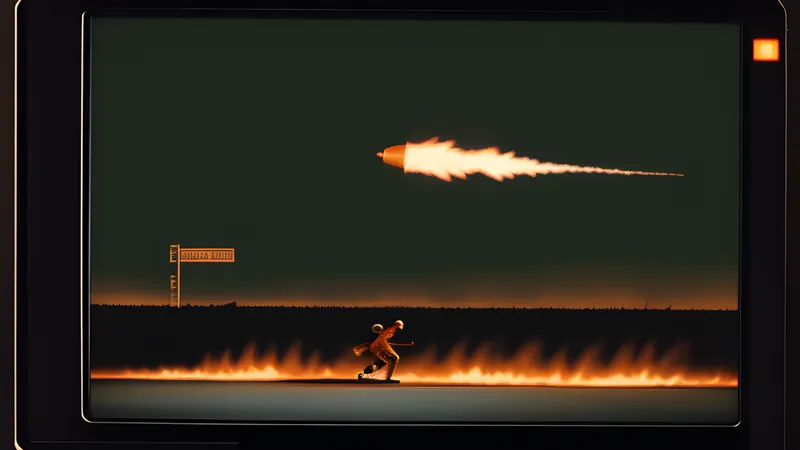
Sam’s boost-slide — a rocket-assisted skate that covers ground far faster than running and lets him fire while moving — is nominally an offensive traversal tool, but Platinum built the enemy AI specifically to punish players who don’t use it. Enemy soldiers and mechanised Argus units are accurate and aggressive at range, converging quickly on any position you hold for more than a few seconds, which means a cover-and-pop playstyle gets you flanked and overwhelmed within moments in anything but the earliest encounters. The slide, by contrast, lets you relocate across an arena faster than enemies can re-triangulate, turning constant repositioning into the actual survival strategy rather than a stylistic flourish. This is the game’s central argument stated in pure mechanical terms: the cover-shooter genre’s core assumption — that stillness behind an obstacle is safety — is wrong, and Vanquish proves it by making stillness the fastest way to die.
The stamina meter that limits how long you can slide or stay in bullet time exists specifically to stop this from being a free lunch. Overheat the suit and Sam is stuck in a slow, vulnerable recovery animation at exactly the moment enemies are converging on his last known position, which means the aggressive playstyle the game rewards also has to be paced rather than spammed. It’s the same design lesson Max Payne’s bullet-time meter taught a decade earlier, applied to constant movement instead of a dive: a powerful ability tied to a depletable resource forces genuine tactical rhythm rather than either permanent availability (which trivialises the challenge) or permanent unavailability (which makes the ability decorative).
Boss fights as mechanical exams
Vanquish’s boss encounters — giant mechanised constructs and the recurring rival agent Burns — are frequently criticised as over-long, and there’s truth to the complaint, but they’re structured as genuine tests of the slide-and-cover-breaking philosophy rather than damage-sponge padding. Each boss telegraphs specific attack patterns that punish standing still and specific windows that reward an aggressive slide-in melee counter, and a player who’s internalised the game’s core lesson (movement is defence) clears them markedly faster than one still playing a conventional cover-shooter rhythm. The fights function as the game checking whether you actually learned the thing it’s been teaching for the previous three hours, which is a legitimate design choice even if the individual encounters run longer than the campaign’s brisk pacing elsewhere would suggest they should.
The melee counter as a second currency
Beyond guns and the slide, Vanquish gives Sam a melee counter that instantly executes most standard enemy types at close range, and its placement in the design is deliberate: it’s the highest-risk, highest-reward option in the kit, requiring you to close distance under fire rather than maintain the safe mid-range spacing a cover-shooter trains you to prefer. Using it well means reading an enemy’s attack windup and closing the gap during the recovery frame rather than the attack frame, which is a genuinely different skill from the aim-and-shoot combat the rest of the game teaches. Platinum, a studio built on character-action pedigree from Bayonetta and Devil May Cry’s lineage, clearly imported a counter-timing sensibility from that tradition into a genre that had never really asked players to think in terms of frame-perfect punishes before. It’s a small mechanical import that explains a lot about why Vanquish feels distinct from its cover-shooter contemporaries even when the moment-to-moment verbs — aim, shoot, take cover — look superficially identical on a control scheme sheet.
Enemy variety as encounter grammar
Vanquish’s roster is compact — a handful of soldier archetypes, a few Argus mechanised walker types, one or two elite variants — and the game leans on combining a small set of enemy behaviours in new arena shapes rather than constantly introducing new types, a design economy that reads as thrift when described flatly but plays as clarity in practice. Because you learn the full enemy grammar early, later encounters can be read instantly by silhouette and movement pattern, which matters enormously in a game whose central skill is fast tactical reading under time pressure. A shooter that kept introducing unfamiliar enemy types deep into its runtime would be actively working against the reflexive, pattern-recognition combat Vanquish is built to reward; the restraint here is a feature disguised as a limitation.
The case against — the campaign is too short to fully cash in its own idea
Vanquish’s most persistent criticism, and a fair one, is length: a skilled player can finish the campaign in five to six hours, which is unusually brief even by the standards of a tightly-paced action game, and it means the combat system barely has room to escalate before the credits roll. The game introduces its full toolkit — slide, melee counter, bullet time, the suit’s overheat penalty — within the first two hours and then spends the remaining runtime recombining the same enemy types in slightly denser arrangements, rather than introducing meaningfully new wrinkles to test against the established mechanics. A longer campaign risked padding, which Platinum clearly wanted to avoid, but the trade-off is a game that proves its central idea convincingly without ever pushing that idea as far as it could plausibly go.
The story’s B-movie plotting, meanwhile, occasionally works against the pacing rather than for it — mid-campaign cutscenes explaining Sam’s history with the DARPA programme and Burns’s rivalry slow a game whose entire identity is momentum, and they’re never quite absurd enough to work as pure spectacle nor grounded enough to earn genuine investment. It’s the one place Platinum’s design discipline visibly slackens.
There’s also a real accessibility cost to how tightly tuned the difficulty curve is around the intended playstyle. A player who arrives from years of conventional cover-shooter habits and tries to play Vanquish cautiously will find the normal difficulty setting punishing in a way that reads as unfair rather than instructive, because the game rarely explains its central thesis in text — it expects the enemy AI’s aggression to teach the lesson through repeated failure. That’s a defensible design choice for a genre veteran but a real barrier for anyone arriving without the reflexive habits Platinum is quietly trying to retrain.
Visual feedback as a teaching tool
One underrated piece of craft: Vanquish’s screen readability during its most chaotic moments is unusually good for a game this fast. The slide leaves a clear directional streak, bullet-time activation shifts the colour grading distinctly enough that you always know your current state at a glance, and enemy tracer fire is colour-coded by threat type so a player under fire from four directions at once can still parse which shots actually matter without pausing to think about it. This sounds like a minor UI detail, but it’s the precondition for the whole “constant aggressive movement” design working at all — a game asking you to stay mobile under heavy fire has to make the state of that fire legible at speed, or the aggression it’s rewarding becomes indistinguishable from recklessness. Plenty of fast action games from the same era struggled with exactly this and ended up feeling chaotic rather than readable; Vanquish’s clarity under pressure is a big part of why its combat holds up as a design case study rather than just a period curiosity.
Spoilers below
The late reveal that the orbital weapon, Providence, was sabotaged from within by a faction planning to seize it for themselves rather than a straightforward foreign attack complicates the geopolitical framing just enough to justify a final act set aboard the collapsing station itself, and the boss rematch against Burns — now revealed to be working the angles of his own agenda rather than a simple rival — gives the recurring antagonist arc a reasonably satisfying, if unsurprising, close. The ending, with Sam surviving the station’s destruction through a suit upgrade sequence that’s more spectacle than mechanical revelation, prioritises a cinematic capstone over a systems-driven final test, which is a minor disappointment given how rigorously mechanical the rest of the campaign has been — the credits sequence argues through cutscene rather than through the slide-and-shoot vocabulary that earned the game its reputation in the first place.
The verdict, and what to play next
Vanquish’s real contribution to the genre is proof of concept rather than commercial dominance — it demonstrated, more rigorously than almost anything else in its console generation, that a cover mechanic can exist in a shooter purely as a trap for players who haven’t learned the game’s actual lesson yet. Few studios copied the idea wholesale, likely because building AI aggressive enough to punish camping without feeling unfair is a harder design problem than shipping another regenerating-health cover template, but the games that did absorb the lesson — Ghostrunner’s momentum-as-defence design among the clearest descendants a decade later — read as a direct lineage back to Sam Gideon’s rocket-boots. Vanquish remains available on modern PC and console storefronts through its remastered edition, and it’s worth the five-hour commitment specifically as the sharpest counter-argument the genre ever produced to its own most comfortable habit.
Related Content