Umurangi Generation: The Photography Game With Politics
A camera, a bounty list, and an apocalypse happening in the corner of every frame
Contents
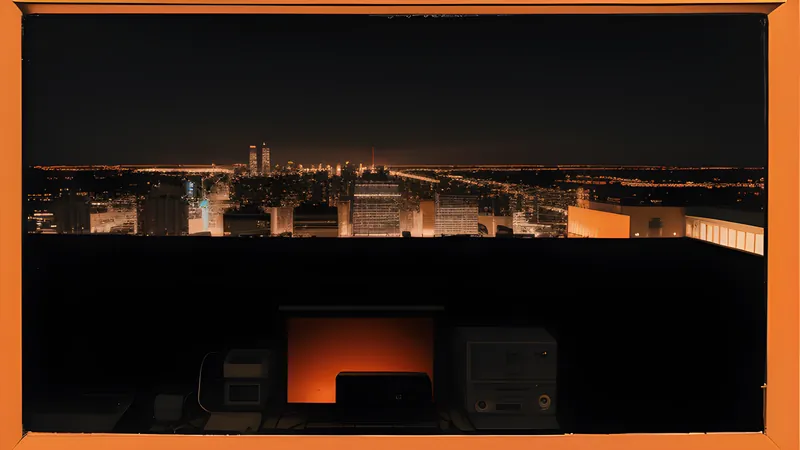
There’s a moment in Umurangi Generation where you’re on a rooftop in Tauranga composing a shot of some graffiti, and you notice — properly notice, for the first time — the thing standing on the horizon behind it. The game hasn’t cut to it. No camera swing, no stinger, no character pointing. It’s been there since you loaded the level. You just hadn’t looked, because you were doing your job, which was photographing graffiti for money.
That’s the whole design, delivered in one gesture. Umurangi Generation is a game about the difference between looking and seeing, and it teaches that difference by paying you to look.
The setup
Released in May 2020 on PC by ORIGAME DIGITAL — essentially Naphtali Faulkner, a Māori developer working out of Australia — with a Special Edition arriving on Switch in 2021 via Playism and consoles following in 2022. The title is te reo Māori: umu rangi, red sky. It won the Seumas McNally Grand Prize at the Independent Games Festival in 2021, which is the closest the indie scene has to a Best Picture, and it beat a field with far more money in it.
You’re a courier with a camera. Each level drops you in a location in a near-future Tauranga, hands you a bounty list — photograph this, photograph that, photograph three of these in one frame — and a time limit. Complete the list, earn gear: new lenses, new film stock, filters, a tripod. Then the next level, which is worse.
Why the bounty list is the mechanic
The obvious ancestor is Pokémon Snap, and it’s a real lineage: a game where the verb is framing and the scoring is composition. But Snap is on rails and its subjects perform for you. Faulkner took the framing verb and put it in a space you walk, climb and clamber through, which changes what a photograph is. In Snap you receive a subject. Here you go and find one, and finding is the gameplay.
Now the trick. The bounty list is a checklist of banal nouns. Bins. A skateboard. Someone’s mate. A pigeon. It is deliberately, aggressively mundane, and it directs your attention like a lead in the nose. You are scanning the level for a bin.
Meanwhile the level is telling you a story. There are UN soldiers in the street. There are refugee tents in the car park. There’s a mural somebody painted about what happened to their neighbourhood. There’s the thing on the horizon. None of this is on your list, and none of this is required, and the game will never acknowledge that you saw it.
So the design does something almost no political game manages. It doesn’t lecture you. It gives you an errand, surrounds the errand with a catastrophe, and lets you be the person who chose what mattered. If you photographed only the bins, that’s information about you. The critique isn’t in the text. It’s in what your own attention did in a room.
That’s a much older trick than it looks, and it’s an environmental-storytelling one. The real ancestor is the way Hypnospace Outlaw makes you an enforcer clicking through webpages for copyright violations while somebody’s life falls apart in the sidebar. Both games weaponise a job description. You’re compliant, you’re being paid, and the compliance is what stops you looking up.
The gear is the point of view
Photography games usually treat lenses as stats. Umurangi treats them as positions. A long lens compresses a scene and flattens distance, which makes a crowd look like a mass. A wide lens exaggerates space, which makes a soldier standing over a civilian look like architecture. Faulkner clearly knows this, and the levels are built so that the same subject reads differently depending on the glass you brought.
There’s also a photo mode that’s an actual photo mode: exposure, colour grade, depth of field. And critically, the game lets you take pictures that have nothing to do with the bounty. You can spend the entire timer photographing a wall. The timer is generous enough that this is viable and tight enough that it costs you.
This is the freedom that makes the politics land rather than nag. A game that forced you to photograph the atrocity would be a game telling you the atrocity is important. A game that pays you for bins while the atrocity is available in the background is a game asking what you’d do with a camera and a wage.
The soundtrack, and the anger
ThorHighHeels did the music, and it’s a genuinely great record — jazzy, warm, loose — and it does the same work the bounty list does. It’s too pleasant for what you’re seeing. It’s the sound of a Tuesday. The dissonance between the mood of the audio and the content of the frame is where a lot of the game’s discomfort actually lives.
Faulkner has been direct in interviews about the origins: the 2019–20 Australian bushfires, the spectacle of institutions responding to a catastrophe with press conferences, and a specifically colonial reading of who gets protected when the sky turns red. The game inherits that anger without inheriting a thesis statement. Nobody in it makes a speech. The UN presence just gets more numerous, level over level, and the tents get more numerous, and eventually you’re photographing something that used to be a town.
The frame as a lie
One more thing this game knows that most photography games don’t: a photograph is an edit.
Every shot you take excludes almost everything. Step left and the soldier leaves the frame. Crouch and the tents disappear behind a wall. Zoom and the context evaporates. Umurangi never says any of this out loud, and it doesn’t have to, because it made you do it several hundred times. You have personally cropped a crisis out of a picture in order to get a clean shot of a bin, and you did it for a small amount of money, quite quickly, without thinking about it.
That’s the argument. Photography chooses, and choosing is a political act performed by somebody’s hands, and in this case the hands were yours. Games have spent decades trying to make the player complicit through plot twists. This one does it with a viewfinder and a shopping list.
Where it strains
It’s rough. The movement is loose, the clambering is inelegant, the collision occasionally embarrassing, and there’s a level or two where finding the last bounty item is genuinely tedious rather than observant. This was made by essentially one person and it plays like it in the seams.
It’s also short — two to three hours for the base game, a bit more with the Macro DLC, which is the best content in the package and considerably angrier than the main campaign. Short is the right shape. It’s still worth knowing.
And the bounty design occasionally fights the looking. When a list item is fiddly — get four of these in one frame from a spot that barely exists — you stop being a photographer and start being a checklist operator, which is the exact mental state the game is critiquing, achieved by accident rather than design.
The verdict
Umurangi Generation is the most efficient political game I know, and the efficiency is the achievement. Three hours. One verb. No dialogue trees, no morality meter, no branch where you choose to Be Good. It just hands you a camera, gives you a reason to point it at something trivial, and puts the end of the world in the depth of field.
The medium keeps trying to do politics through writing — a character explaining the system, a choice menu about the system — and keeps producing homework. Faulkner did it through attention, which is the one resource games actually control. He made noticing optional and then measured nothing, and that’s why it works. The game never tells you that you missed it. You just find out later that it was there.
Play it on PC if you can; the mouse is the camera and the camera is the game. The Switch version is a competent port and the right size for a couch, though the photo-mode fiddling is happier with a pointer.
Where next: Hypnospace Outlaw for the other great game about doing a small job inside a large disaster. NORCO for a place that has already had its red sky and learned to live under it.
Spoilers below
The escalation is the structure, and it’s brutal once you see it laid out. Early levels are a skate park and a hangout — you photograph mates, you photograph a crew. By the middle, the same locations have soldiers in them. By the end you are photographing the aftermath of something that killed people you’d previously been asked to photograph having a nice time, and the bounty list is still asking for bins.
The list never changes tone. That’s the knife. The game could have had your employer stop, or apologise, or pivot to documenting the crisis, and instead the errands continue at the exact register they started at, because the institution issuing them does not have a mechanism for noticing. The horizon fills up and the paperwork stays the same shape.
And the final level’s use of the camera — where the only thing left to photograph is what happened — works because you’ve spent three hours with the shutter making a small pleasant sound. Two hundred photographs of bins have taught your hand a reflex, and the game finishes by pointing that reflex at the thing it was always in the way of.
Related Content