Total War: Warhammer III — The Campaign Map As A Toy Box
Creative Assembly traded historical restraint for a roster where every faction plays a different game

Contents
Every historical Total War game runs on the same quiet promise: whichever faction a player picks, the underlying ruleset is the same ruleset everyone else is playing. Pikemen behave like pikemen, gunpowder degrades the same way for every army that fields it, and the differences between factions live mostly in starting position and a handful of unique units. Total War: Warhammer III, the 2022 capstone to Creative Assembly’s decade-long fantasy trilogy, abandons that promise entirely. A Kislev army fights with ice-magic-empowered bear cavalry and a public-order system built around a “Kostaltyn versus Zar” ideological axis; a Cathay army fights with a Yin-Yang-style Harmony resource that has to stay balanced between two opposing philosophies or the whole faction’s units suffer; an Ogre Kingdoms army barely builds economy buildings at all and instead marches its entire population from region to region, eating the battlefield dead to sustain itself. That makes each faction a different game sharing a map rather than the same game wearing different skins, and that gradual shift across three numbered entries is the actual subject worth examining.
From shared ruleset to bespoke faction mechanic
The historical Total War games this desk has covered before, like Total War: Shogun 2, earn their tension from a small, legible cast of factions competing over the same resources under the same rules — the drama comes from position and timing, not from asymmetric toolkits. Warhammer III inverts that design premise on purpose. Chaos Undivided factions don’t settle territory in any conventional sense; they roam in a horde stance, converting their entire economy into a mobile army that besieges and moves on rather than annexing provinces. The Daemons of Chaos summon their armies from nothing rather than recruiting from a population pool. Grand Cathay’s whole campaign structure revolves around defending a Great Bastion against an endless Chaos incursion from the north, a mechanic no other faction in the game even interacts with. Each of these is a bespoke minigame bolted onto a shared map and battle engine, built specifically for that faction rather than adapted from a shared recruitment-and-economy loop, and the game expects a player to learn a new one every time they start a campaign with a faction from a different roster.
Immortal Empires as the toy box’s actual shape
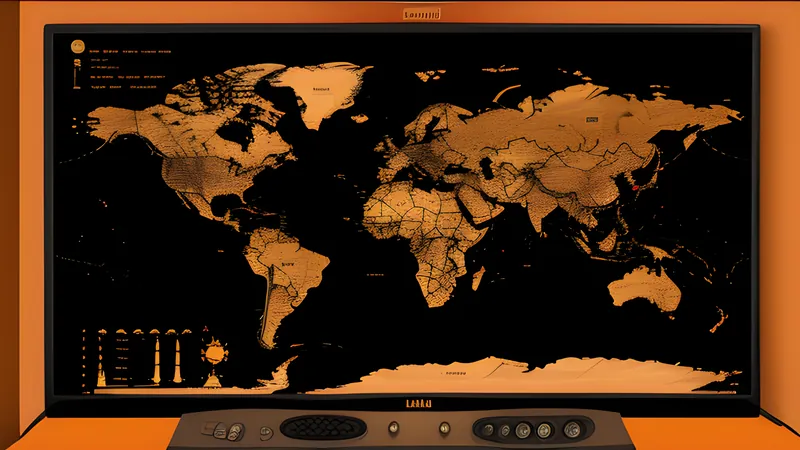
The mechanic that makes this argument concrete is Immortal Empires, the free mega-campaign map that stitches together the separate campaign maps from Warhammer I, II and III into one continuous world, released as a beta update rather than sold as new content. Immortal Empires currently supports dozens of playable factions on a single continuous map spanning the Old World, the New World, the Southlands, the Chaos Wastes, Cathay and the Lands of the Dead, and the practical effect is that a single multiplayer or single-player campaign might involve a horde-stance Chaos army, a settled Empire faction defending fixed provinces, an Ogre Kingdoms migration eating its way across the map, and a Skaven faction spreading corruption from underground strongholds nobody else can see coming, all in the same session. That’s a genuinely different proposition from the legible, bounded rivalries a game like Shogun 2 or a turn-based 4X like Civilization VI builds its late game around, where every player is at least nominally playing by the same rules even as their empires diverge. Here the rules themselves are the variable, and Immortal Empires is best understood as Creative Assembly formally admitting that the toy box has become the actual product, ahead of the historical simulation the series built its name on.
Legendary Lords turn the campaign into a character study
Layered on top of the faction-mechanic asymmetry is a second, smaller-scale one: every Legendary Lord, the named hero commanding a given starting position, carries a unique quest chain, a signature weapon or artefact earned through it, and often a distinct mount or magic lore unavailable to any other character on that faction’s roster. Playing Kislev’s Boris Ursus is a different campaign from playing Katarin the Ice Queen even though both start on the same patch of map with access to the same unit roster, because their quest lines pull the early campaign toward different regions and reward different playstyles once the associated artefact lands. That’s a level of authored specificity a historical Total War game never attempts, because a historical general amounts to a name and a stat line, where a Legendary Lord carries a personal story the campaign is quietly telling underneath the strategic layer. It’s closer to what a role-playing game does with a companion arc than what a strategy game typically does with a starting position, and it’s a large part of why a Warhammer III campaign can feel like it’s building toward something more specific than territorial dominance even when the win condition on paper is still “control enough provinces.”
What asymmetry buys, and what it costs the diplomacy layer
The upside of that toy-box structure is real and worth stating plainly: no other strategy series lets a player run a horde of ratmen tunnelling toward a rival capital in one campaign and a coalition of ice-age human survivors defending a frozen tundra in the next, using the same purchase, the same engine, and largely the same battle-tactics skillset carried over between them. Faction identity in Warhammer III changes what a player is optimising for on a turn-by-turn basis, a far deeper divergence than the flavour-text differences a historical Total War roster typically settles for. But that asymmetry pulls hard against the diplomacy layer, which has always been the weaker half of the Total War formula and gets outright incoherent once factions no longer share comparable incentives. Negotiating a non-aggression pact with a horde faction that has no fixed capital to lose, or trying to read a Chaos-aligned AI’s confederation offer when its entire economic model runs on different resources than the player’s own, exposes how much of the historical games’ diplomacy AI was quietly built around the assumption that every faction wants roughly the same things: territory, trade income and security. Warhammer III’s AI still runs that same underlying diplomatic logic dressed in new faction flavour, and the seams show constantly — an ostensibly cunning Skaven faction will offer a trade agreement in the same turn its lore says it’s plotting an underground betrayal, because the diplomacy system doesn’t actually model faction-specific motivation any deeper than a historical entry’s did.
Siege battles as the one place the old discipline survives
Where the older Total War discipline still holds is the siege battle, which remains close in spirit to what Age of Empires II and every RTS descended from it understood about defensible chokepoints: walls funnel an attacker into predictable approach lanes, elevated towers punish troops caught in the open, and a river or gate crossing forces an attacking army into a vulnerable, disorganised state a well-positioned defender can punish decisively. Warhammer III’s monstrous units complicate that legibility usefully rather than breaking it — a giant or a stone-throwing troll can simply climb or smash through a section of wall a human army would have to besiege properly, which forces a defender to think about wall coverage as a genuine perimeter problem rather than a formality to garrison and forget. Artillery pieces and flying units add further wrinkles: a wyvern-mounted hero can bypass the whole gatehouse argument entirely by landing directly on a wall segment, which means a siege’s outcome increasingly turns on what a faction’s specific unit roster can physically do to the map’s geometry rather than on troop numbers alone. It’s one of the few places in the game where the fantasy roster adds real tactical texture to a system the series already understood well, rather than replacing that system’s logic with something new to relearn from scratch.
The realm-of-chaos endgame as the toy box’s honest conclusion
Warhammer III’s original, non-Immortal-Empires campaign structure builds toward a Realm of Chaos endgame that sends the player’s army into a demonic hell-dimension unique to each God of Chaos, an explicitly non-historical, non-grounded conclusion no Total War game before this trilogy would have attempted. It’s tempting to read that as tonal overreach, but it’s actually the toy-box philosophy being honest about itself: a game that spent its whole campaign teaching a player that every faction operates under different rules ends by sending them somewhere the map itself stops pretending to be a real place. Compare that to how StarCraft II’s three-species asymmetry stays grounded in a single shared ruleset of supply, resources and unit counters even at its most baroque — Warhammer III never had that option available once it committed to a roster this divergent, and the Realm of Chaos finale is the design following its own premise to a genuinely strange, memorable conclusion rather than reaching for a safer, more legible ending it had already ruled out three factions ago.
The ancestor worth naming
The real design lineage here traces back to the classic 4X tradition of wildly asymmetric species, the lineage that runs through Master of Orion II and its genuinely different alien traits per empire, transplanted into a real-time battle engine that historical Total War spent two decades proving could handle legible, comparable factions well. Warhammer III is what happens when that asymmetric-species tradition gets bolted onto an engine built for the opposite assumption, and the friction between the two traditions — thrilling faction identity pulling against a diplomacy AI that still thinks everyone wants the same things — is the actual, ongoing argument the game is having with itself three entries into the trilogy. Each new Immortal Empires update adds another faction with another bespoke mechanic rather than resolving that tension, which suggests Creative Assembly has stopped trying to reconcile the two traditions and started treating the friction itself as the product.
It’s on PC, runs the full three-map Immortal Empires campaign as a standing live platform rather than a fixed release, and remains the clearest evidence yet that a strategy series can chase faction fantasy hard enough to leave its own foundational systems some distance behind it. Whether that trade is worth it depends entirely on what a player wants from a campaign map: a legible contest with a small, comparable cast rewards close reading of position and timing, while a toy box this large rewards curiosity about what a completely different set of rules feels like to run, one faction at a time, for as many afternoons as the map has factions left to try.
Related Content