The Cracking Intro: The Scene's Business Card
Software piracy groups stripped copy protection off 8-bit games and then, almost as an afterthought, invented an entire art form to sign their work
Contents
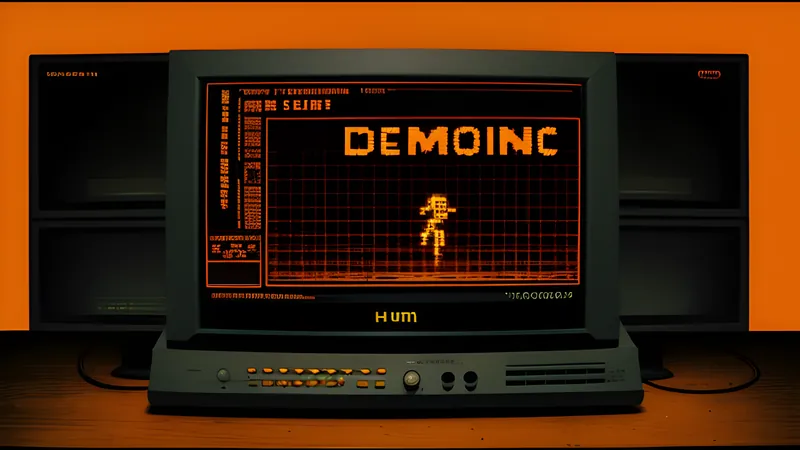
Every act of software piracy on the 8-bit home computer left evidence behind, and for a remarkable stretch of the mid-to-late 80s that evidence was better made than most of the games it was attached to. A cracked copy of a C64 or Amiga game didn’t simply strip out the loader that checked for an original disk or tape; it typically arrived with its own opening sequence bolted on first — a scrolling message, a chiptune, a logo built from custom character sets, sometimes an entire mini-demonstration of technical showmanship that had nothing to do with the game that followed. That opening sequence, the crack intro, started as advertising for a piracy group and ended up as one of the most influential pieces of design culture the home computer era produced, because the people writing it eventually got more interested in the intro than in the crack it was attached to.
Why the intro existed at all
The mechanical reason crack intros existed is straightforward. Removing copy protection from a commercial game was a technical exercise that demonstrated real skill — reverse-engineering a publisher’s deliberately obscure loading routine, often written specifically to be difficult to disassemble, was genuinely hard work on 8-bit hardware with limited debugging tools. Groups who did that work well wanted credit for it, and a cracked game with no attribution attached gave that credit to nobody. The intro solved the attribution problem by inserting a splash screen before the game loaded: the group’s name, sometimes a greeting to rival groups, sometimes a boast about how quickly the protection had fallen. It functioned exactly like a printed business card handed over with finished work — proof of authorship attached to a product that, by its nature as stolen software, could never carry the original publisher’s name as a selling point.
The showing-off outgrew the crime
What happened next is the interesting part. Because multiple groups were cracking the same games in parallel and racing to release first, the intro itself became a competitive space for who could build the most impressive scrolling text routine, the tightest chiptune, the cleverest use of raster effects to squeeze more colours or more simultaneous sprites out of hardware than the manufacturer had ever intended to allow. Groups started keeping dedicated members whose only job was writing intros, separate from whoever handled the actual disassembly and protection-cracking. That division of labour is the moment the intro stopped being a side effect of piracy and started being the actual product some of these people cared about. The technical constraints that shaped this work were real and specific — I’ve written about how the C64’s SID chip turned music itself into a system worth studying on its own terms, and intro-writers were often the same people pushing that chip hardest, because a crack intro’s music had to grab attention in ten or twenty seconds flat, with none of a full game’s time to build an impression gradually. Composers who made their names writing full soundtracks for commercial releases — the kind of reputation I’ve covered in the context of the SID chip’s most celebrated composer and the sound programmer who did as much as anyone to make the C64 a musical instrument in its own right — existed in a genuinely overlapping culture with the intro scene, even where the specific individuals differed, because both groups were solving the identical technical problem of extracting more expressive sound from three SID voices than the chip’s designers had any reason to expect anyone to manage.
Names that meant something to nobody who mattered legally
Cracking groups operated under names that were essentially brands, in a market where the actual product was illegal and therefore could never be advertised through any normal channel. Names like Fairlight and Triad became recognisable across the C64 and Amiga scenes specifically because their intros were consistently well made, which meant a group’s reputation for technical polish in the ten seconds before a game loaded could travel further, and faster, among the people who actually cared, than the reputation of most legitimate publishers of the same era. That’s a genuinely odd inversion: a piracy group’s unpaid, unofficial signature sequence carrying more prestige within its actual audience than a lot of the box art and publisher logos on the games it was cracking. Rival groups needled each other directly inside these intros — boasts about speed, jabs at a competitor’s supposedly inferior cracking technique, occasional outright insults — turning what should have been a footnote into a genuine public rivalry that pushed the format’s technical ambition upward simply because nobody wanted to be the group whose intro looked worse than the crack it was attached to.
From intro to demo to party
Once writing intros had become a discipline in its own right, the logical next step was removing the crack entirely and just releasing the showcase on its own: a standalone “demo,” with no piracy attached, existing purely to demonstrate what a small team of programmers, musicians and artists could make a machine do. That’s the direct lineage from crack intro to demoscene proper, and it happened fast — by the late 80s, demo groups were producing work with no pretence of being attached to cracked software at all, and the community had grown large enough to organise its own gatherings, “demo parties,” where groups competed head to head for bragging rights judged by an audience of peers rather than by whichever piracy board happened to distribute the release fastest. Finland’s The Gathering and Assembly, both tracing their roots back to this same late-80s and early-90s period, grew from small local meet-ups of exactly this kind into some of the largest recurring computing events in Europe, built entirely around competitions that judge demos, music and graphics on pure technical and artistic merit rather than any commercial release schedule — a direct, traceable, and slightly improbable line running from an illegal crack intro’s ten-second boast to an arena full of programmers competing for a trophy under their own names in full public view. I’ve argued elsewhere that the demoscene’s influence on game design runs much longer than most people give it credit for, and the crack intro is the specific, underappreciated hinge point in that story: without a commercial motive forcing programmers to compress maximum visual and audio impact into the smallest possible window of a captive audience’s attention, it’s not obvious the wider demoscene culture develops the same urgency or the same technical ambition nearly as quickly.
The loading screen’s stranger cousin
It’s worth distinguishing the crack intro from the legitimate loading screen it superficially resembles, because the two grew out of opposite motives even though both filled the same dead time on 8-bit hardware. A publisher’s own loading screen was there to entertain a paying customer through an unavoidable technical wait — I’ve written about one loading screen that famously outlived the mediocre game it was attached to — and its job was reassurance: something to look at while legitimate hardware did legitimate, if slow, work. The crack intro had no such polite justification. It existed purely to advertise a group’s skill to an audience that hadn’t paid for anything and hadn’t asked to see it, inserted before software the viewer was, by definition, not supposed to have obtained legitimately in the first place. That’s a strange kind of confidence to build an entire subculture on — announcing your own handiwork loudly and specifically while committing an act you had every reason to keep quiet about — and it’s part of why crack-intro culture never fully shed its outlaw glamour even once its most talented members had moved on to entirely legal demo releases and, in plenty of documented cases, straight into legitimate jobs in the games industry whose products those same people had once been cracking for fun. The skillset transferred almost without modification: a scener who’d spent years squeezing an extra colour or an extra voice out of hardware nobody had designed for the effect was, by definition, already doing the job description of a technical artist or a sound programmer at any studio that would eventually hire them, minus the part where the work in question had been attached to stolen software. Distribution networks that had grown up to spread cracked games and demo releases around the world before the wider internet existed — the bulletin-board culture around something like CompuNet sat adjacent to exactly this scene, even where its own users weren’t directly involved in cracking — did some of the same infrastructural work that legitimate publishers would later pay real money to build from scratch: reliable, fast, international distribution of digital files between strangers who trusted a shared culture’s unwritten rules more than any formal contract.
Why the business card still matters
The crack intro’s real legacy isn’t the piracy it was originally built to announce; it’s the specific idea that a technical constraint, treated as a creative brief rather than an obstacle, produces better and stranger work than the same skill applied without any constraint at all. Ten or twenty seconds to make an impression, on hardware never designed for the effect being attempted, forced a level of focus and showmanship that a full, unconstrained demo release sometimes actually lost once the time pressure disappeared. The scene that grew out of that pressure went on to produce programmers and artists who shaped mainstream game development for decades afterwards, and the direct evidence of where that culture actually started is still sitting, unglamorously, in the first few seconds of thousands of cracked 8-bit games from a period when the fastest way to get noticed for genuine technical skill was to steal someone else’s software and sign your name to the theft in the flashiest, most technically accomplished way anybody in the room had yet found — a business card nobody asked to be handed, attached to a product nobody had paid for, that nonetheless built the reputations, the friendships and, in the end, the entire legitimate design culture that followed it out the other side.
Related Content