Skull and Bones: Eleven Years for This
Ubisoft's naval spin-off survived a decade of reboots and arrived as a competent, thin live service
Contents
The naval combat in Assassin’s Creed IV: Black Flag was good enough, in 2013, that Ubisoft immediately started building a spin-off around it alone. Skull and Bones finally shipped in February 2024, developed by Ubisoft Singapore, more than a decade and multiple public delays after that decision, having been announced back in 2017 for a release originally pencilled for 2018. Eleven years is long enough to build several games from scratch, and the strange thing about Skull and Bones is that what eventually arrived plays like a perfectly serviceable, entirely unambitious pirate-ship live-service game — competent in the way a decade of iteration should guarantee, and thin in a way eleven years should have made impossible.
The ship combat that started it all
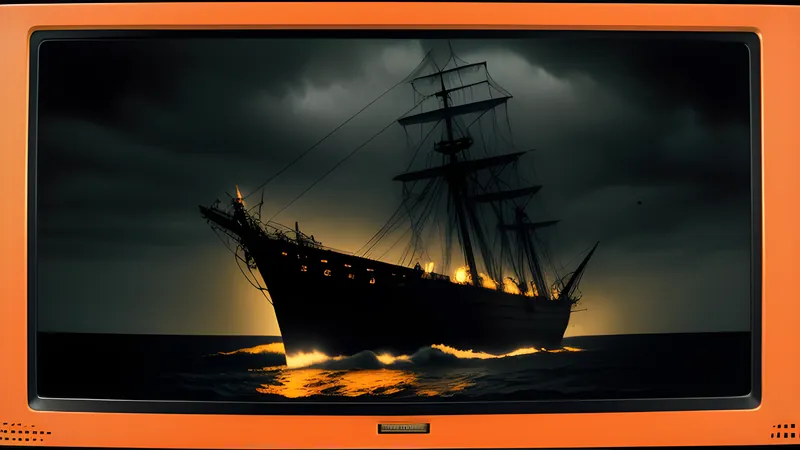
Credit where it’s earned: broadside naval combat is still the game’s strongest system, and it’s easy to see why Ubisoft thought it deserved a whole game. Positioning your hull’s flank against an enemy’s, timing a cannon volley to catch a rival mid-turn, managing the different ammunition types — chain shot to strip sails and slow a fleeing target, round shot for hull damage, fire barrels for area denial — gives ship-to-ship combat a real tactical rhythm that a land-based cover shooter can’t replicate. Weather plays into it directly: storms reduce visibility and complicate aim, and a squall rolling in mid-fight changes the calculus of whether to press an advantage or retreat to shelter.
This system works well on its own terms, and the real issue is that it’s recognisably the same system Black Flag shipped a decade earlier, refined rather than reimagined — a full game built entirely around it needed a second genuinely new idea to justify existing as its own product rather than a mode inside a bigger Assassin’s Creed. Eleven years of development time is an enormous amount of runway to have spent polishing one mechanic that already worked.
Weather and water simulation deserve specific credit here, because they’re the part of the ship-combat loop that most clearly benefited from the extra decade: wave physics that visibly affect a ship’s roll and pitch, storm systems that build and dissipate with genuine visual drama, and a day-night cycle that changes both visibility and the tactical value of a well-timed ambush. If the eleven years bought anything unambiguously worth having, it’s a naval simulation layer more convincing than Black Flag’s, even if the moment-to-moment combat decisions sitting on top of it haven’t fundamentally changed.
No character on the deck
The most consequential design choice, and the one that most separates Skull and Bones from its inspiration, is the decision to remove the player character almost entirely from the experience. Black Flag let you walk your own ship’s deck, board enemy vessels in first-person melee combat, and swim and climb through hand-crafted coastal settlements as Edward Kenway, a genuine character with a genuine arc. Skull and Bones drops all of it: there’s no on-foot exploration, no boarding combat played out in melee, no protagonist beyond a customisable, largely silent captain. The ship is the whole game, viewed from a fixed external camera, and every interaction with land and other pirates happens through menus and cutscenes rather than lived, physical play.
That’s a legitimate design bet — a game entirely about ship combat and economy rather than split between ship combat and on-foot adventuring could, in theory, go deeper on the naval half than Black Flag ever needed to. In practice, it means Skull and Bones has no equivalent to Edward Kenway’s personality, no boarding sequences with the visceral thrill of Black Flag’s, and nothing to anchor a player’s attachment to the world beyond the ship’s stat sheet. The economy of piracy — trade routes, contraband, hostile factions — is mechanically sound and entirely bloodless.
Boarding, when it happens at all, is resolved through a scripted sequence and a short skill check rather than played out as an interactive fight, which removes the single moment Black Flag players are likeliest to remember from that earlier game — the deck-clearing melee once your ship had battered an enemy vessel into submission. Trading that for a menu prompt is the clearest single example of the game choosing systemic breadth over the specific, physical set-pieces its predecessor built its reputation on.
Crafting and the ship-as-character problem
Ship customisation is where Skull and Bones tries hardest to compensate for the missing human protagonist, and it’s the game’s second-strongest system after the combat itself. Hulls, sails, figureheads and weapon loadouts are all modular and visually distinct, and a fully upgraded ship genuinely reads as an earned, personalised object rather than a reskinned default. The crafting economy underneath that customisation — timber, iron, cloth, and rarer regional materials gathered through trade routes and plunder — gives the moment-to-moment loop of sailing between ports a reason to exist beyond combat alone, and it’s a more honest expression of a pirate economy than the game’s faction reputation systems, which mostly gate content behind grind rather than meaningfully changing how the world treats you.
The trouble is that a ship, however well customised, can’t carry a story the way a face and a voice can. Black Flag’s Edward Kenway gave players someone to be disappointed in, someone whose greed and self-interest the plot could interrogate directly. A ship has no interiority to interrogate, and Skull and Bones’ captain — silent, largely undefined beyond a character-creator’s cosmetic choices — leaves the game’s world feeling administrated rather than inhabited, however handsome the individual vessels look at anchor.
Live service, and the thinness underneath the polish
The endgame is built from the now-standard live-service scaffolding: a seasonal roadmap, a battle pass, cosmetic ship customisation, PvP contested waters, and rotating world events. None of it is badly built — Ubisoft Singapore clearly understands the genre’s mechanical requirements — but none of it carries the specific identity that would make Skull and Bones the game people reach for over a dozen other live-service options competing for the same hours. Live service and the game that refuses to end names the structural problem directly: a game built to be played indefinitely has to keep manufacturing reasons to return, and Skull and Bones’ reasons are the genre’s standard ones — new cosmetics, new seasonal threats, a slowly climbing power ceiling — rather than anything specific to piracy that couldn’t be reskinned onto any other live-service premise.
What eleven years actually bought
It’s worth being specific about what a decade-plus of development produced, because “long in development” doesn’t automatically mean “troubled,” and the public record here is unusually well documented: the project began around 2013 as a Black Flag-derived concept, was formally announced in 2017 for a planned 2018 release, and was delayed repeatedly across the years that followed, through several publicly acknowledged changes in creative direction as Ubisoft reportedly reworked the game’s scope and business model more than once. Games that spend that long moving between conceptions often ship as a compromise between all of them rather than a clear execution of any single one, and Skull and Bones reads exactly that way: a naval combat system inherited wholesale from 2013, a live-service economy layered on top that reflects the industry’s mid-2020s assumptions rather than its 2017 ones, and comparatively little connective tissue that feels like it was designed as a coherent whole from the start.
None of that is a claim about any individual developer’s effort or conduct — a decade-long, multiply-redirected production is a studio and publisher-level story, and the studio closure wave and what gets buried with it covers the wider pattern of prolonged, redirected AAA productions and what they cost the people working inside them, cost that rarely shows up in the finished product’s credits or its review coverage.
The factions and the world they half-build
Skull and Bones populates its Indian Ocean setting with competing colonial powers and pirate factions whose territorial disputes are meant to give the open sea political texture beyond simple loot-and-sail gameplay. It’s a reasonable structural idea — reputation with one faction opens trade opportunities and closes others, and contested waters shift control based on aggregate player activity in a given region. What it lacks is any individual within those factions worth remembering: quest-givers exist to hand out objectives and collect rewards, not to carry the kind of specific, quotable personality that even a modest pirate-fiction template usually manages. The world is mechanically legible and dramatically flat, a description that applies to most of the game’s systems once you look past the ship combat itself.
The real ancestor
The obvious ancestor is Black Flag itself, and Skull and Bones never escapes its shadow because it never really tries to — it’s explicitly a spin-off of that game’s best system, stripped of everything Black Flag wrapped around it. The more interesting comparison is Sid Meier’s Pirates!, a much older template for the same basic fantasy: sail a ship, raid settlements, manage a crew’s loyalty, retire wealthy. Pirates! solved the “why keep playing” question with a life-simulation arc — ageing, retirement, a defined endpoint that gave the loop stakes. Skull and Bones, like most live-service games, refuses that endpoint entirely, and the absence is felt: a pirate’s life without a horizon to sail toward is just an economy, however well the cannons fire along the way.
Spoilers below
There is no meaningful single-player narrative arc to spoil here in the conventional sense — the game’s story beats are told through faction reputation and world-event framing rather than an authored campaign with a protagonist’s personal stakes, and the closest thing to a late-game revelation is the unlocking of the Kingpin ascension system, where a captain can attempt to become the region’s dominant pirate lord through a structured endgame contest against other players’ fleets and reputations. It’s a systemic climax rather than a narrative one, which is an honest reflection of what kind of game Skull and Bones actually is underneath the eleven years of expectation that preceded it.
Related Content