Silent Hill 2 Remake: Bloober Team Handled the Fog Carefully
A studio best known for jump-scare walking sims took on the genre's most argued-over sacred text and mostly earned the right to touch it
Contents
Konami published, and Polish studio Bloober Team developed, a full remake of Silent Hill 2, releasing 8 October 2024 for PS5 and PC on Unreal Engine 5. The original, made by Konami’s internal Team Silent and released in 2001, is one of the small handful of horror games that gets cited as literature rather than just as a genre highlight — James Sunderland searching a fog-bound town for his dead wife Mary, stalked by Pyramid Head, in a game whose central twist is that James’s own guilt is the thing generating the horror around him. Handing that game to Bloober Team — a studio whose prior catalogue (Layers of Fear, Observer, The Medium) leans heavily on jump scares and environmental spectacle rather than psychological interiority — was, reasonably, the most scrutinised remake assignment in the genre this decade.
What changed: the camera and the combat
The most visible change is the camera. The 2001 original ran a semi-fixed, distant third-person view with deliberately awkward tank-adjacent controls that made combat feel like an afterthought bolted onto an adventure game — a design choice Team Silent leaned into rather than apologised for, since fumbling with a pipe against Pyramid Head was supposed to feel helpless. The remake switches to a modern over-the-shoulder third-person camera in the vein of the Resident Evil 2 remake, with a dodge mechanic, stamina management, and noticeably more combat encounters throughout. This is the single biggest bet in the whole project: the original’s clumsiness was partly the point, and modernising the controls risks removing the exact friction that made James’s encounters feel like something he was enduring rather than something he was good at.
Bloober’s answer, and it’s a reasonably smart one, is to keep the enemies slow, telegraphed, and sparse rather than making combat genuinely skilful. The improved camera and dodge give the player competence, but the encounter design never gives them mastery — a Mannequin or Lying Figure still corners you in tight hallway geometry deliberately unsuited to a dodge-roll’s effective range, so the modernised controls raise the floor of playability without raising the ceiling of power fantasy. The result sits in a genuine middle ground — less purely helpless than 2001’s original, well short of a full action game — and that middle ground is closer to preserving the intent than either “keep it exactly as clunky as it was” or “give it a full modern combat system” would have been.
What stayed: the puzzles, the pacing, the silence
The parts of the remake that draw least comment are the parts done best: the apartment-block and hospital puzzle sequences are rebuilt largely intact, item-based logic puzzles (the kind that ask you to cross-reference a poem with numbered lockers, or match symbols to a piano) with their original solutions preserved rather than “modernised” into a hand-holding minigame. The game’s pacing — long stretches of walking through fog with no combat at all, environmental detail doing the emotional work — is untouched, and if anything is slower than the 2024 horror-game average, which is a genuinely brave choice given how impatient contemporary open- world design has trained players to be. Akira Yamaoka, the original’s composer, returned to rework the score, and the ambient industrial noise that stands in for music through most of the game is the single most load-bearing piece of continuity between the two versions — muting it would have broken the remake more than any camera change could.
The apartment building as the game’s real tutorial
Before the puzzles get elaborate, the Wood Side Apartments sequence quietly teaches the whole grammar of the game: read notes for clues, backtrack through rooms whose locks now make sense, treat a hallway you’ve already cleared as a place that might still hold something you weren’t equipped to notice the first time through. The remake preserves this teaching-through-space approach exactly, resisting the urge to add a quest marker or a highlighted-object mode that so many contemporary remasters bolt on by default. That’s a meaningful restraint given how normalised assisted navigation has become across the genre in the years since 2001 — the remake could have quietly added a waypoint system and most players would never have questioned it. Its absence is a deliberate vote for the original’s belief that navigating without help is part of how the town’s dread accumulates.
Pyramid Head and the discipline of restraint
Pyramid Head appears less often in the remake than marketing led people to expect, and that’s a correct choice rather than a missed opportunity — the character’s power in 2001 came precisely from scarcity and from ambiguity about what he was (never fully explained in-game, understood by players mainly through subtext about sexual guilt and punishment). Bloober resists the temptation to turn him into a recurring boss-rush antagonist the way a less disciplined remake might have, keeping his appearances tied to the same story beats as the original and letting long stretches of the game go by with only the memory of him doing the work. That restraint is the clearest sign the studio understood what it was remaking rather than just what it was selling.
The reveal, told the same way twice
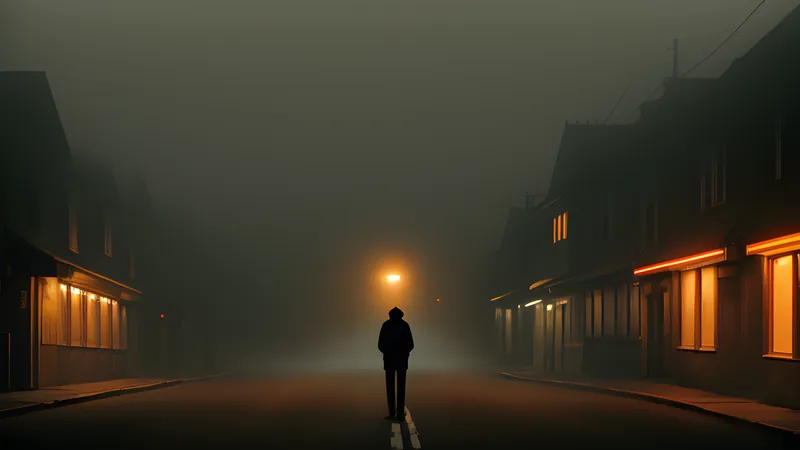
The central mechanism of Silent Hill 2 — the town punishing James for something he’s suppressed even from himself, environmental details (a locked door, a specific room number, a mirror) seeding a truth the plot only states outright in the final act — survives the remake essentially unaltered in structure, which was the correct call given how carefully that structure is built. Where the remake adds value is visual: Unreal Engine 5’s lighting lets fog behave as a genuinely volumetric, moving thing rather than a 2001-era draw-distance trick, and several key rooms use that improved fidelity to hide and reveal environmental storytelling details (photographs, notes, mirrors) with more precision than the original hardware allowed. It’s a remake that mostly found new tools to tell the same story rather than a new story wearing the old title.
The trust problem Bloober actually had to solve
It’s worth being specific about why this assignment carried more scrutiny than most remakes. Bloober Team’s prior output leans on cheap scares and unreliable-narrator gimmicks that read as imitation-Silent Hill rather than a studio with its own voice — Layers of Fear and The Medium both borrow so visibly from Team Silent’s psychological-horror playbook that handing Bloober the actual source material felt, to a skeptical portion of the audience, like handing a tribute act the original band’s instruments. The remake’s actual output argues against that skepticism mostly through omission: the things Bloober’s back catalogue is known for — jump scares timed to musical stings, environments that exist to startle rather than to accumulate dread — are largely absent here. The horror in the remake is patient in exactly the way the studio’s own prior games weren’t, which suggests either a genuine stylistic stretch or, more likely, a production process with enough Konami oversight and enough licensed access to Team Silent’s original design documents that the studio was working from a stronger brief than its solo output ever had. Either way, the result argues for itself more persuasively than the studio’s résumé did going in.
Where it sits against the genre’s remake wave
Silent Hill 2 joins a run of prestige horror remakes that have collectively re-litigated how much a remake should modernise versus preserve — read alongside Resident Evil Village: the sequel that changes costume every hour and Resident Evil 4 (2023): the remake that argues with the original, the Silent Hill 2 remake sits at the more conservative end of that spectrum — closer to restoration than reinvention — which is the correct instinct for a text this singular and this dependent on its original pacing to function. The systems ancestor worth naming is the original 1999 Silent Hill, whose engine limitations forced the fog in the first place, a lineage this site has covered directly in Silent Hill: the fog that was a hardware limit — the remake is the first version of the series confident enough in what that limitation accidentally taught the franchise to keep the fog by choice rather than necessity.
The verdict: a remake that understood its job was conservation with better tools, not reinvention, and the modernised combat is the one place that risk shows — and mostly survives it.
Spoilers below
The game’s final revelation — that James murdered Mary himself, smothering her as her wasting illness (never named on-screen, widely understood to be a long, degenerative disease) became unbearable to witness, then buried the memory so completely that he genuinely believes he’s searching for her rather than atoning for her death — is delivered with the same restraint as in 2001: a single videotape, watched near the game’s end, that James himself has been carrying and avoiding the entire runtime. Maria, the doppelganger who accompanies James through much of the game and who resembles Mary but behaves nothing like her, is confirmed as the town’s own manufactured stand-in for the guilt James can’t face directly — and the remake’s multiple endings (In Water, Leave, Rebirth, and the joke ending) are preserved exactly as ambiguous as the original, with no epilogue text added to settle which one is “true.”
What to play next: for another game built entirely around a protagonist’s suppressed guilt made literal by the environment, Signalis: the survival horror that reads like a poem runs a close cousin of the same idea.
Related Content