Sanxion: The Loading Screen That Outlived the Game
Thalamus shipped a split-screen shooter and accidentally shipped a legend on the front of it
Contents
Ask anyone who owned a Commodore 64 in 1986 about Sanxion and watch what happens. They will not describe the shooter. They will make a noise — a rising synth arpeggio, usually, done badly — and their hands will do a little bouncing motion, because what they are describing is a bar graph. The Sanxion loader is the most famous thing Thalamus ever published, and the game it was loading is a footnote to its own front door.
That is a strange fact and it deserves an explanation, because the explanation is about a piece of British consumer technology that no longer exists: the cassette.
Five minutes of nothing
A C64 game on tape took about five minutes to load. Sometimes eight. The datasette read audio off a compact cassette at a speed the standard Kernal ROM routine could just about cope with, which was catastrophically slow, and every commercial publisher of any size wrote their own turbo loader to beat it. During those minutes the machine was fully occupied and the screen was traditionally a border strobing in coloured stripes as the bits arrived. You sat there. You made toast. You went back and it had failed at 90% and you rewound and did it again.
Publishers worked out that this dead time was theirs. Ocean’s Novaload, which they used across their catalogue from the mid-eighties, put a picture on the screen and played music while the tape ran, which meant somebody had solved the genuinely hard problem of doing interrupt-driven audio and data-loading from the same tape signal at the same time. Mastertronic went further with Invade-a-Load and gave you a playable Space Invaders clone to fill the wait. The load became a venue.
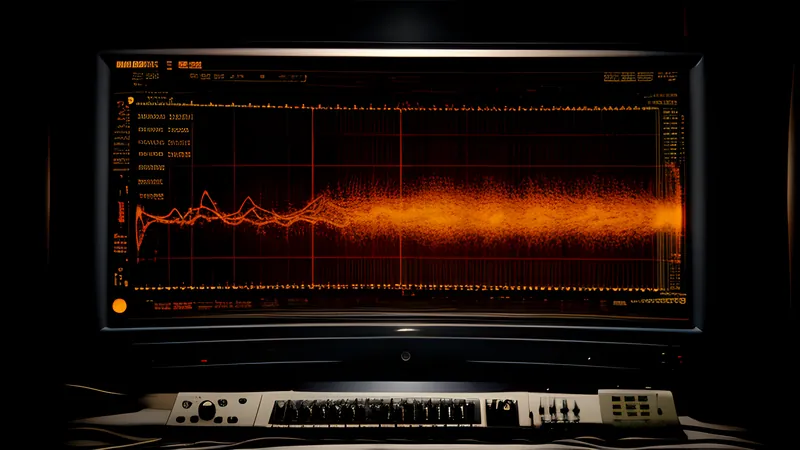
Thalamus, formed by Newsfield — the publisher of Zzap!64, which is to say a games magazine started a games label, which is to say the British industry in one sentence — took the venue seriously. Their loader put a real-time spectrum analyser on the screen: bars leaping in time with the music, colour-cycling, an oscilloscope for an audience of one. And the music, credited to Rob Hubbard, is the reason the whole thing has outlived everything around it.
Why the loader tune works
Hubbard’s Sanxion loader is a long-form composition. It develops across its full run: it changes key, introduces a lead line, drops it, brings it back with a counter-melody underneath. Being asked to fill five minutes is what made it that shape. Most SID tunes of the era are eight-bar loops built for a title screen you will look at for twenty seconds. Hubbard had a slot with a known duration and an audience with literally nothing else to do, and he wrote to the brief.
The technical craft is worth stating specifically. The SID chip has three voices. Three. Every bassline, arpeggio, lead, pad and drum has to be squeezed through three channels, which is why the era’s signature sound is the fast arpeggio — you fake a chord by cycling through its notes so quickly the ear hears them stacked. Hubbard’s other trademarks are all in evidence here: percussion built from filtered noise stolen from a voice that is doing something else a moment later, and a pulse-width modulation on the lead that makes a static waveform seem to breathe. The vibrato and the slides are hand-programmed, frame by frame, because there was no other way to do it.
And it played over a spectrum analyser, which closed the loop. You could see the three voices being spent. The display made the constraint visible, and watching a tune argue with its own hardware for five minutes is a better piece of theatre than most title screens managed. That’s the same instinct behind Delta a year later — another Fasoulas game, another Hubbard score, and a game that felt increasingly like a delivery mechanism for its soundtrack.
The game behind the door
Sanxion itself, and I want to be fair to it, is a competent horizontal shooter with one real idea. Stavros Fasoulas, a Finnish programmer whose first published game this was, split the screen into two horizontal bands showing the same action from two angles — a side view and an overhead view of the same ship in the same moment. You fly along a corridor engaging waves of attackers, and you are meant to read both views at once.
It is a clever idea that does not quite pay. The problem is attention. Two simultaneous views of one thing means your eye has to pick one and glance at the other, and glancing costs you exactly the reflex the game is testing. The overhead view carries the positional information you need for the ground targets; the side view carries the collision information that keeps you alive. So you spend the game performing an eye-movement chore. There’s a version of this design that works — give each view a job that only it can do and stagger the moments they matter — and Sanxion doesn’t find it.
The rest is solid, fast and unremarkable. Sixteen levels, waves that arrive in fixed formations you can learn, a difficulty that rises honestly. Fasoulas was plainly a serious programmer and the scrolling is clean. Compare it with Uridium, which came out the same year and used the same 64, and the gap is one of ambition about feel: Braybrook built a ship you could feel the weight of, and Fasoulas built a ship that goes where you push it. Fasoulas got much better very quickly — Delta the following year is a substantially finer game, and Quedex after it is genuinely strange.
The thing this teaches
There’s a serious point buried in the joke about the loading screen being better than the game.
Constraints specify work as much as they limit it. The loader tune is great partly because Hubbard was handed a fixed five-minute duration, three voices and an audience that could not leave. The spectrum analyser is great because someone had to fill a screen that was otherwise strobing stripes. Nobody in that chain was being asked for art. They were being asked to make a delay tolerable, and the answer they found was better than what they got when they were asked for the game itself.
The C64 keeps producing this pattern. Monty on the Run is a decent platformer whose Hubbard theme has been performed by orchestras. The Last Ninja games are remembered for Ben Daglish and Anthony Lees at least as much as for the combat. The SID chip’s limitations produced a generation of composers who wrote melody-first because melody was the only thing that survived three voices, and melody is the thing that survives forty years.
The label that came out of a magazine
Thalamus is worth a paragraph of its own, because the arrangement was peculiar even by British standards. Newsfield published Zzap!64, the most influential C64 magazine in the country, and in 1986 it launched a software label. The obvious conflict — a magazine grading games in a market where it also sold them — was handled by the reviewers loudly not reviewing Thalamus titles, and the label went on to build a genuine identity: high production values, big box art by Oliver Frey, and a house habit of finding programmers nobody had heard of and giving them room.
Fasoulas was the first of those and the pattern held. Thalamus published Armalyte in 1988, which is one of the finest shooters the machine ever ran, and Creatures in 1990, which is one of the strangest. The label’s reputation now rests on a small catalogue and a very high hit rate, and Sanxion is the door it came in through. A first game from an unknown Finn, sold on the strength of a loading screen. It worked. Zzap!64 gave it a Sizzler and the tape sold, and the label had a future.
There is one more piece of the era in that story. Nobody involved thought the loader was the product. Hubbard was paid to score a shooter and the analyser existed because a programmer had five minutes of screen to fill. The parts of a 1986 British game that have survived into 2024 — the music, the box art, the waiting — are largely the parts nobody in the building considered to be the work. The pattern repeats across the whole catalogue of the machine, and it is the reason the C64 archive keeps rewarding a second look: the value ended up in different places than the invoices did.
Where to hear it
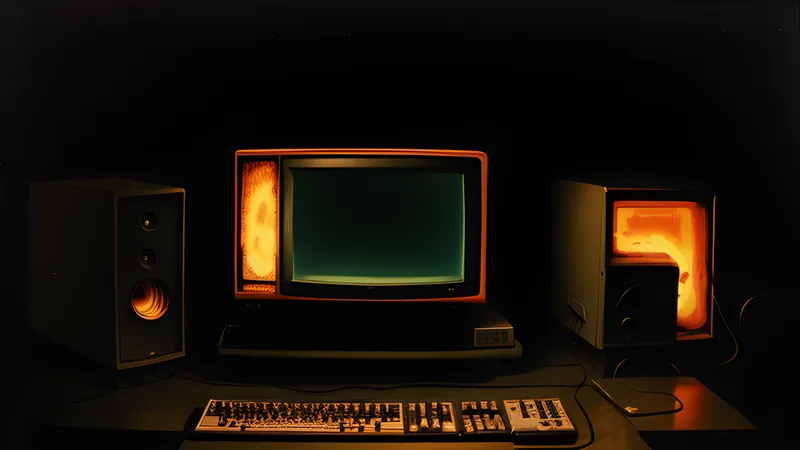
Sanxion emulates trivially and you should absolutely play the shooter for twenty minutes to see the split-screen idea for yourself; it is a genuine design artefact and it fails interestingly. But the honest recommendation is to run it in an emulator with tape loading enabled and let the loader run its full length, in the dark, with the volume up. Do the thing you did in 1986. Sit there and watch the bars.
The High Voltage SID Collection has the tune in playable, chip-accurate form and it is one of the most covered pieces of music the format produced. It has outlived the game, the format, the label and the publisher that owned the label. That is what happens when someone takes five minutes of waiting seriously.
Related Content