Octopath Traveler: The HD-2D revival of the sprite JRPG
Square Enix built a genuinely new visual language out of nostalgia for the 16-bit era, then wrote eight stories that never quite meet
Contents
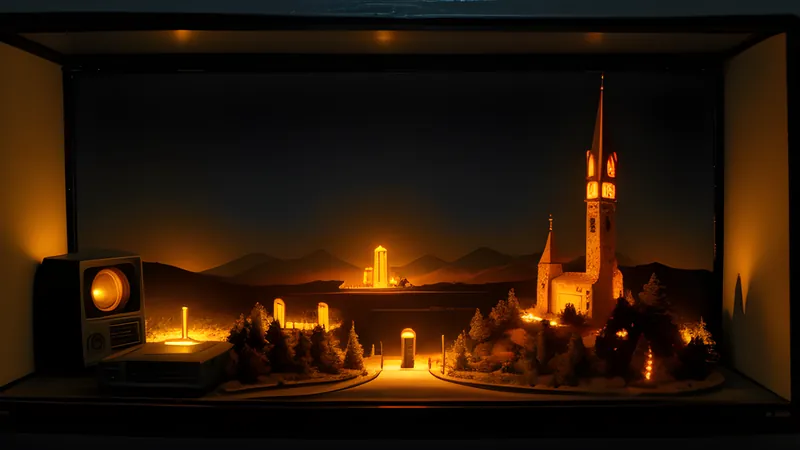
Octopath Traveler released on Switch in July 2018, developed by Square Enix and Acquire, and its most immediately obvious achievement is a visual style the studio branded HD-2D: pixel-art sprite characters walking across richly detailed miniature-diorama environments rendered in 3D, lit with a tilt-shift depth-of-field effect that makes entire towns look like they’re built from tabletop scenery. It’s a style that has since spread across an entire wave of Square Enix releases, but Octopath Traveler is where it was invented, and seeing it for the first time in 2018 — sprite characters casting long, dynamically-lit shadows across a genuinely three-dimensional space — remains the game’s clearest sales pitch.
The harder question, six years on, is whether the eight-protagonist structure the game built around that visual showcase actually works as a story, and the honest answer is that it works brilliantly as a delivery mechanism for eight separate short stories and rather less well as a single cohesive narrative.
Break and Boost: a battle system built for weakness-hunting
Octopath Traveler’s combat is the game’s other genuine innovation, and it deserves as much attention as the visuals get. Every enemy has a Shield gauge and a set of specific weaknesses — certain weapon types, certain elemental spells — and hitting those weaknesses depletes the Shield; deplete it fully and the enemy is “Broken,” stunned for a turn and taking bonus damage from everything. Alongside this runs the Boost system: every turn, the player accumulates Boost Points that can be spent to power up a single action, either turning one attack into up to four hits, or amplifying a spell’s potency, at the cost of skipping future turns to save up.
The result is a turn-based system with a genuine tactical puzzle at its centre: does a character spend their turn testing an unknown enemy’s weakness with a cheap attack, or hold back and Boost once the weakness is confirmed for maximum damage. Boss fights in particular become a rhythm of probing, breaking, and then unloading every Boosted attack the party can muster in the single turn where the enemy is stunned and vulnerable — a loop that rewards planning ahead by a turn or two rather than reactive button-mashing, and one of the more genuinely inventive turn-based systems the JRPG genre has produced since the SNES era whose sprite work it’s visually paying tribute to.
Eight travelers, eight self-contained stories, and the seam between them
Each of the eight player characters — Olberic the disgraced knight, Primrose the dancer hunting her father’s killers, Cyrus the absent-minded scholar, Tressa the merchant chasing a mystery ledger, Ophilia the cleric fleeing a kidnapped sister’s captors, Therion the thief working off a debt, H’aanit the beast-tamer tracking an escaped monster, Alfyn the apothecary healing a village — has a fully self-contained four-chapter arc, playable in almost any order, with its own tone, stakes and supporting cast. Individually, several of these are genuinely strong: Primrose’s revenge plot in particular carries real weight, and H’aanit’s slower, more meditative arc about duty and mercy is a rare tonal register for the genre.
The structural cost is that the eight protagonists barely acknowledge each other. They travel together as a party for gameplay purposes, but story-critical scenes almost never involve more than the one traveler whose chapter is currently active, and the other seven stand around as silent, interchangeable background extras even during a chapter’s most dramatic moments. It’s the game’s most-discussed flaw for good reason: a JRPG that assembles a party of eight distinct, well-written characters and then largely declines to let them talk to each other is leaving an enormous amount of dramatic potential unclaimed, and it’s a gap the format never quite closes even by the endgame’s loosely connected final chapter.
The 16-bit lineage is worn openly, not just visually
Octopath Traveler’s HD-2D presentation is explicitly a tribute to Final Fantasy VI’s SNES-era sprite work, and the resemblance runs deeper than the art style — the job-class system, borrowed and expanded from earlier Final Fantasy titles, lets any traveler equip a secondary class alongside their starting one, mixing and matching abilities into hybrid builds the same way Final Fantasy V’s job system encouraged decades earlier. It shares that same era’s commitment to distinct, readable class identities: a Warrior hits hard and takes hits, a Scholar debuffs and controls the field, and the fun of the system is in discovering which combinations produce genuinely broken synergies rather than balanced, samey builds.
The pacing similarly echoes Chrono Trigger’s efficiency in places — individual side quests resolve in a single town visit rather than sprawling across hours — even as the main eight-chapter structure runs considerably longer overall than either SNES-era touchstone, since the format demands each of the eight travelers get roughly equal narrative real estate regardless of how strong any individual arc turns out to be.
Where the difficulty curve punishes exploration order
Because chapters can be tackled in almost any order, and because enemy difficulty in a given region is tuned around a specific expected party level, a player who wanders into a late-game character’s second chapter too early can hit a genuinely brutal difficulty spike that the game does very little to warn against. This is a real design tension: the freedom to choose your own path through eight stories is the game’s core structural promise, but that same freedom means the difficulty curve can’t be smoothly tuned the way a linear JRPG’s can, and newer players are likely to bounce off a wall the game never quite explains how to avoid.
A score that does narrative work the script sometimes can’t
Yasunori Nishiki’s soundtrack is doing quiet, essential work throughout the game, giving each of the eight travelers a distinct musical theme that recurs and develops across their individual chapters — Primrose’s theme carries a mournful string line that shifts register as her revenge plot darkens, while Tressa’s merchant theme stays buoyant even as her mystery grows stranger. Because the travelers themselves rarely interact on the page, the score becomes one of the only tools the game has for signalling that these eight stories are meant to sit in the same emotional universe, tonally if not narratively, and it largely succeeds at that job even where the writing itself falls short of full integration.
Secondary jobs and the limits of build variety
The game’s secondary job system — earned by defeating specific NPCs guarding shrines scattered across the map, rather than simply unlocked through story progress — lets any traveler equip abilities from a class that isn’t their starting one, which is where most of the build experimentation lives. A Cleric-classed healer picking up the Merchant’s secondary abilities to buff party income, or a Warrior borrowing a Scholar’s elemental analysis tool, opens genuinely creative hybrid builds. The limitation is that a traveler’s starting weapon and stat growth still anchor their core identity heavily enough that the secondary job mostly supplements rather than transforms a given character’s role — a Warrior with a borrowed Scholar’s spells is still fundamentally a frontline damage-soaker, just a slightly more flexible one, which caps how far the build variety can genuinely stretch compared to a true class-swapping system.
The travel banters are the game quietly admitting the problem
Interestingly, the game does have a mechanism for addressing the isolated-protagonist problem, just not one integrated into the main story: optional “travel banter” conversations, triggered manually from a menu at specific story milestones, let pairs of travelers exchange dialogue reacting to each other’s arcs. These are genuinely well written, and pairing, say, Cyrus’s academic curiosity against Therion’s guarded cynicism produces some of the sharpest character writing in the whole game. But burying this content in an optional menu rather than the main narrative flow is itself an admission that the eight-protagonist structure couldn’t organically support the interaction the format clearly wanted — a workaround for a structural problem rather than a fix for it, and a clue to what a tighter, more cross-referential sequel might look like.
Spoilers below
The game’s endgame content, patched in and expanded slightly after launch, ties the eight otherwise-disconnected stories together through Galdera, a malevolent god sealed away in the setting’s deep past, whose influence is revealed to have touched each traveler’s individual plot at the margins — the source of Primrose’s father’s murderers’ cult activity, the corruption behind H’aanit’s escaped beast, among others. It’s a genuinely underdeveloped connective thread relative to how much narrative weight the game asks it to carry in its final hours, unlocked only after completing all eight individual storylines and requiring the player to seek out an optional final chapter that most players finishing a single traveler’s arc will never stumble across organically.
The eight travelers’ final confrontation with Galdera is mechanically satisfying — a genuinely difficult final boss that demands mastery of the Break and Boost systems built up across the whole game — but narratively it’s the clearest evidence of the format’s central weakness: eight strong individual stories, asked at the last minute to cohere into one, without ever having built the connective tissue across forty-plus hours that would have made the ending feel earned rather than appended.
Square Enix clearly took the lesson on board: the 2023 sequel, Octopath Traveler II, keeps the HD-2D presentation and the Break and Boost combat largely intact while giving its eight new travelers a genuine shared central antagonist and considerably more crossover dialogue baked directly into the main story rather than quarantined in an optional menu. The first game’s real legacy, in other words, isn’t just the visual style everyone copied afterwards — it’s the design lesson the format itself taught its own creators about what an eight-protagonist JRPG needs to actually cohere, learned the hard way in front of a paying audience rather than caught in internal playtesting.
Related Content